Moderna kämpar med att följa upp vaccinsuccé
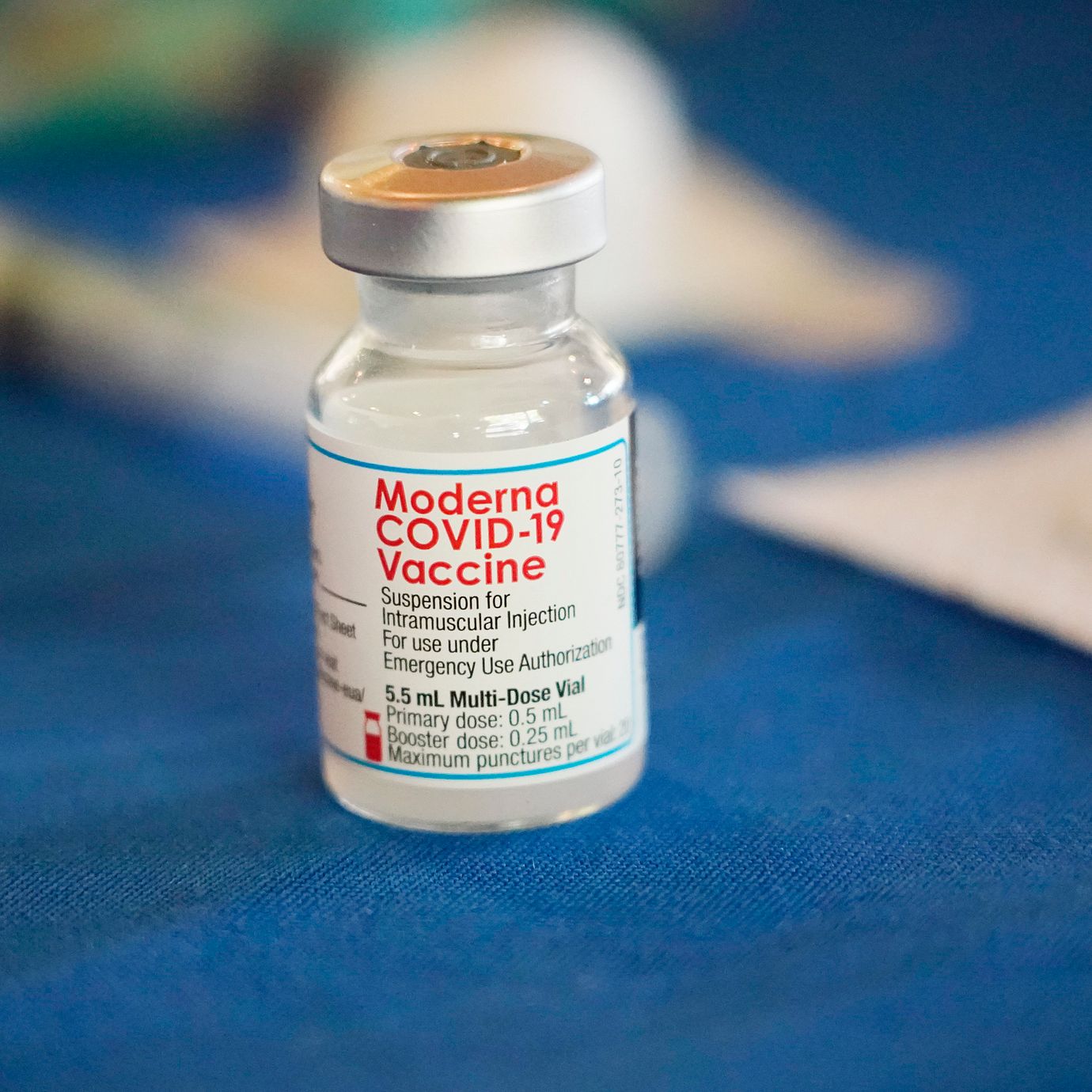
När covid-19 bröt ut hade läkemedelsbolaget Moderna forskat på mRNA-plattformar i över tio år. Allt var riggat för att tillverka ett vaccin på rekordtid och bolagets börsvärde gick från 6 miljarder till som högst 196 miljarder dollar. Nu står Moderna inför den tuffa uppgiften att följa upp succén och visa att man inte bara är en ”one-shot wonder”, skriver Fast Company.
För sju år sedan lovade Modernas vd att bolaget skulle ha dussintals läkemedel på marknaden vid det här laget. Det löftet har man inte hållit även om bolaget säger sig ha 47 läkemedels- och vaccinkandidater i sin pipeline.
 Fast Company
Moderna became a hero with its COVID-19 vaccine—now comes the hard part
The pandemic darling and mRNA pioneer is still trying to conjure a follow-up act.
“Science doesn’t move in a straight line,” says Stéphane Bancel, “especially with cutting-edge science that no human has done before you.” The 50-year-old CEO of the biotech company Moderna is familiar with circuitous journeys and unexpected turns of fate.
Founded in 2010 by a group of influential scientists from Harvard and MIT, Moderna spent its first decade pursuing research into the then-novel idea of using mRNA as a platform to create vaccines and drugs that essentially manufacture themselves in a patient’s body. But by early 2020, it still didn’t have a single product on the market. It did, however, have six vaccines in Phase 1 trials and was working on one against MERS, a type of coronavirus. And it had built a 150,000-square-foot facility in the Boston suburb of Norwood, ready to mass-produce mRNA vaccines. Just in case.
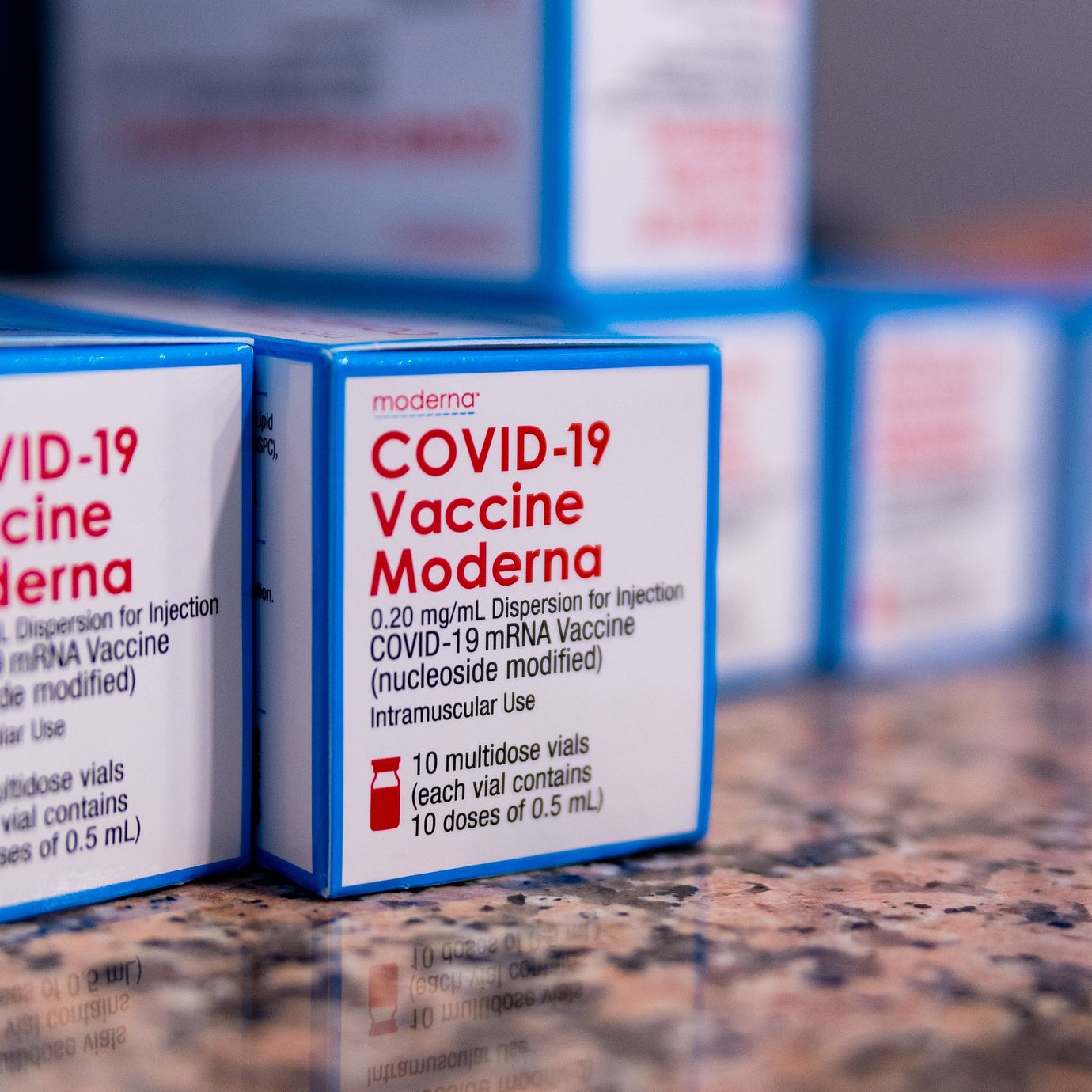
When the genetic sequence of a novel coronavirus from China was made public on January 11, 2020, Moderna was ready. It tapped its mRNA platform to develop a new vaccine candidate and on December 18, 2020, it obtained FDA emergency use authorization (EUA) for a COVID-19 vaccine, marking one of the shortest vaccine-development cycles ever. (The FDA issued an EUA for the Pfizer-BioNTech COVID-19 vaccine just one week earlier.) The company produced billions of doses over the next couple of years, driving annual revenue from $60 million in 2019 to $18.4 billion last year.
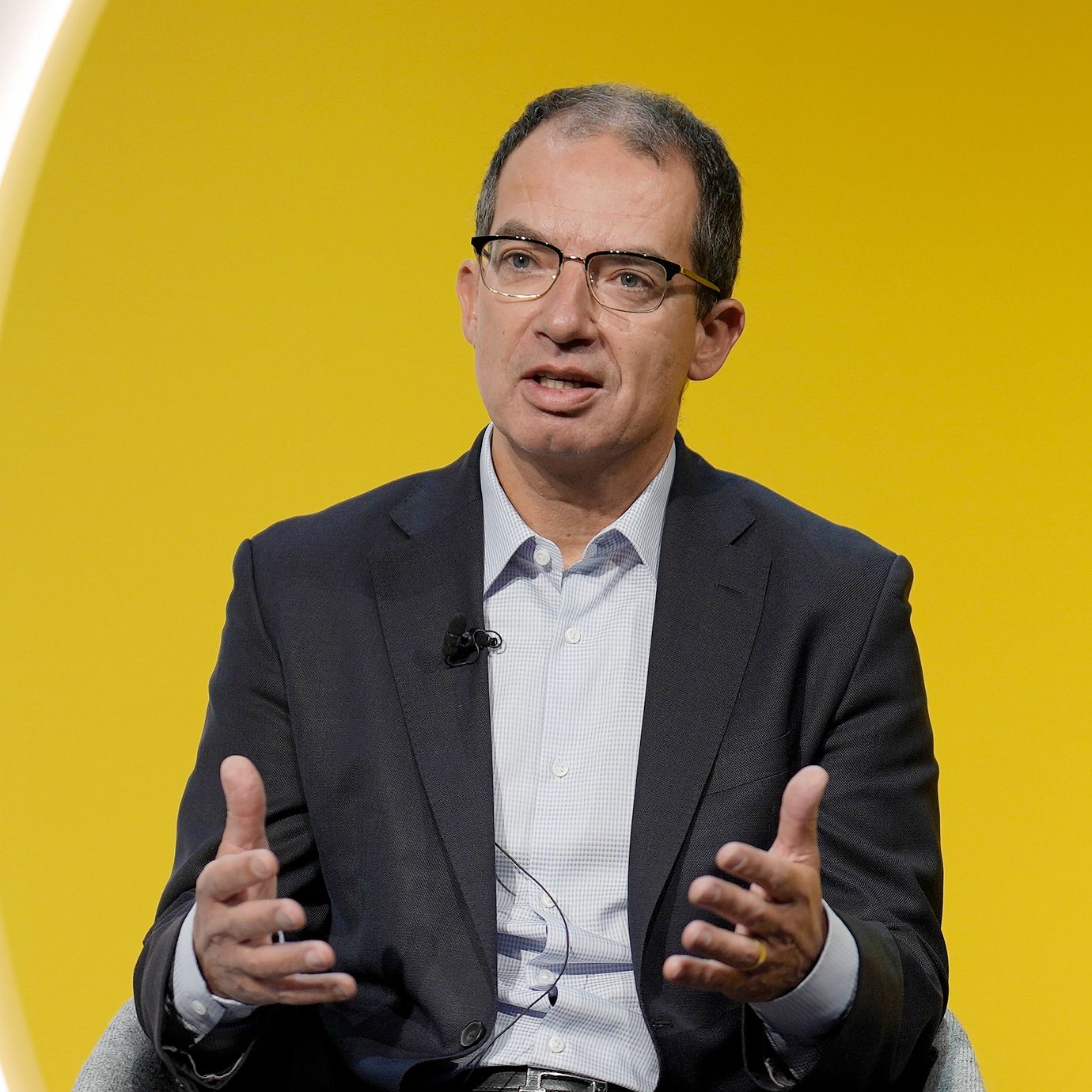
But as demand for COVID-19 booster shots wanes—and with a flurry of competitors now developing their own mRNA vaccines and drugs—Moderna finds itself once again seeking its way. For investors, who sent the company’s market cap skyrocketing from roughly $6 billion in 2019 to $196 billion at its peak in August 2021 (it’s now back at a more earthbound $50 billion), the company needs to prove that it’s not a one-shot wonder, or even “just” a vaccine maker.
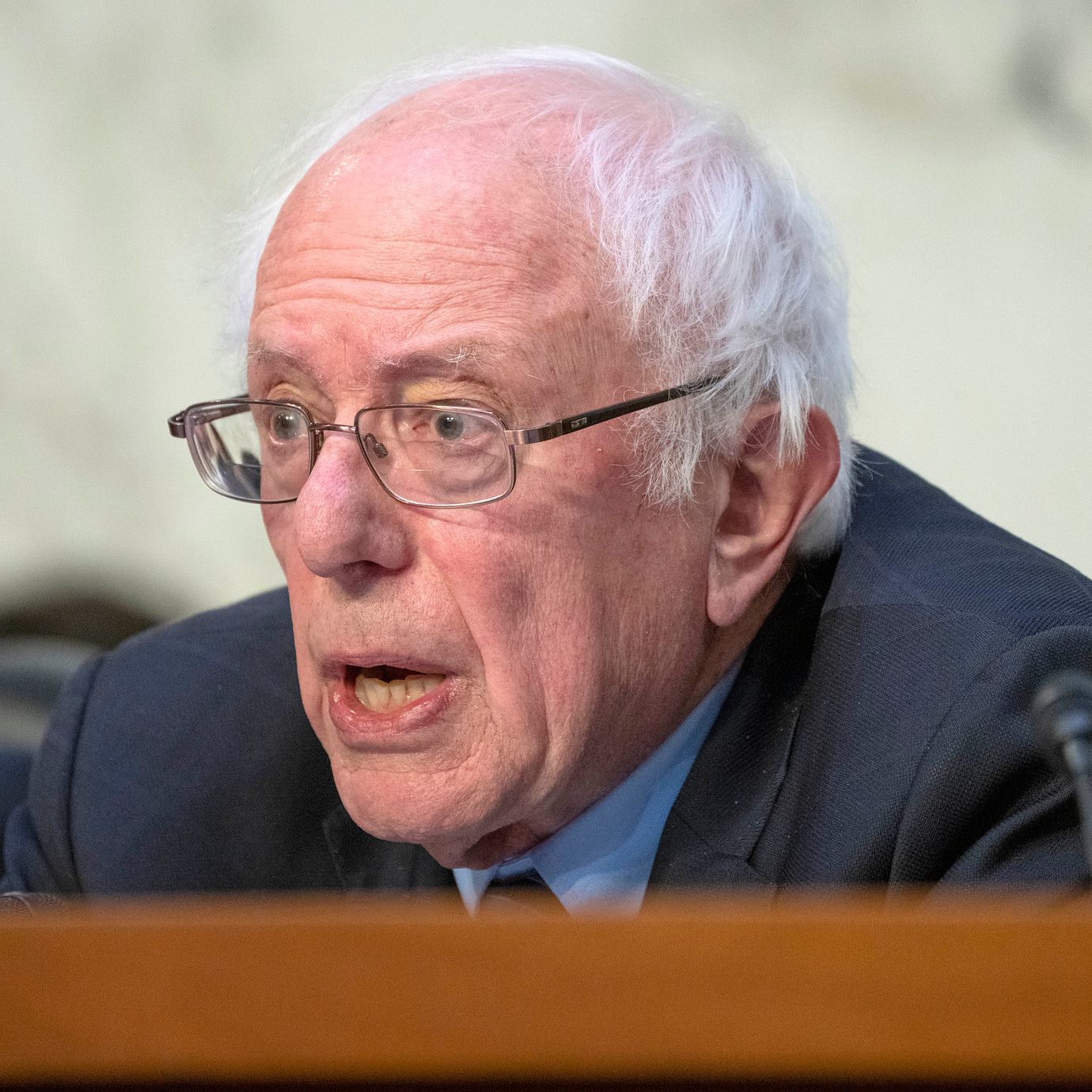
At the same time, Moderna and its multibillionaire CEO are fighting public and political backlash over plans to raise the price of the COVID-19 vaccine from $26 per dose to between $110 and $130—after benefiting from nearly $10 billion in federal support for its development. Increasingly, the pandemic savior is being cast as a villain, with Vermont senator Bernie Sanders lambasting its “unprecedented level of corporate greed” in a March 2023 hearing of the U.S. Senate Committee on Health, Education, Labor, and Pensions.
Moderna is seeking to change the narrative by getting, at least, a second drug to market. It has considerable advantages, including more than a decade of scientific legwork, a handful of promising drug candidates, virtually unrivaled technical infrastructure, and some $18 billion in cash. On the other hand, mRNA is no longer new technology, the competitive environment is fierce, and, as Bancel knows, nothing is guaranteed.
“I’ve always believed, and I told every early investor, that this company will either go bankrupt, or it will be extremely big,” says Bancel on a morning video call from his Cambridge, Massachusetts, headquarters, wearing a quarter-zip sweater and brow-line eyeglasses. “Anything in between made zero scientific sense. Because mRNA is an information molecule, we always believed it would be a platform.”
Moderna has long championed this idea of mRNA as being akin to a tech platform upon which different applications (i.e., vaccines and therapeutics) can be developed and spun out. Conventional drugs deliver small molecules or proteins into a patient’s body; traditional vaccines introduce an antigen—a protein or proteins from a virus—to stimulate an immune system response. But mRNA-based drugs and vaccines do something different, delivering snippets of genetic code into a patient’s body, which their own cellular machinery converts into the desired therapeutic protein or proteins.
“That’s incredible leverage and scalability compared to what pharma does, where every drug has [its own] factory”
The big idea behind Moderna is that once you figure out how to effectively package and deliver mRNA into the body for one type of drug, all you need to develop a similar drug is to change the mRNA code. That’s basically what the company did for COVID-19. What’s more, most of the products in Moderna’s clinical pipeline use essentially the same manufacturing process, says Bancel. “That’s incredible leverage and scalability compared to what pharma does, where every drug has [its own] factory.”
The Marseille, France–born Bancel, who has a master’s degree in chemical engineering and an MBA from Harvard, worked at Eli Lilly before becoming CEO of the French diagnostics company BioMerieux in 2007. After taking the top job at Moderna in 2011, he quickly used the language of “platforms,” “code,” and “scalability” to help the year-old startup raise money like an enterprise software player rather than an experimental biotech company—banking some $2 billion in venture funding by 2016, and raising $621 million in a 2018 initial public offering, the largest at the time for a biotech pharma company. He also helped ink lucrative industry partnerships with such companies as AstraZeneca, Merck, and Vertex for research into everything from cancer to cystic fibrosis treatments. But until COVID-19, none of its ventures had panned out.
Today, the company says that it has 47 drug or vaccine candidates in development, with three dozen in active clinical trials. “We’re well known, obviously, for the scale-up and delivery of our COVID-19 vaccine over the last couple of years,” says Moderna president Stephen Hoge, a doctor and former McKinsey partner who has led R&D since 2013. “But in the background, the most exciting work has been the acceleration and scaling of our pipeline.”
To support that pipeline, Moderna has been expanding. Head count has grown from about 800 pre-pandemic to roughly 4,000 today, and the company plans to add another 2,000 employees by the end of the year. Its original building in Norwood, meanwhile, has morphed into a 500,000-plus-square-foot campus, known as the Moderna Technology Center, or MTC.
If mRNA is the platform, this campus is what powers the company’s uniquely iterative approach to drug development. Here, an LEED Gold–certified building called MTC North serves as Moderna’s internal R&D factory, rapidly producing the raw materials that Moderna scientists need to design and refine new therapies at the company’s labs in Cambridge. Teams at MTC North make small batches of experimental materials to order—generally, pieces of mRNA encased in lipid nanoparticles—in about 30 to 40 days, which is really fast in biotech time. Automation is key to this speed. “Larger, more traditional companies have layered their automation on top of their existing processes,” says Nick Guziewicz, Moderna’s executive director of technological development operations. “Moderna was built with automation in mind from the get-go.”
Nearby, a building known as MTC South houses what investors hope will be Moderna’s next big product: an experimental personalized cancer therapy called mRNA-4157. In Phase 2 trials, the therapy cut the risk of recurrence or death in advanced melanoma (after surgical resection) by 65% when combined with Merck’s drug Keytruda, compared with Keytruda alone. The FDA granted mRNA-4157 Breakthrough Therapy Designation in February, which could speed reviews of future trials. Enrollment in Phase 3 trials should begin later this year.
“Everything that we build is trying to accommodate the current state but also anticipate the future”
The material for those trials will be manufactured at MTC South, with each dose custom-generated for a particular patient. Unlike a conventional vaccine, mRNA-4157 doesn’t protect you from getting cancer but rather trains the immune system to attack an existing tumor. Creating the treatment involves sequencing a patient’s tumor, using machine learning to identify the antigens (proteins produced by genetic mutations) that make their cancer unique, and picking 34 that the algorithm predicts will elicit the strongest immune response. The Moderna team must then build a DNA plasma template that encodes the mRNA sequences that produce these antigens—creating the starting material for the therapy. In all, the manufacturing process takes about six weeks.
Scott Nickerson, SVP of individualized neoantigen therapy manufacturing, is in charge of this effort, applying everything he learned from ramping up the manufacture of Moderna’s COVID-19 vaccine to a very different, totally personalized product. He’s been hiring roughly 100 people a month—in technical services, quality, and manufacturing teams—and developing workflows that enable the simultaneous production of treatments for multiple patients with no mix-ups. “Everything that we build is trying to accommodate the current state but also anticipate the future,” he says.
Bringing an mRNA cancer treatment to market—with a likely price tag in the tens of thousands of dollars (at least)—would change the company’s fortunes. Moderna’s stock soared more than 25% when initial data from the mRNA-4157 trials was released in December. But it has since lost those gains (and then some), as investors and analysts see a long, complex path to approval.
“The data is encouraging,” says Vinod Balachandran, a surgical oncologist at Memorial Sloan Kettering Cancer Center who has been leading the development of an mRNA vaccine for pancreatic cancer from BioNTech and Genentech. But he’d like to see more data on how Moderna’s mRNA-4157 is working—if, and how strongly, immune cells are actually recognizing vaccine targets—which Moderna hasn’t yet released. In addition, FDA regulators might not see an urgent need to fast-track approval for a melanoma therapy, given that multiple treatments are already available. Moderna is also far from alone in developing personalized cancer vaccines.
Other drug candidates advancing through Moderna’s pipeline could be good medicine, if not commercial home runs. The company says it plans to file for FDA approval for its bivalent influenza vaccine, which has had mixed results in Phase 3 trials. It has also launched a Phase 3 study of a vaccine candidate to prevent congenital cytomegalovirus, a leading cause of birth defects in the United States. In addition, Hoge, Moderna’s president, looks forward to getting clinical data later this year on several protein-replacement therapies for rare diseases.
Working across diverse therapeutic areas, though, comes with challenges. Speaking on background, some scientists involved in developing mRNA drugs for other companies argue that the features that make mRNA good for vaccines—short-lived behavior and locally administered—work against it when it comes to treatments. The authors of a 2021 article in the influential journal Nature raised similar concerns, questioning whether mRNA formulations are as effective in therapeutic drugs that target specific organs as they appear to be in vaccines. In other words, Moderna’s mRNA platform may not be as versatile as it seems.
Seven years ago, Bancel boasted that Moderna would have dozens of drugs on the market by now, not just one. Bancel shrugs it off. “That was the direction, the order of magnitude, not the precise number,” he says. With 36 candidates now in clinical trials, he contends, “I think we’re well on track to that.”
Moderna has a reputation for being secretive and even disingenuous. (A trait, to be fair, that’s shared by many in the industry.) A 2016 editorial in Nature slammed the company for not publishing its science, noting that “other prominent biotechs like Theranos and Kadmon have also chosen stealth over disclosure of data.” This January, FDA advisers chided the company for not sharing key data about rates of infection in recipients of its bivalent COVID-19 booster. And, while Moderna’s COVID-19 vaccine—as well as the one from BioNTech and Pfizer—relies on (and pays to use) methods developed by biochemist Katalin Karikó and immunologist Drew Weissman at the University of Pennsylvania, Bancel has fiercely contested patent claims brought by others.
He seems, however, eager to recast his image as an icon of capitalism run amok. In 2022, Bancel earned $19.4 million in base pay and another $398 million in realized gains from exercising stock options. In a March 2023 blog post, he wrote that he donated all his after-tax proceeds from the stock options, $176 million, to philanthropic causes last year. But he’s not apologetic about the 400% increase in the list price of Moderna’s COVID-19 vaccine, arguing that it’s in line with that of similar vaccines. Should the company’s cancer vaccine come to market, it will surely renew the drug-pricing conversation.

Moderna is also trying to shake off a reputation as a revolving door for talent. After at least a dozen highly placed executives left the company between 2012 and 2016, Bancel reportedly turned to the HR departments of Google and Netflix for advice on stemming the flow. “Smart people who wanted to stand out and challenge Stéphane’s ideas didn’t last,” says a former employee of this era. “But he was pretty loyal to those who performed for him. And I’ve never met someone as industrious as him.” A more recent ex-employee says that Moderna is “not as toxic as it used to be.” Post-COVID-19, the company has beefed up HR and implemented well-being perks such as three “Recharge Days” per year and a free subscription to the Calm app.
“I think in the early days I wasn’t clear enough with candidates that this is not a 9-to-5, leave-your-brain-at-the-door type of company,” Bancel concedes. “This is a place where we believe we can change the lives of millions of people—and that every day that we are late because we didn’t do our best work, people will suffer. Now I tell people, this is who we are.”
What Moderna will be remembered for, however, remains to be seen. Producing a lifesaving vaccine to help stanch a global pandemic might be enough for a regular company. But there’s no indication that Bancel—and his company’s investors—will be satisfied with that.
© 2023 Mansueto Ventures, LLC, as first published in Fast Company. Distributed by Tribune Content Agency.