Notan för teleskopet som kan ge ledtrådar om livets begynnelse: 103 miljarder
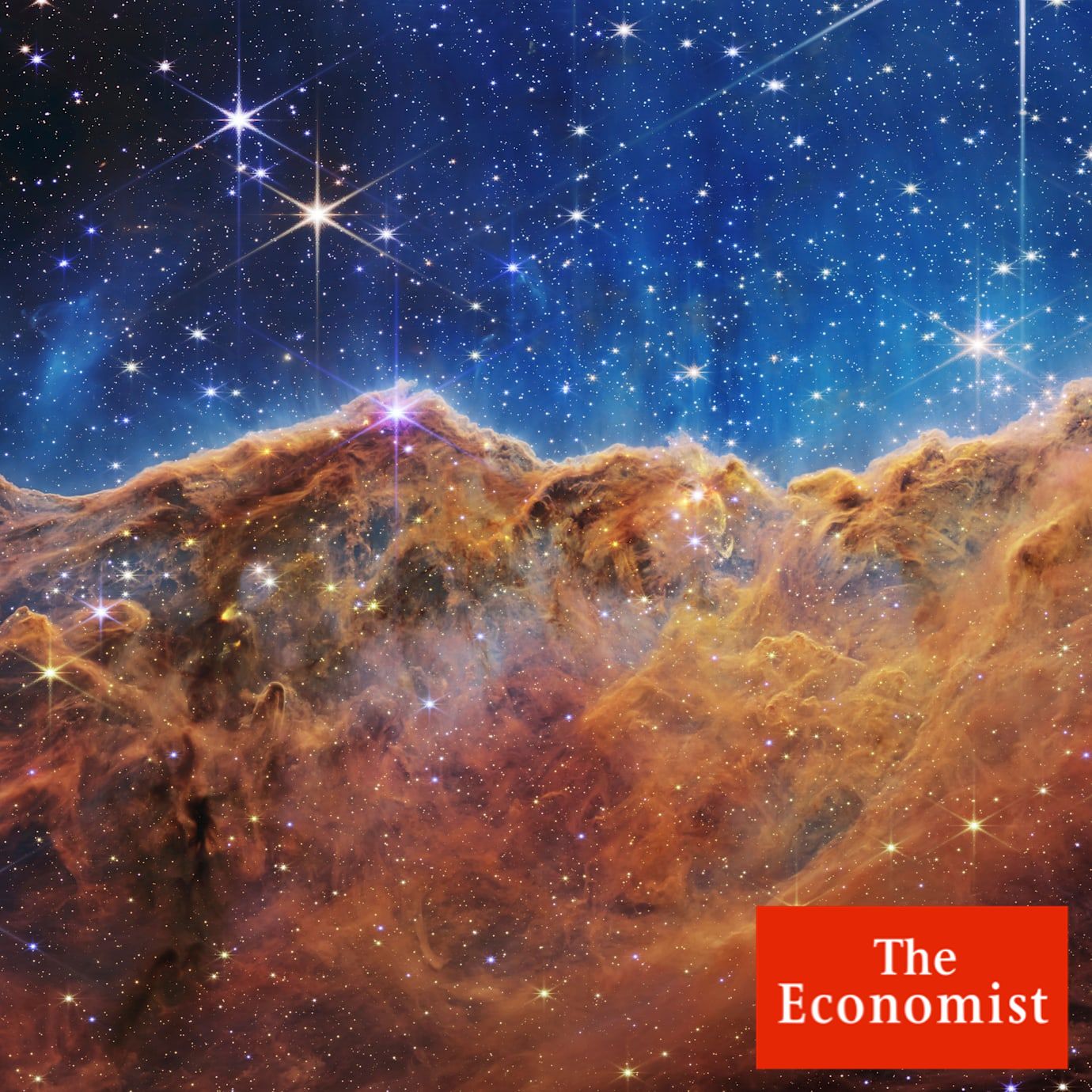
Förväntningarna på James Webb-teleskopet är skyhöga. Det enorma rymdteleskopet, som sköts upp på juldagen 2021, väntas ge ledtrådar om både livets och universums begynnelse.
Hittills har introduktionen av James Webb – från uppskjutning, driftsättning och prestanda – gått enligt plan. Men den svällande budgeten gjorde att projektet vara nära att läggas ned, skriver The Economist. Notan för jättesatsningen? Motsvarande 103 miljarder kronor.
 The Economist
The James Webb Space Telescope opens for business
Astronomy will never be the same again.
Well, it worked. The image of the Carina Nebula above, released on Tuesday, is just one indication that the James Webb Space Telescope (JWST) is doing what it was sent up to do—taking spectacular images of the cosmos. Comparing this view with an image of the same nebula provided by the Hubble Space Telescope in 2007 reveals just how much more powerful JWST will prove to be.
But the Carina Nebula is very much in our cosmic neighbourhood, about 8,000 light years away. Perhaps the most scientifically intriguing results will come when JWST takes its long view.
“The last thing we want to do is save a billion dollars and fail”
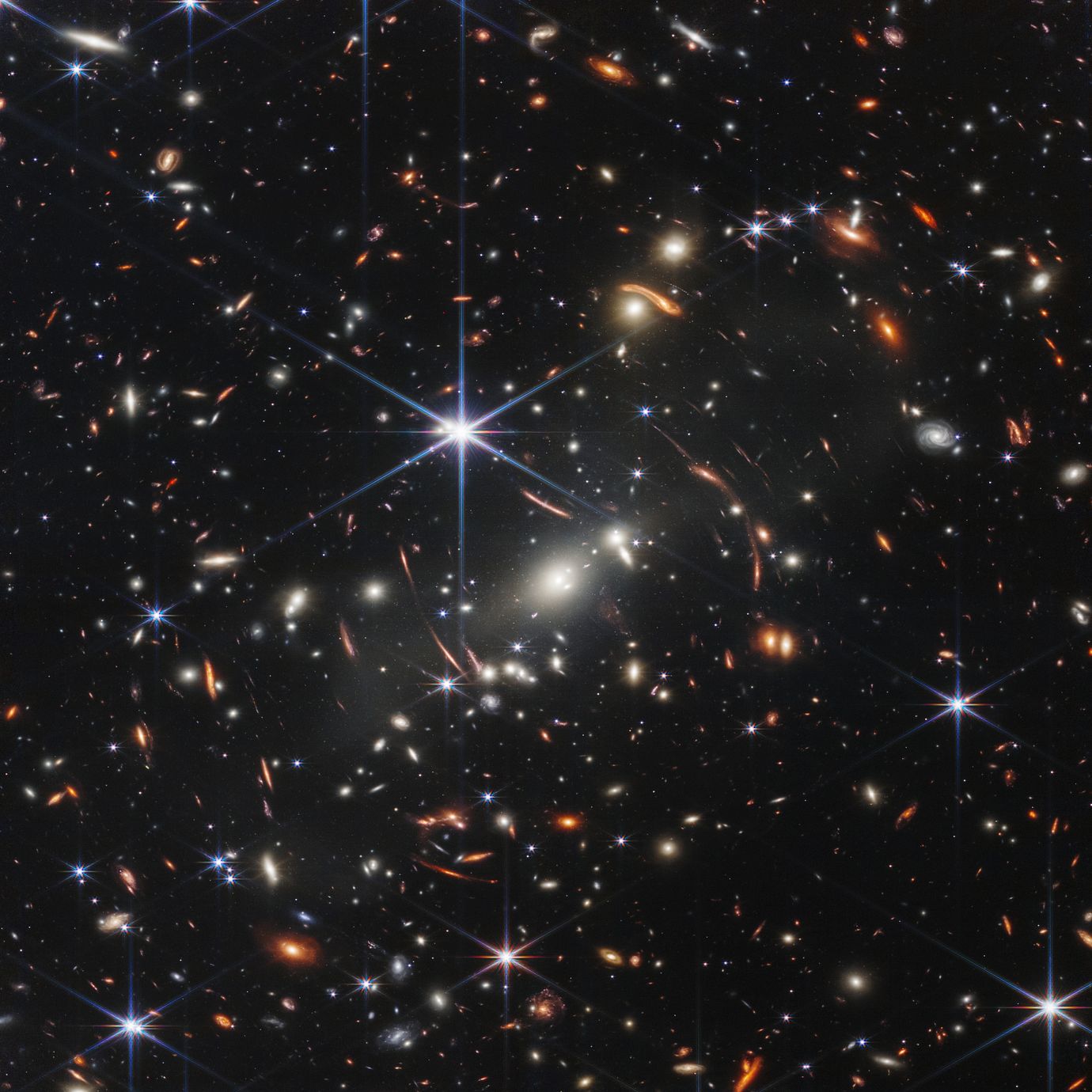
The “deep-field” picture above, released on Monday, shows SMACS 0723, a cluster of comparatively nearby galaxies whose gravity acts to bend and concentrate light from far, far more distant ones behind them. For the moment (for JWST has only just got going) the faintest of those “gravitationally lensed” galaxies are the most distant objects Earthlings have ever seen in infrared light.
JWST was launched, after 11 years of delays and at a cost of $9.7bn, on Christmas Day 2021. Its ballooning budget, even when split between NASA and the space agencies of Europe and Canada, almost got it cancelled. But it was too big to be sunk. Before lift-off, Thomas Zurbuchen, NASA’s head of science, told The Economist that “the last thing we want to do is save a billion dollars and fail”.
Seven months into the mission, though, every aspect of launch, deployment and performance seems to have gone according to plan, if not better. As a result, astronomers now have the most powerful tool yet given them to scan the cosmos in infrared frequencies of light. That will let them study many things they have struggled to examine in the past—in particular, the formation of stars and planets, from the universe’s youth, more than 13bn years ago, to the present day.
After its launch, the JWST manoeuvred its way to Lagrange 2 (L2), a point in space 1.5m km from Earth. At this spot the gravitational fields of Earth and sun conspire to create a gravity well. The telescope does not sit at L2. Rather, it orbits it. L2 was chosen partly because of its ability to anchor a spacecraft in this way and partly because the alignment of Earth and sun, as seen from it, means illumination from both can be blocked by a single shield. Since infrared-detecting instruments have to be kept cold, protecting them from extraneous sources of heat and light is important.

On the journey to L2 the telescope’s operators unfolded its solar panels, an antenna to facilitate communication with Earth, the shield and the two mirrors that shape the images. One is a parabolic primary, 6.8 metres across, assembled out of hexagonal cells made from gold-plated beryllium. This gathers and focuses incoming electromagnetic radiation. The second is a smaller, hyperbolic secondary held in front of the primary by three struts. Using a design invented by Laurent Cassegrain, a French astronomer of the 17th century, this secondary intercepts the narrowing beam from the primary and reflects it back through a hole in the primary’s centre to four instruments.
These are MIRI (for detecting long infrared wavelengths), NIRCam and NIRSpec (which take images of and analyse shortwave infrared) and FGS/NIRISS (which studies bright targets such as nearby stars orbited by exoplanets). The wavelengths examined by MIRI correspond to objects such as exoplanets that have no internal source of heat, and hotter but more distant bodies whose light has been stretched from visibility into the infrared by the expansion of the universe. Since “farther away” also means “longer ago” in cosmic terms, this will enable it to spot signs of the cosmic dawn, the moment when the universe’s first stars ignited. And, on top of these two benefits, long-wavelength infrared of the sort MIRI detects penetrates dust clouds more successfully than visible light can, thus tearing away the veil from intriguing pockets of the sky where dust is coalescing into stars and planets.
The initial goal was ten years, but NASA now reckons it can keep the telescope in place for twenty
The launch’s accuracy meant midcourse corrections needed to put the telescope in orbit used less fuel than budgeted. That leaves more for the small adjustments needed to keep the instrument on station. Since station-keeping is the main constraint on how long the mission can last, that matters. The initial goal was ten years, but NASA now reckons it can keep the telescope in place for 20. On top of this, all four instruments appear more sensitive than modelled, and thus capable of collecting 10-20% more photons than expected.
The release of this week’s images marks the conclusion of the telescope’s commissioning, a lengthy process intended to make sure it is fit for purpose. Management will now be transferred to the Space Telescope Science Institute in Baltimore, which will have the thankless task of allocating time on it to eager astronomers. The good news is that the new estimates of its working life mean many more requests will eventually be fulfilled. The bad is that there may be a long wait.
© 2022 The Economist Newspaper Limited. All rights reserved.