Nytt sätt att se på tv mer populärt än HBO
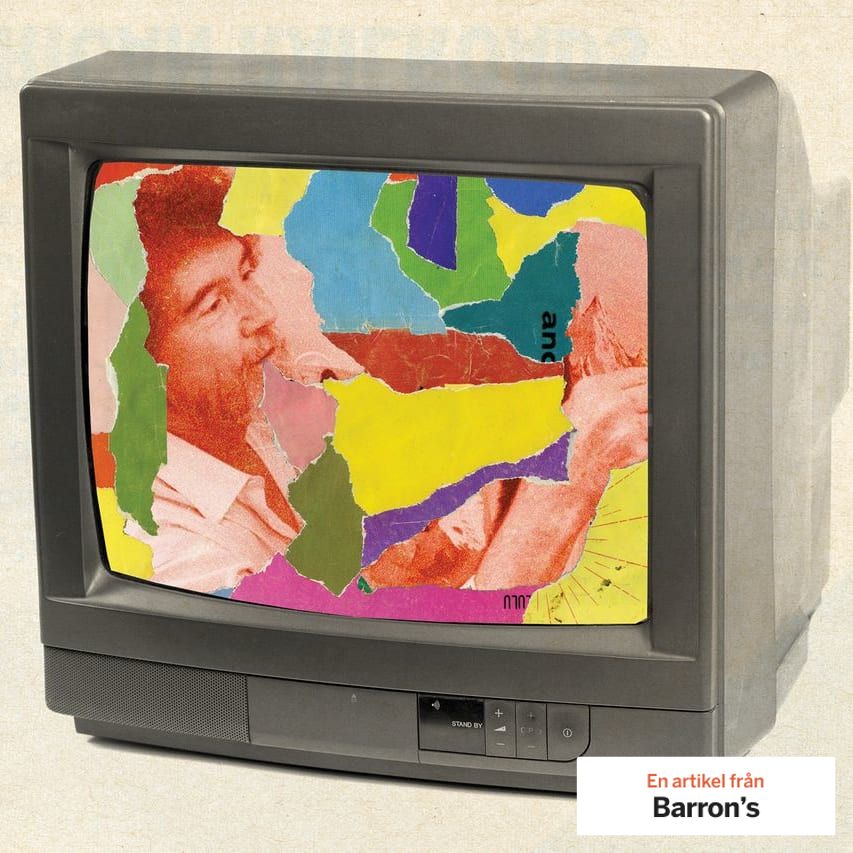
Reklamdrivna FAST-kanaler, som erbjuder gratis och varierade program, blir allt mer populära hos tittarna. Dessa linjära kanaler liknar traditionell sändningstelevision och är tillgängliga via mobiler, tv-apparater och bärbara datorer.
En framgångssaga är nya versioner av tv-legendaren Bob Ross program, som lockar över 15 miljoner tittare per månad på 23 olika strömningstjänster.
FAST-publiken växer snabbt och många medieföretag investerar nu i sektorn. Samtidigt finns det en oro för hur utvecklingen kan påverka tv-branschen och reklammarknaden på sikt, skriver Barron’s.
 Barron's
There’s a New Way to Watch TV. It’s Already More Popular Than HBO.
FAST channels have brought back program guides—and advertising. But the shows are free and varied. Media execs are taking note.
Forget about Succession’s Logan Roy. The new powerhouse in the TV business is Bob Ross.
Yes, Bob Ross, the host of The Joy of Painting, which ran for more than 400 calming, low-budget episodes on PBS before finishing its run in 1994. All of the shows are comfortingly familiar. There’s Ross, with his trademark perm, in a crisp white shirt, standing by an easel, holding a palette. And he’s talking right at the camera, in soothing tones, while painting landscapes dotted with “happy little trees.” It’s Zen TV.
Ross died in 1995, but the magic of a growing streaming TV phenomena called FAST channels has brought Ross back to TV at no cost—24 hours a day, seven days a week. There are 23 streaming services that offer versions of the Bob Ross channel via smartphones, TVs, or laptops, together generating 15 million viewers a month, according to American Public Television, which handles syndication of the show. That’s more than quadruple the audience for the finale of Succession, the most-watched episode ever in the series about a struggling media empire.

That’s a massive audience, especially amid a reeling business for TV. Writers are currently on strike. The market for subscription streaming services is saturated, forcing Netflix (ticker: NFLX) to offer an advertising-supported subscription tier, while cracking down on password sharing. Through it all, customers continue to cut the cord on their cable and satellite subscriptions. This year, the proportion of U.S. households with traditional pay TV will drop below 50%.
As carriage fees drop for broadcast and cable channels, pay-TV providers are scrambling for ways to salvage their businesses.
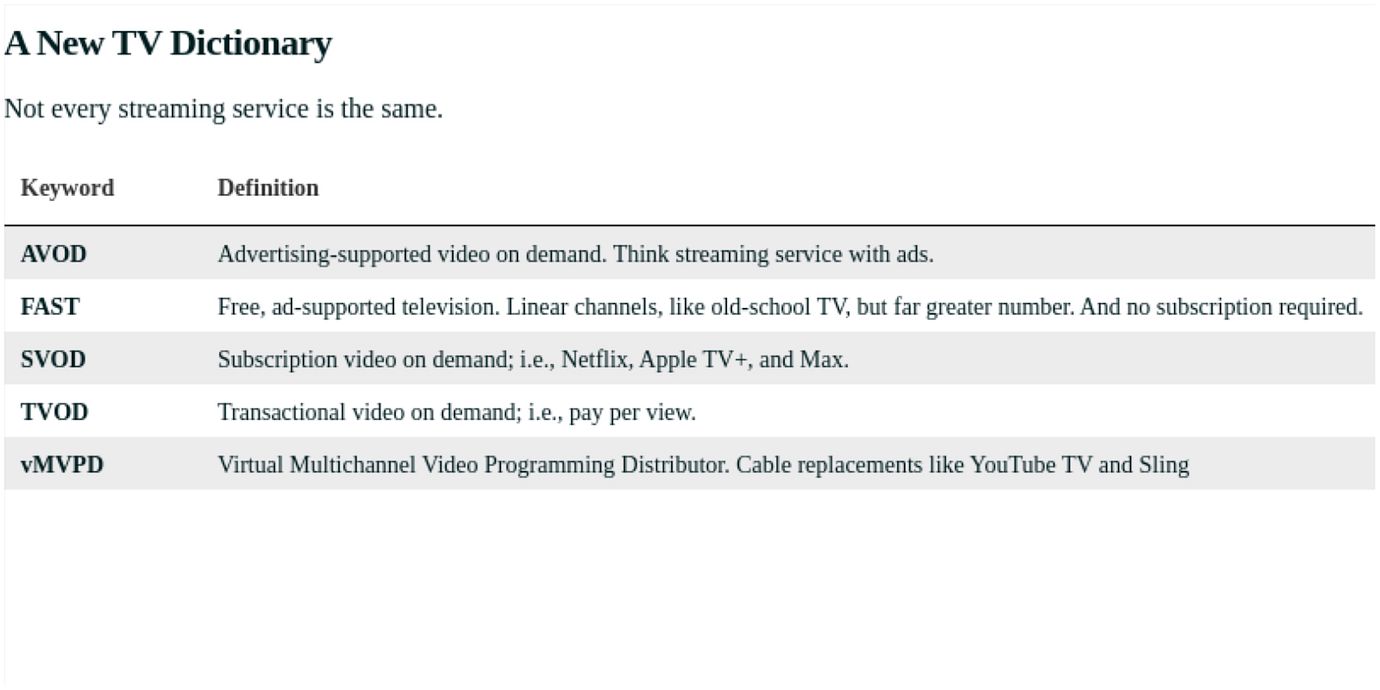
Enter FAST, short for “free advertising-supported television.” These are linear channels, like broadcast TV. FAST viewers surf through cable-style electronic programming guides. There were 3,720 FAST channels as of October 2022, according to Variety’s research arm, up almost 1,000 channels from a year earlier. They’re now collectively raking in billions of dollars a year.
You can watch single-title shows like The Love Boat or I Love Lucy, or personality-driven channels with Ross and Julia Child. There are themed channels focused on Westerns, mysteries, and romance. There are live news channels, sports channels (think chess, bass fishing, pickleball, and cornhole), kids channels, and Spanish channels, including, naturally, Bob Ross en Espanol. You may not be watching FAST channels just yet, but plenty of your neighbors are.
While the prospect of navigating thousands of channels across dozens of platforms sounds nightmarish, Macien Jenckes, who runs Comcast’s (CMCSA) FAST business, known as Xumo, isn’t worried. “Good, old-fashioned channel surfing is remarkably powerful,” he says. User interfaces “without a grid guide don’t work. People like to see what’s available. It’s the power of linear viewership. We once thought everything would be viewed on demand. But we found that sometimes people just want to lean back and be captured by something.”
Nearly every major media company is investing in FAST, and while it isn’t yet moving the needle for their stocks, the segment is quickly becoming material.
FAST leader Tubi, which was acquired by Fox (FOXA) for $440 million in 2020, represented 1.3% of overall U.S. TV viewing hours in May, according to Nielsen. That’s bigger than the 1.2% share for Max, the new name for the old HBO Max, where Succession aired. Fox shares common ownership with Barron’s parent News Corp.
The Roku Channel, launched by Roku (ROKU) in 2017, had 1.1% of all viewing hours for in May, about even with Comcast’s Peacock streaming service.
“Get better content, with well-curated channels, attract advertising dollars, then reinvest into better content”
Pluto TV, acquired for $340 million in 2019 by Paramount Global (PARA), then called Viacom, had 0.9% of all viewing hours in May, aided by its access to the company’s library of Paramount, Showtime, and CBS content. Combined, the big three FAST services had 3.3% of all U.S. viewing hours in May, ahead of every subscription service other than YouTube, Netflix, and Hulu.
Pluto co-founder Tom Ryan, now heading all of Paramount’s streaming businesses, says that when Pluto launched on April Fools’ Day in 2014, almost no one thought they’d make it.
“People thought we were going against the conventional wisdom with linear, ad-supported TV,” he says. “Everyone thought advertising was doomed in the streaming world. It was hard to raise money, or to get partners, or to convince people of our vision.” He says the company raised an initial round of funding in 2014, started to get traction in 2016, then sold to Viacom in 2019.
“A flywheel emerged,” Ryan says. “Get better content, with well-curated channels, attract advertising dollars, then reinvest into better content.”
For the most part, FAST’s growth is still happening under the radar. One former executive at a leading streaming platform says that the content business is generally run by Succession watchers, not Bob Ross fans. Their focus has been on subscription services, but that’s now changing.

In 2020, Comcast paid a reported $100 million-plus for Xumo, which has a FAST channel platform called Xumo Play. Amazon (AMZN), Sling TV, and Redbox parent Chicken Soup for The Soul Entertainment (CSSE) have FAST platforms, as well.
The major TV manufacturers have their own FAST channel collections, including Samsung Electronics (005930.Korea), Vizio Holding (VZIO), and LG Electronics (066570.Korea). Their customers can get free and unlimited content just by plugging in their new television and connecting to Wi-Fi. That ease of use and quick onboarding could earn the TV makers considerable viewing market share in the years to come.
Salek Brodsky, senior vice president for Samsung TV Plus, says the platform has more than 250 channels in the U.S., with over 1,900 channels across 24 countries. Last year, he says, Samsung’s FAST platform streamed three billion hours—up 100% from 2021—with similar growth expected this year. The content model has the potential to significantly boost profits for the traditionally low-margin TV hardware business. Samsung, Brodsky says, “strongly believes in the significant economic prospect that FAST presents to creators, advertisers, and the service operators themselves.”
The business model for FAST is straightforward: Content providers split ad revenue with the platforms, generally 50/50
The FAST audience is growing at a time when other formats are losing viewers. Overall TV viewing fell 4.4% in May from the prior month, according to Nielsen, driven by a 5.5% drop in broadcasting views, and a 5.4% slide in cable.
The business model for FAST is straightforward: Content providers split ad revenue with the platforms, generally 50/50. Financial data are scant, but there are tantalizing hints of early success. Paramount reported that 2021 revenue for Pluto was over $1 billion. Tubi reports that ad revenue jumped 31% in the March quarter compared with the prior year, although it doesn’t report a specific total. On the content-provider side, E.W. Scripps (SSP), which owns local TV stations and basic-cable networks such as ION and Court TV, expects to generate more than $100 million this year from its growing collection of FAST channels.
Most of the FAST platforms have 200 to 400 channels each, with considerable overlap in content—thus the ubiquity of Bob Ross. The platforms bring varying strengths to the table. Not all will survive, and it is conceivable that the power balance could shift. Pluto says it draws 30% to 40% of its content from other parts of Paramount, including shows from CBS and Showtime. Tubi, which has exclusive access to some Fox content, is emphasizing advertising-supported video on demand, or AVOD, over FAST. But it offers both options, building on a library of more than 50,000 movies and TV shows.
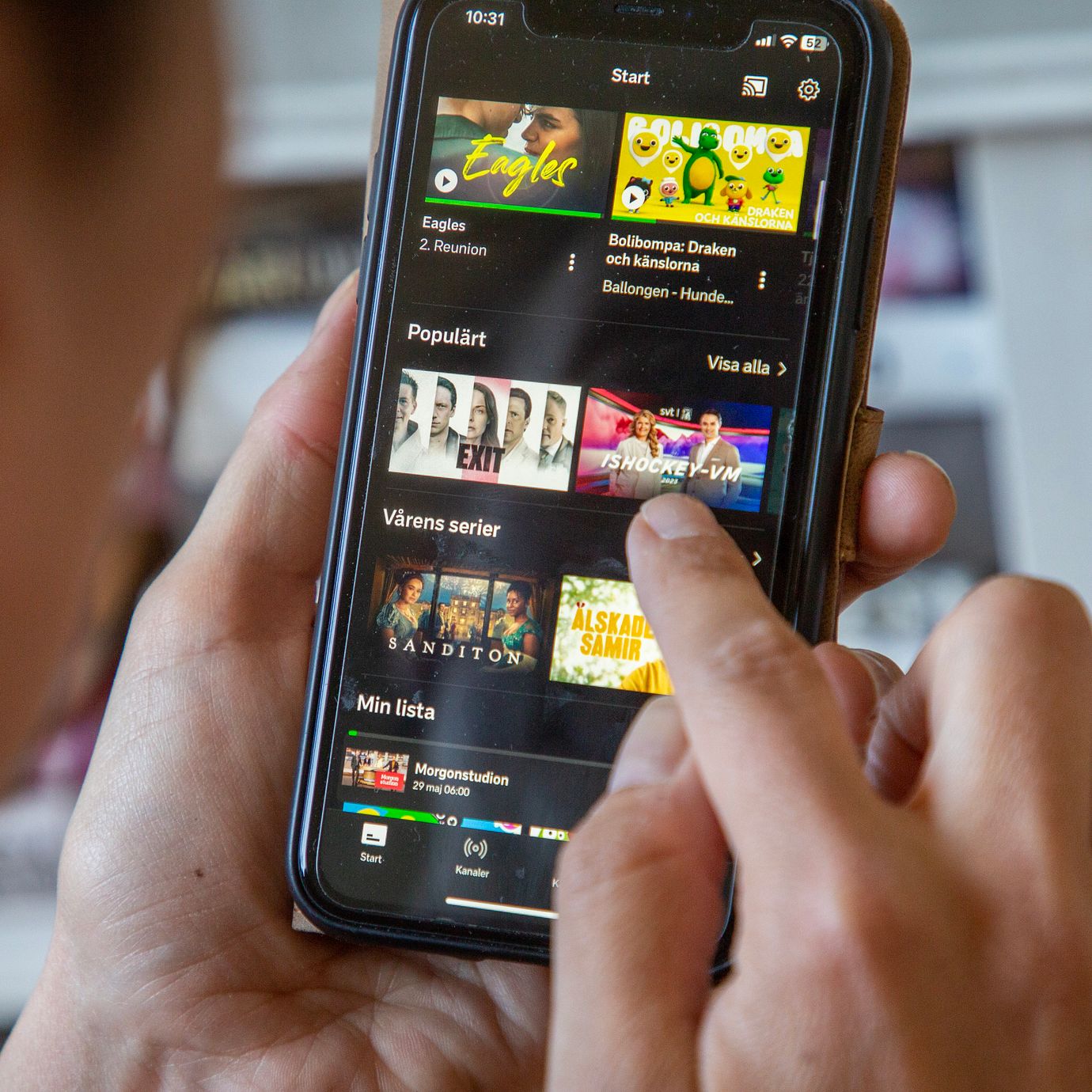
In its first decade or so, streaming was largely viewed as a subscription play. But advertisers are being forced to join the party as more viewers transition away from traditional TV.
Research firm TVRev estimates that FAST, combined with AVOD, could take in $43 billion of total domestic TV ad spending in 2027, topping the total for broadcast and cable ad markets combined.
“Because nothing in TV happens quickly and because agencies are still somewhat skeptical of streaming, the real dollar shift will happen in 2024 and 2025,” TVRev said in a recent report. “That’s when streaming viewership will start to surpass combined broadcast and cable viewership and the shift will start to seem inevitable.”
So far, about 80% of FAST viewing is in the U.S., says KA Srinivasan, chief revenue officer at Amagi, a venture-backed Bangalore company that helps content owners build and maintain their channels. But FAST is emerging in more markets—FAST viewing in India is up five times since the end of 2022, he says.
AppLovin (APP), a company which helps app developers market and distribute their wares, spent $430 million last year to buy Wurl, a company that helps content owners create FAST channels.
”We are keeping an eye on that segment, for sure”
Wurl CEO Ron Gutman sees a growing opportunity for ad sellers and buyers. He contends that FAST channels are generating on average about 25 cents per hour of individual viewer time. For people who watch an hour of FAST a day, that would be $7.50 a month, more than the $6.99 a month that Apple (AAPL) charges for its Apple TV+ streaming platform.
The emergence of FAST channels is driving big changes in how some content companies operate, even ones that have already had digital success. JP Evangelista, a senior vice president at the music-video company Vevo, says his business was long driven by viewers on YouTube and conventional cable. In 2018, Vevo’s ad revenue from FAST channels and connected TVs was just 4% of its total revenue; now, he says, it’s close to 50%, accounting for a third of its U.S. viewing, spread over 15 FAST channels on multiple platforms.
There’s a wild card in the FAST market: whether streaming giant Netflix enters the field. The company still spends some $17 billion a year on new content. It has a growing store of original content that could fill up a dozen FAST channels. Netflix has said very little about FAST, but the streamer hasn’t ruled it out.
In response to a question on the company’s December-quarter earnings call, Netflix Co-CEO Ted Sarandos said, “We’re open to all these different models that are out there right now….We are keeping an eye on that segment, for sure.”
Bob Ross lovers, TV viewers, and investors should do the same.