Post covid shoppar vi som vanligt igen – utebliven boost för e-handeln

Det talades om att pandemin skulle ta oss fem år in i framtiden. Nedstängningar och social distansering skulle förändra mänskligt beteende i grunden och e-handeln tillhörde de stora vinnarna i det vadet. Men tji fick de, skriver Bloomberg.
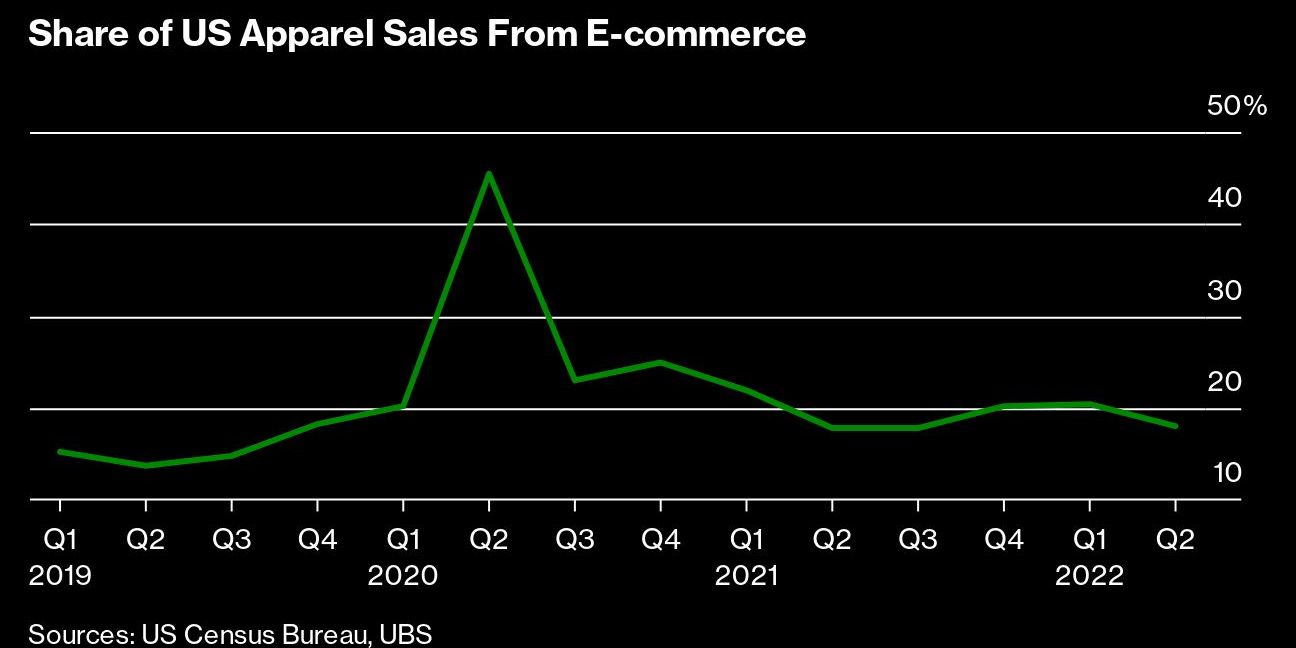
De fem senaste kvartalen har e-handeln släpat efter den traditionella handeln i tillväxt. När det kommer till kläder är förhållandet mellan online-köp och butiksköp tillbaka där det var före pandemin.
– Folk underskattade kraften i gamla vanor, säger psykologiprofessor Wendy Wood.
 Bloomberg
The Great Post-Covid Online Shopping Bet Was a Costly Delusion
Did the pandemic forever change how we shop?
The answer seemed obvious in the first half of 2020, when retailers closed their doors to slow the spread of Covid-19, pushing millions to the internet. It looked like a fundamental shift in e-commerce’s trajectory. The thinking was simple: After experiencing the ease of online shopping, why would consumers return to stores?
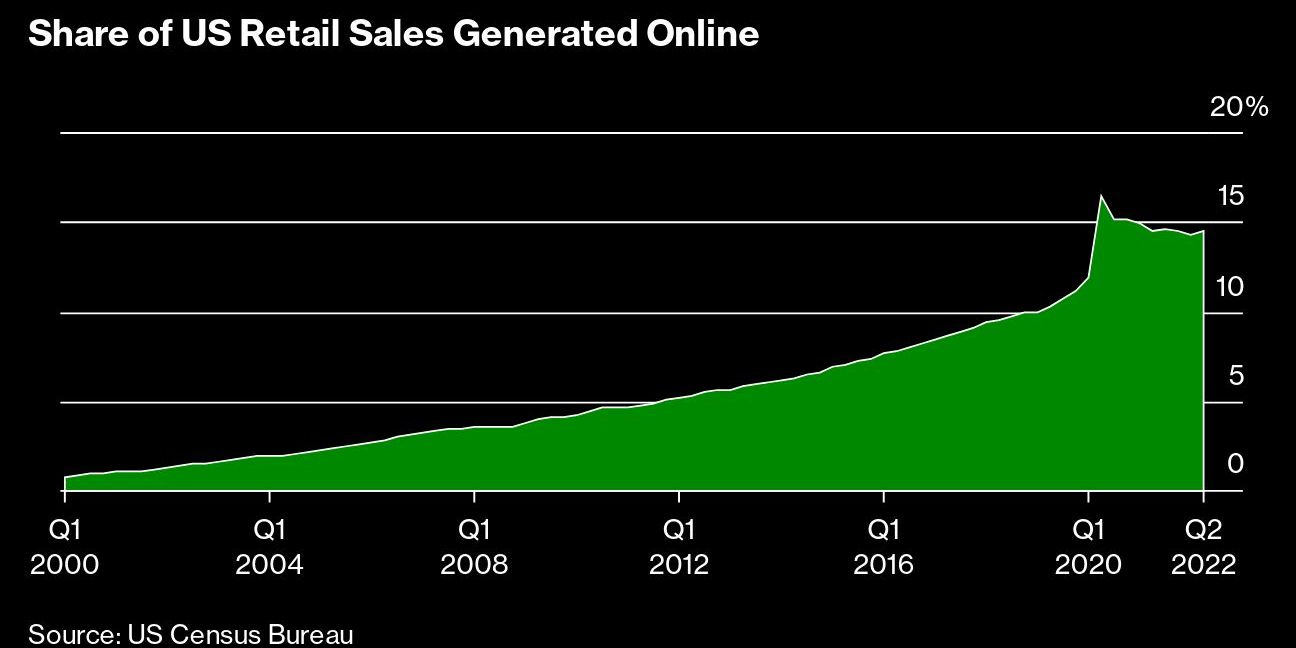
Turns out they have. In the US, the e-commerce wave has receded. In some categories, such as clothing, the percentage of sales made online is back to where it was before the pandemic, according to an analysis by UBS. For the past five quarters, online growth has trailed the sales gains of the overall retail industry, according to US Census Bureau data.
The S&P 500 has declined 25% in the first nine months of this year, but stocks tied closely to e-commerce have been hit even harder. Amazon.com Inc.’s shares have sunk 32%, knocking half a trillion dollars off its market value. Shopify Inc.’s stock has plunged 80%, for a $143 billion loss in value. And shares of European online retailers Asos Plc and Boohoo Group Plc are down more than 70%.
“Everyone’s thesis was that we moved five years in the future,” says Ed Yruma, a retail analyst for Piper Sandler. “What’s been really interesting is, that’s been wrong.”
It’s tempting to blame the economy for the e-commerce slowdown. Inflation is running at the highest level in four decades, leading the Federal Reserve to sharply raise interest rates and many economists to predict the US will slip into recession. But the latest data show consumer spending overall hasn’t collapsed: Excluding gasoline, retail sales rose a healthy 0.8% in August.

The data reveal that consumers are allocating more discretionary dollars to services such as entertainment and travel, at least partly reversing the merchandise-heavy tilt of the past two years. The shift back to pre-pandemic spending preferences indicates that some retail giants failed to read their markets correctly, blithely assuming that Covid-lockdown patterns would continue.
Inflation may also be pushing some consumers to become thriftier, and that could be putting e-commerce at a short-term disadvantage. Its biggest draw has traditionally been convenience, not the cheapest prices—especially when shipping costs are taken into account.
Before Covid-19 struck, the share of sales made online in the US had been adding about a percentage point annually since the mid-2010s. In the second quarter of 2020, during the height of the pandemic, it increased to 16.4%, from 11.9%—an unprecedented jump cramming several years of gains into three months.
Online growth surged for several more quarters, convincing much of the e-commerce industry that making purchases over the internet had hit an accelerated phase of growth.
That frothiness fizzled—and then some—over the past year.

In the aftermath, Amazon is scaling back its sprawling delivery operation. Other companies, such as Shopify and Wayfair Inc., have laid off workers and issued public mea culpas.
“It’s now clear that bet didn’t pay off,” Shopify Chief Executive Officer Tobi Lutke wrote in a letter to employees in July as the retail software provider announced 1,000 job cuts. “What we see now is the mix reverting to roughly where pre-Covid data would have suggested it should be at this point. Still growing steadily, but it wasn’t a meaningful five-year leap ahead. Ultimately, placing this bet was my call to make, and I got this wrong.”
How did so many get it wrong? Shopify, Wayfair, and Amazon declined to comment on that. A Shopify spokeswoman says that the company provides services to physical stores, too.
The industry misread how much of the boom in online shopping was forced—not by choice—says William Brown, general manager of e-commerce for Grupo Unicomer, a retailer and lender in the US and other countries. Federal stimulus dollars, which boosted discretionary spending, also helped create the false signal.
“A number of companies pretended that would become the new normal,” Brown says. “That’s just not realistic.”
In some categories, online shopping is holding its gains. The penetration rate in US groceries hit 2.8% in the second quarter, almost tripling its share during the same period in 2019, according to UBS.
And in parts of the world where e-commerce is relatively new, such as Latin America, online shopping gains are proving stickier. A lack of access to credit had slowed adoption in these regions, but that’s changing with new financing options. “The drop-off you’re seeing in the west is not going to take place at the same magnitude in emerging markets,” says Nirgunan Tiruchelvam, an analyst at Aletheia Capital.
For the most part, however, online sales growth has reverted back to pre-Covid levels, or worse. In the UK, retailer Next Plc, which generates more than 60% of sales from e-commerce, said in August that “growth online has ground to a halt,” blaming a reversal of pandemic trends.
“People underestimated the impact of old habits,” says Wendy Wood, a professor of psychology and business at the University of Southern California.
Habits are associations that people learn through experiences, says Wood, who wrote 2019’s Good Habits, Bad Habits: The Science of Making Positive Changes That Stick. They eventually get so integrated with a specific context of life, such as commuting to the office, that they become nearly automatic, she says.
“I like to hold things in my hands, make sure things fit”
When social distancing eased and the masses returned to their routines, the habits tied to them came roaring back, according to Wood. That’s part of the reason why millions of Americans returned to malls. The bad news for companies relying on e-commerce growth is that as more people go back to their old ways, especially working outside the home, those old habits will strengthen, she says. Plus, for many people, shopping in a store was fun. Going to the mall offers more rewards than just making a purchase. The experience can light up the senses and offer the social interactions humans crave, says Wood. “Old habits worked for us,” she says. “And we fall back into them very easily.”
This rings true for Katerina Cohee, a mother of two from Fallbrook, California. She returned to stores as soon as she could during the pandemic to hunt for deals. “I like to hold things in my hands, make sure things fit,” she says. “I only do Amazon once in a blue moon.”
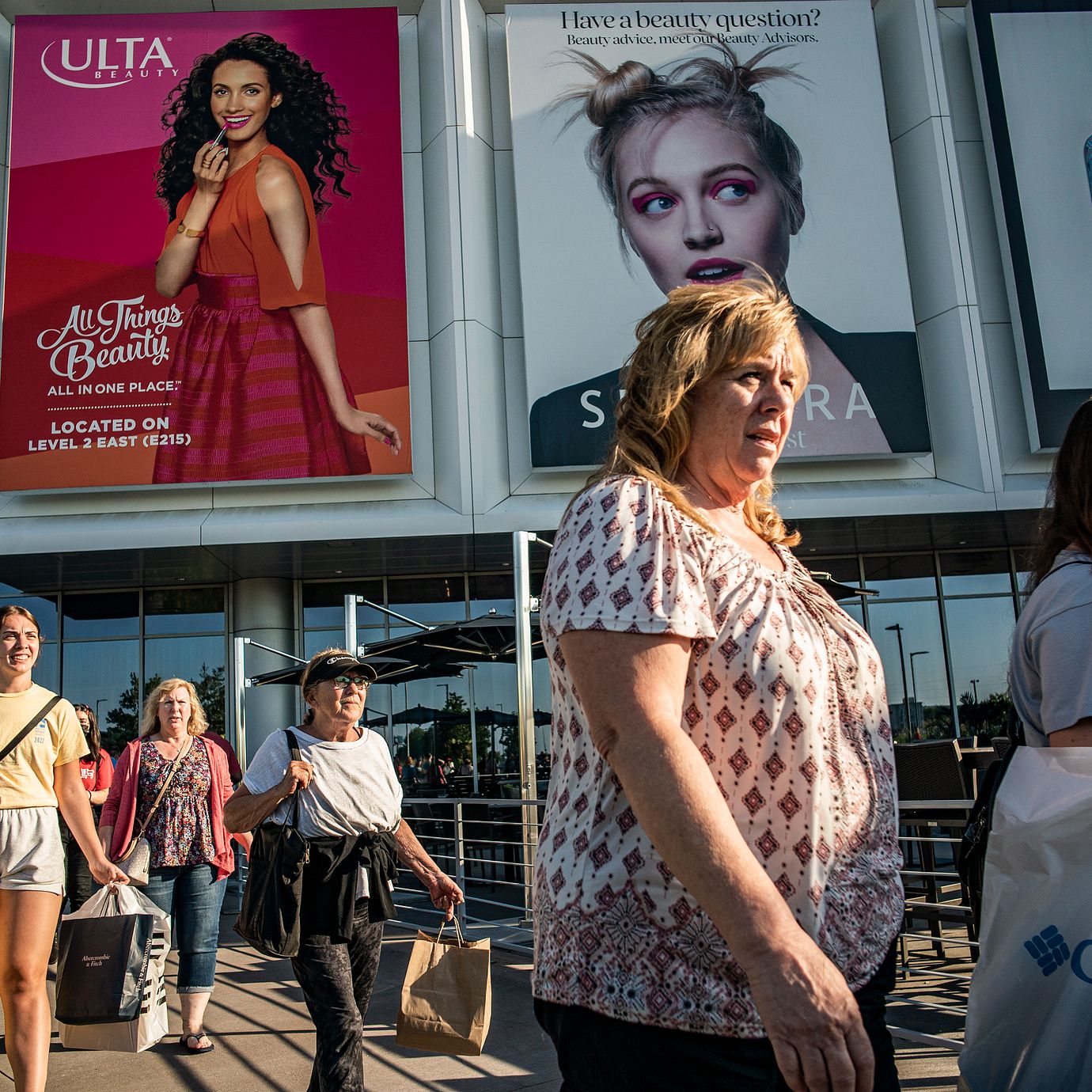
A study of 10 of the biggest US retail chains shows that store visits are up a combined 2.7% this year through August, compared with the same period in 2019, according to location analytics firm Placer.ai.
There were signs before the pandemic that e-commerce predictions were too rosy. Even then, digital brands had realized they needed to open physical locations to keep boosting sales, while often improving profitability by using stores as a cheaper way to lure shoppers than through paying rising costs for digital advertising.
Warby Parker Inc.—one of the few digital brands that has gone public—says the percentage of sales coming from e-commerce has fallen back to pre-Covid levels. In turn, the eyewear company plans to boost its store fleet by 25% to 200 locations, by yearend.
“We know the pandemic changed us in fundamental ways, but how it changed us isn’t totally apparent yet,” says Yruma, the retail analyst. “It seems the consumer mindset right now is: ‘I want to get out of my house.’”
—With Carolina Millan and Matt Day
For more articles like this please visit us at bloomberg.com