Sheins IPO-försök i USA har bromsats av Kina-spänningar
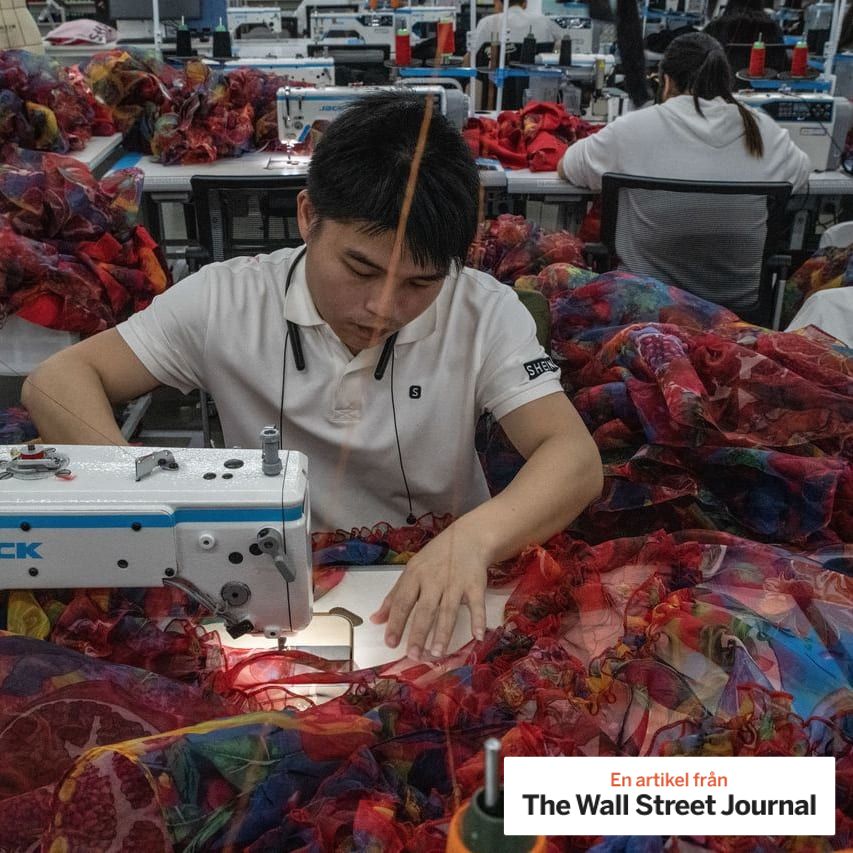
Sheins ambitiösa planer på att noteras på New York-börsen har bromsats av ökande spänningar mellan USA och Kina, skriver Wall Street Journal.
Amerikanska myndigheter kräver mer insyn i klädjättens leveranskedja och kopplingar till den kinesiska staten. Kina kräver i sin tur att Shein följer landets politiska riktlinjer. Problemet förvärras av diskussioner kring företagets användning av bomull från Xinjiang-regionen, där tvångsarbete förekommer.
Som svar på utmaningarna har Shein börjat överväga en börsnotering i London.
 The Wall Street Journal
Shein’s Quest to Win Over America Gets Stuck in U.S.-China Tensions
The fast-fashion giant aimed to bridge the divide between Beijing and Washington, but hopes for a splashy U.S. public offering have faded.
Fast-fashion giant Shein seemed to be on a roll. The purveyor of $3 T-shirts, $10 jeans and other ultra-low-priced clothing had become one of the world’s biggest fashion companies, with hundreds of millions of customers. In November, it filed to go public in New York, raising expectations it would be one of the biggest IPOs in years.
Its U.S.-based executive chairman, Donald Tang, shuttled across the country meeting politicians, optimistic he could sell them on his vision of Shein as a model of compliance and transparency.
Now the company is awkwardly stuck in the middle of U.S.-China tensions, and its hopes for a New York initial public offering have faded.
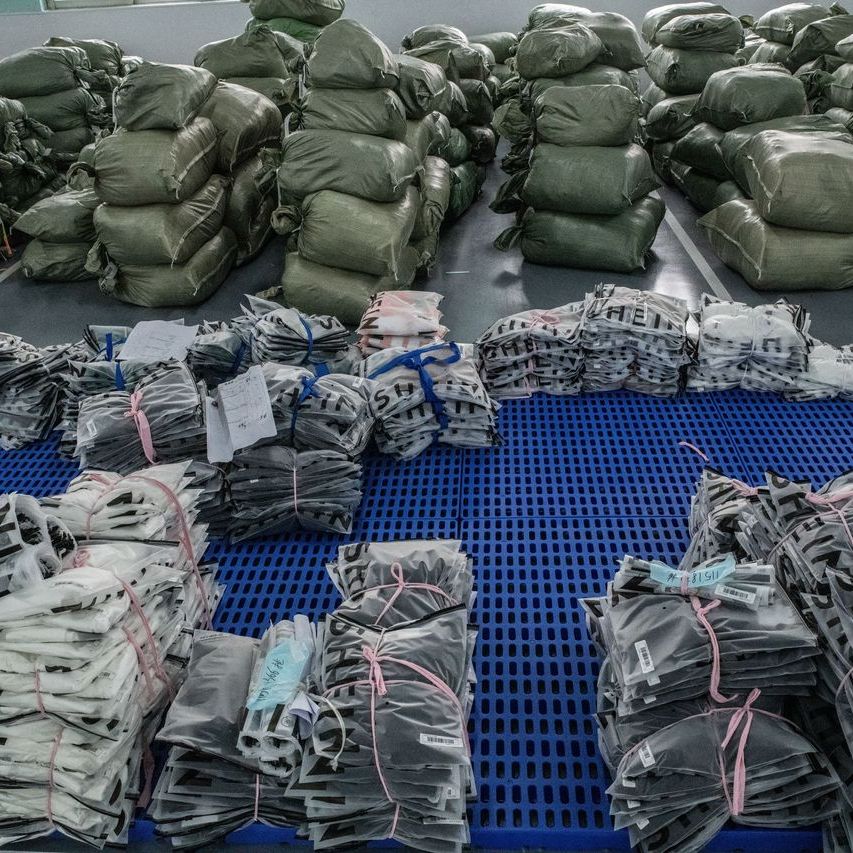
Shein was founded in 2012 in China, although it moved its headquarters to Singapore in 2021. It contracts with thousands of Chinese factories that churn out new styles every day, and has services such as warehousing and back offices there. Its biggest market, though, is the U.S.—it has never sold in China.
Shein has largely failed to bridge misgivings on both sides. Washington lawmakers are suspicious of Shein’s China ties and have demanded more details on its supply chain. Beijing wants Shein and other companies with substantial operations in China to stay in line with its own messaging. One outsize issue is cotton—not just where Shein gets the fabric, but also how it talks about it.

Shein has shifted its main listing efforts to London. An IPO filing there could come in the next few weeks, people familiar with the matter said.
The widening divide between Beijing and Washington has played out especially in high-tech industries like semiconductors and artificial intelligence—but no company is immune. Shein’s challenges in satisfying the two don’t bode well for other high-profile companies with China roots trying to establish a U.S. foothold.
Along with social-video platform TikTok and bargain retailer Temu, Shein is among the few major companies with Chinese roots that have broken through with American consumers in meaningful ways. All have come under scrutiny in Washington. Last month, President Biden signed a bill that will ban TikTok if its Chinese owner, ByteDance, doesn’t sell it within a year.
Temu, owned by Chinese e-commerce company PPD Holdings, poured money into the U.S. ad market and has grown to become America’s second-most popular shopping app by monthly users, behind Amazon . After landing in Washington’s crosshairs, it’s now shifting its focus to other markets beyond the U.S.
“If Shein can’t make it, who else has a better chance?”
Companies have increasingly had to pick sides since Beijing-based ride-hailing company Didi Global angered Beijing when it went ahead with its U.S. listing in 2021 without full sign-off by Chinese regulators. After its IPO, Chinese regulators slapped Didi with restrictions and a data-security review, and the company delisted from the New York Stock Exchange after 11 months.
“If Shein can’t make it, who else has a better chance?” said Sheng Lu, an expert on the global textile and apparel industry at the University of Delaware. “Shein is not in a traditionally sensitive high-tech industry. It’s just a clothing retailer.”
Tang, Shein’s executive chairman, has been the Western face of the company since he joined it in 2022. Last year, the former Bear Stearns executive relocated from Los Angeles to Washington to be closer to Shein’s lobbying efforts.
He has experience taking companies public and connections in both the U.S., where he has lived for four decades, and China, where he was born. Selling Shein as a compliant global company in today’s political environment, he found, requires a different skill set. “I have learned so much more in the last several years than the previous life I was in,” he said.
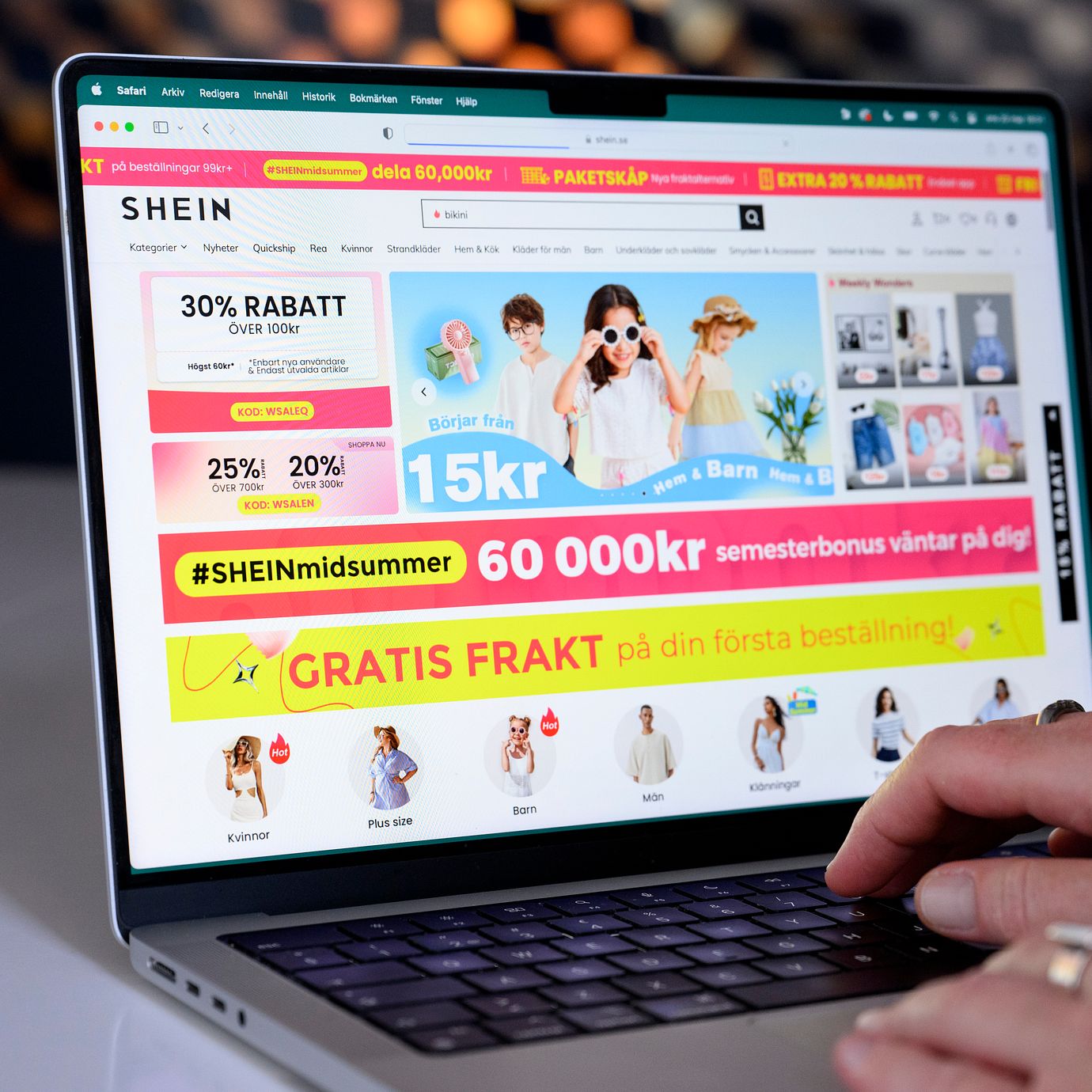
The face of Shein
Shein’s identity between two places is a familiar one for the 61-year-old Tang, who has been an American citizen for decades but still gets asked where he’s really from.
He came to the U.S. in 1982 to follow his girlfriend, whom he had met at age 14 in a math competition. In a 2006 essay for the Los Angeles Times, Tang recounted how as a 17-year-old in China, he dialed an emergency number for the U.S. consul-general, saying he needed a visa so he could be with his girlfriend. He arrived with only $20—the maximum that Chinese law allowed citizens to take out of the country at that time. His girlfriend is now his wife and mother of their two children.
He graduated from California State Polytechnic University, Pomona, and went on to take on executive roles at Bear Stearns. Later, as a vice chairman there, he played matchmaker between his firm and China’s Citic Securities , which would have been the first Chinese bank to inject capital into a Wall Street bank. The deal fell through when Bear Stearns collapsed during the financial crisis and was taken over by J.P. Morgan in 2008.
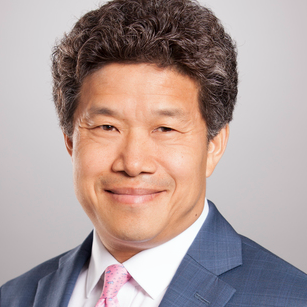
Tang first heard of Shein in the early days of the pandemic, when he and his family were hunkered down in Hawaii. His wife was intrigued by the cute face mask the hostess at a local restaurant was wearing, and was told the mask was from Shein.
A year later, Tang was introduced by a mutual friend to Shein’s reclusive chief executive, Sky Xu, who has stayed out of the spotlight throughout the company’s meteoric rise, and started advising him. In 2022, months after the company moved its headquarters, Tang started leading its effort to build a global identity.
Under his guidance, Shein has formed partnerships with Western brands like Forever 21 and tried to diversify its supply chain beyond China. He has enlisted Western executives and advisers, including Frances Townsend , who was a homeland security adviser in George W. Bush ’s White House.
Shein delivered record sales and profits in 2023, according to a letter to investors.
Yet for all Tang’s Western-facing campaigning, he remained aware that Shein isn’t immune from Beijing’s pressure and that falling out of favor with Chinese authorities could cost the company dearly.
Cotton conundrum
A primary issue for both Washington and Beijing is cotton.
U.S. law bans imports linked to Xinjiang, where Washington accuses Chinese authorities of using forced labor in its repression of Uyghurs, allegations Beijing denies. U.S. politicians want Shein’s assurance that it doesn’t use cotton from Xinjiang, which accounts for the vast majority of China’s cotton production.
Publicly addressing the matter could get Shein in trouble with Beijing. Companies viewed as bowing to Western criticism over Xinjiang risk swift retaliation, as H&M learned in 2021 when its statement that it would stop sourcing from Xinjiang prompted its erasure from the Chinese internet.
What Shein says publicly on the matter has evolved. It told The Wall Street Journal last year it doesn’t source cotton from Xinjiang or even from China. Its more recent statements leave out any mention of Xinjiang and simply says it has “zero tolerance” for forced labor. Until late last year, Shein’s website included a report on sustainability and social impact, with information about its cotton sourcing, tracing and testing. The report has since been removed from Shein’s website.
People close to the company say cotton makes up around 4% of Shein’s clothing sold in the U.S.
Oritain, a New Zealand-based company that verifies the origin of raw materials, said tests of Shein cotton samples in 2022 and 2023 indicated that 1.7% originated in what it calls “unapproved regions.” For Shein, that means Xinjiang. That compares with the industry average of 14% in 2022.
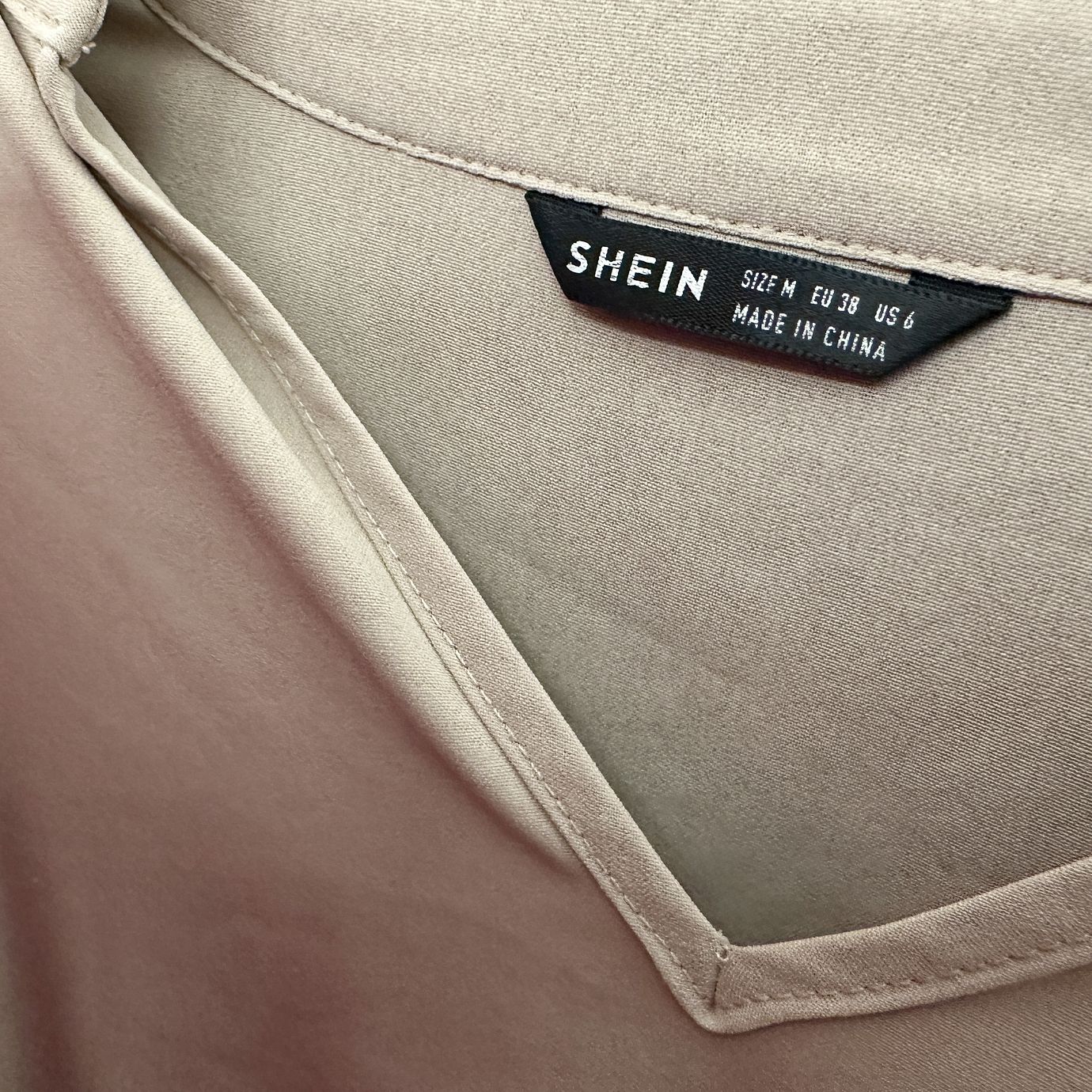
Industry experts say it’s challenging for any apparel maker to root out Xinjiang cotton entirely given how complex the global supply chain is. Raw cotton from different sources often ends up at the same processing plants.
When Shein filed with the Securities and Exchange Commission for a U.S. listing in November, it did so confidentially—a common move that lets a company keep sensitive business and financial data away from public eyes and competitors during discussions with regulators.
The SEC told Shein its application wouldn’t be accepted unless the company submitted a public filing, people with knowledge of the matter said—a move that securities lawyers say is unusual. Shein still hasn’t done so.
A public filing wouldn’t guarantee Shein SEC approval, but could set off scrutiny from lawmakers, government officials and the media over sensitive issues, securities lawyers say.
Shein filed the same paperwork with China’s stock regulator, something companies with substantial operations in China are required to do when they seek to go public.
China’s cybersecurity watchdog also opened a probe into Shein’s data practices, in what’s become a routine practice in recent years. The review included how Shein handles information on its staff, suppliers and partners. Authorities also paid particular attention to Shein’s language on Xinjiang cotton, people familiar with the matter said.
The Cyberspace Administration of China didn’t respond to a request for comment.
Putting out fires
This year got off to an inauspicious start for Tang, with the issues in Beijing and reports that Shein’s investors were trying to offload their stakes in private markets. Shein had internally started to discuss alternatives to a New York IPO. New issues continued coming up.
In February, Sen. Marco Rubio (R., Fla.) urged SEC Chairman Gary Gensler to block Shein’s IPO unless it provided details on its company structure and interactions with the Chinese government.
In March, French lawmakers approved a fast-fashion bill that will impose hefty levies on low-cost garments sold by companies like Shein to curb the industry’s environmental impact.
In April, the U.S. Department of Homeland Security announced heightened scrutiny over low-value packages sent from abroad directly to U.S. consumers, with no duties and little scrutiny. Shein relies on the shipping method under a trade loophole that critics say also helps companies skirt bans on imports made with forced labor.
That same month, Europe labeled Shein a “very large online platform,” a designation that imposes stringent rules over issues including counterfeit and unsafe products and consumer data.
According to Tang, the company’s priority now is compliance. Shein plans to spend $50 million on global compliance for the next few years. That follows a similar strategy by TikTok, which to stave off a U.S. ban expanded its U.S. presence and spent $1.5 billion on a data-use compliance project.
Tang even paints Shein’s listing plans as part of its transparency efforts. “Most companies seek to go public for liquidity reasons. We seek to go public to embrace scrutiny and public diligence,” he said.
When asked on a Milken Institute panel in early May where Shein is really from, Tang said that depending on how people look at it, Shein can be seen as a Chinese company, based on where most of its supply chain and employees are, or a Singaporean company, with its headquarters and other important functions there.
But, he concluded, Shein’s values, mission and vision align with those of America’s: entrepreneurship, innovation, expression of individuality, rule of law and fair competition.
“I think if you look at it that way, we’re an American company,” he said.
Shein’s main challenge continues to be Washington.
Beijing isn’t looking to block Shein from listing overseas, and the company has cleared its cybersecurity review, the people familiar with the matter say. One person close to Beijing said China’s stock regulator has indicated it will give a final nod once Shein gets closer to a listing. China’s securities regulator didn’t respond to a request for comment.
Shein still hasn’t completely given up on a U.S. listing, according to people familiar with the matter.