Statligt förbud mot Iphone pressar Apple i Kina
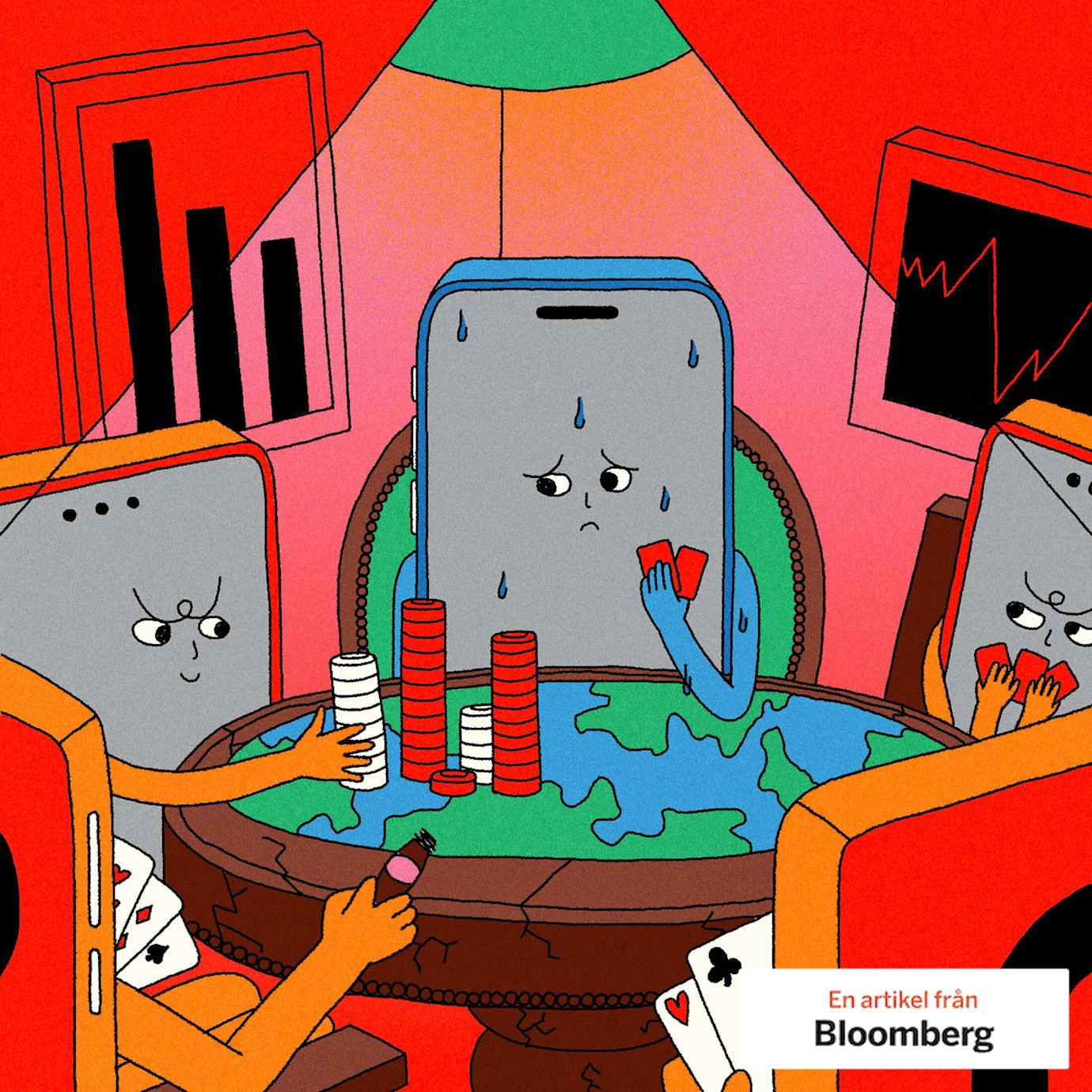
Handelskriget mellan Kina och USA har inte hindrat Apple från att expandera i Kina. Företaget sysselsätter omkring 5 miljoner kineser och deras produkter är fortsatt mycket populära i landet, skriver Bloomberg Businessweek.
Men nu pressas Apple både av konkurrenten och den kinesiska staten. I augusti lanserade Huawei en verklig utmanare till Iphone. Samtidigt har kinesiska myndigheter under hösten successivt utökat förbudet för Iphone på jobbet. Apple kan därmed tappa 80 miljoner kinesiska kunder som arbetar i statligt ägda företag.
 Bloomberg
Is 2024 the Year US-China Tensions Finally Trip Up Apple?
The iPhone maker has navigated its relationship with Beijing well so far, but the situation isn’t getting any easier.
No American tech company has bet as heavily as Apple Inc. on the economic interdependence of China and the US. Apple needs Chinese workers to make its iPhones and Chinese consumers to buy them. This would seem to make the deteriorating relationship between the two global superpowers uniquely dangerous for the company and its chief executive officer, Tim Cook, who was responsible for Apple’s decision to outsource production to China long before he took over the top position from Steve Jobs in 2011.
But until recently, the US-China trade war that began during Donald Trump’s presidency and intensified during Joe Biden’s had barely slowed down the company. Sure, Biden launched an aggressive campaign to keep China from developing advanced semiconductors and called Chinese President Xi Jinping a “dictator,” and Xi pursued a strategy to limit China’s reliance on Western-made technology—but none of that seemed to matter. Apple logged some $73 billion in revenue in the region it calls Greater China—which includes its operations in Taiwan and Hong Kong—in 2023, up from $32 billion in 2014. Business slowed in China in 2023 but not as fast as it did elsewhere. About 19% of Apple’s revenue came from the country in the fiscal year ended in September, up slightly from 2022.
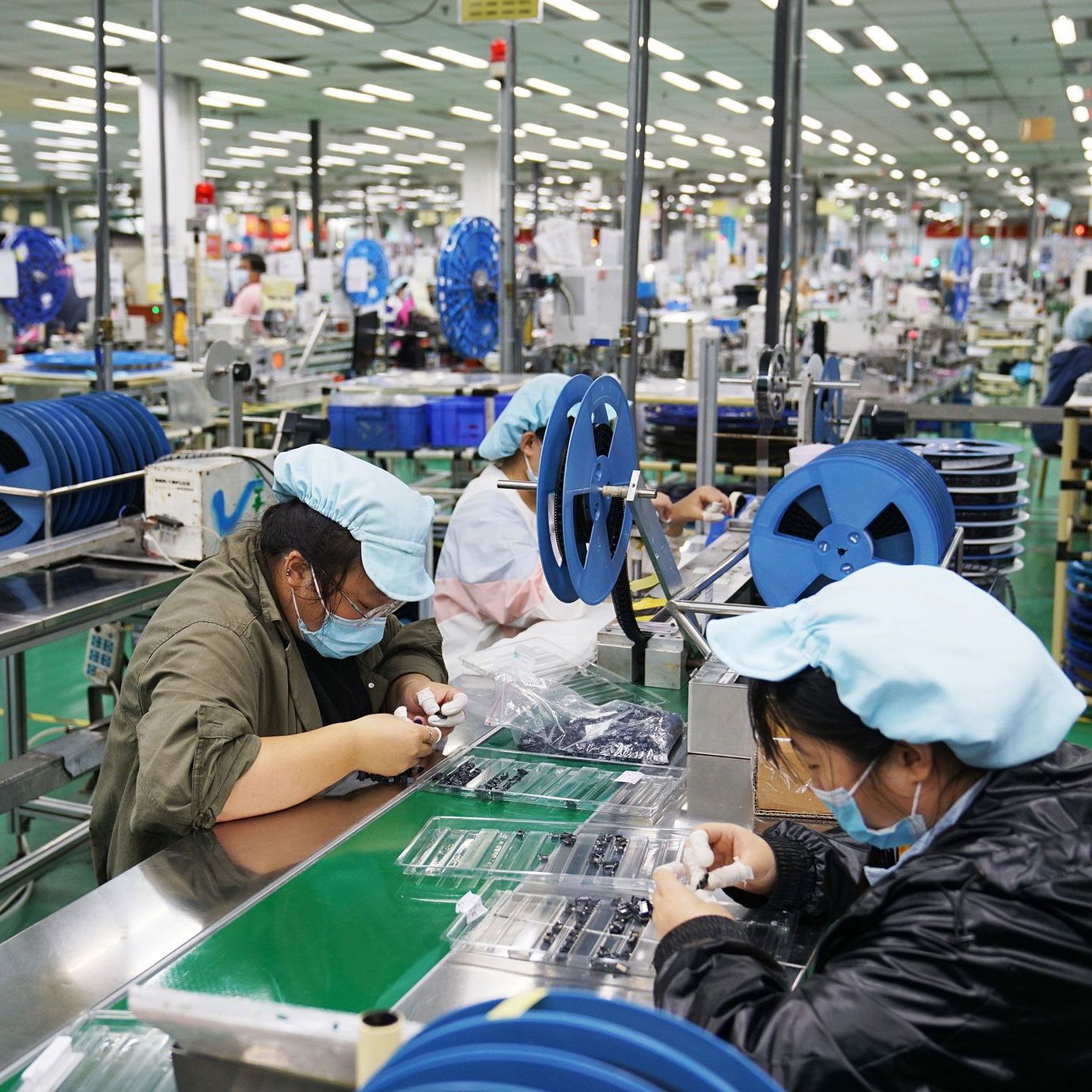
While the company has floated above the geopolitical tumult, Apple enters 2024 in danger of getting dragged into it. That would be a poor omen for other US companies that face increased pressure from Beijing, in the form of both regulations and reinvigorated competition from domestic companies that Chinese policymakers have long sought to boost.
In September, Chinese government agencies in some cities told employees they were no longer allowed to bring Apple phones to their jobs, as part of a larger plan to keep the iPhone out of state-run offices. By December multiple state-backed companies and government departments in at least eight provinces had instructed employees to use devices made by local brands, a major step-up in the campaign, Bloomberg News reported. Chinese officials responded to the initial report about new restrictions by noting that the country hasn’t banned phones made by Apple or other foreign companies, but they also referred obliquely to “security incidents concerning Apple phones.”
The White House described the September restrictions as “aggressive and inappropriate retaliation.” Cook appeared to downplay the report in an interview with CBS News, noting that he hadn’t seen any official policy changes.
“The thing that’s changed is there are some darn good Chinese phones”
Chinese smartphone users might have ignored the prohibition if not for a second factor: technological advances by Chinese companies. China has tried to push Apple out of the domestic smartphone market for more than a decade, mostly without success, says James Lewis, a former US diplomat who’s now a senior vice president at the Center for Strategic and International Studies. “The thing that’s changed is there are some darn good Chinese phones,” he says.
In August, Huawei Technologies Co. announced a handset that’s roughly comparable to a top-of-the-line iPhone 15 Pro Max. The new device, the Mate 60 Pro, represents a comeback for Huawei, which briefly surpassed Apple in smartphone sales in 2019 before being frozen out of the market for high-end phones. Trump instituted export controls in 2020, prohibiting Huawei from acquiring advanced chips from global suppliers, including the industry-leading Taiwan Semiconductor Manufacturing Co. (TSMC). Those restrictions caused Huawei to run out of high-end chips, and its market share plummeted in 2021 and 2022.
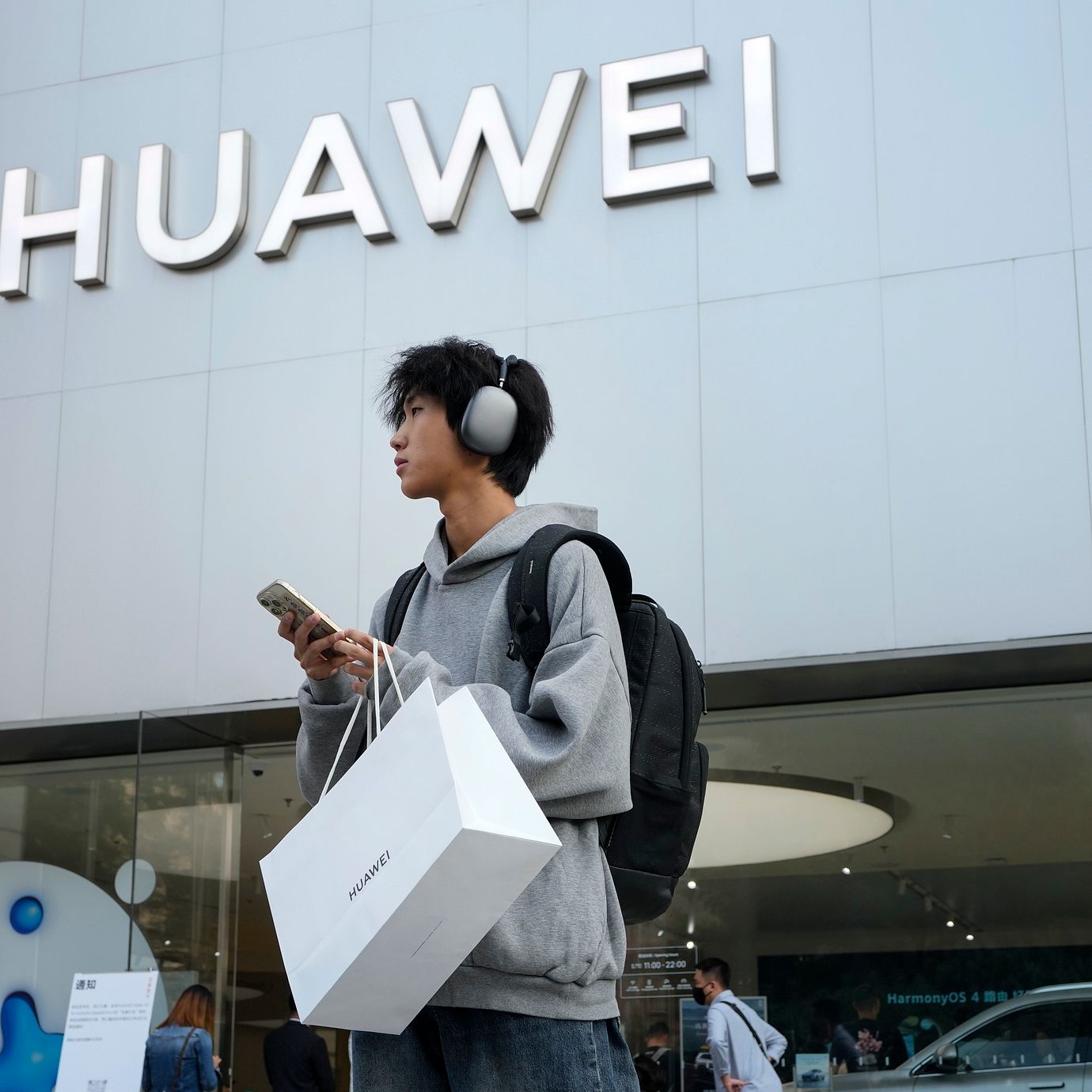
The Mate 60 Pro doesn’t use a TSMC chip. Instead it runs on one made by Semiconductor Manufacturing International Corp. (SMIC), a state-backed company based in Shanghai. In 2020, SMIC’s best chips were based on a 14-nanometer process—making them years behind the state of the art. (In chips a lower measurement means a faster, more efficient processor; the most powerful Apple phones use 3nm chips.) Now SMIC is capable of manufacturing chips using a 7nm process, a near-state-of-the-art technology that puts it a bit closer to parity with processes used by Apple.
Huawei’s market share in the high-end phone segment has already soared, from 11% in 2022 to 24% during the third quarter of 2023, according to researcher IDC. The success of the new phone prompted IDC to cut its forecast for Apple’s China sales for 2024, says Nabila Popal, a research director at the firm. “Huawei’s success most significantly impacts Apple’s growth in China,” she says.
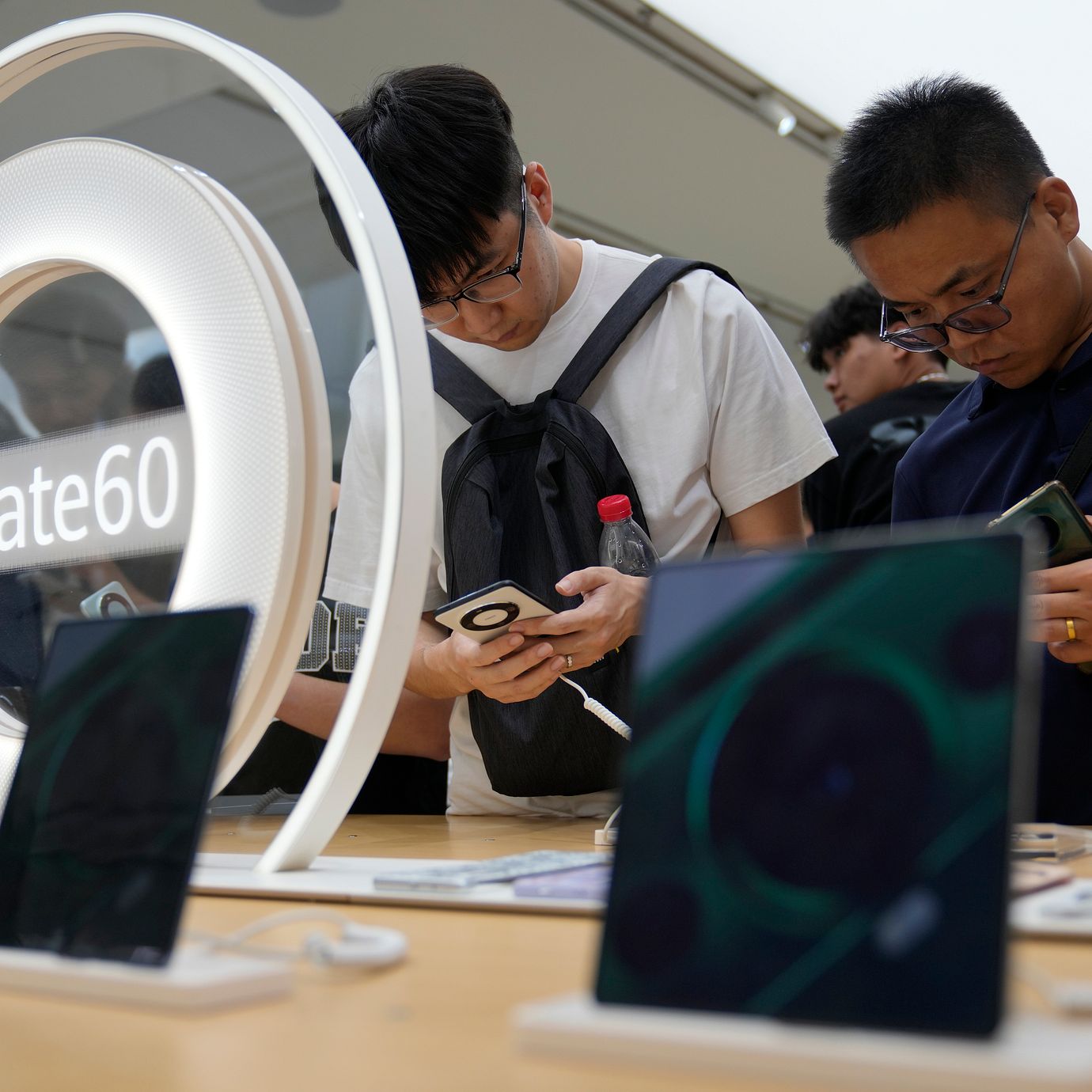
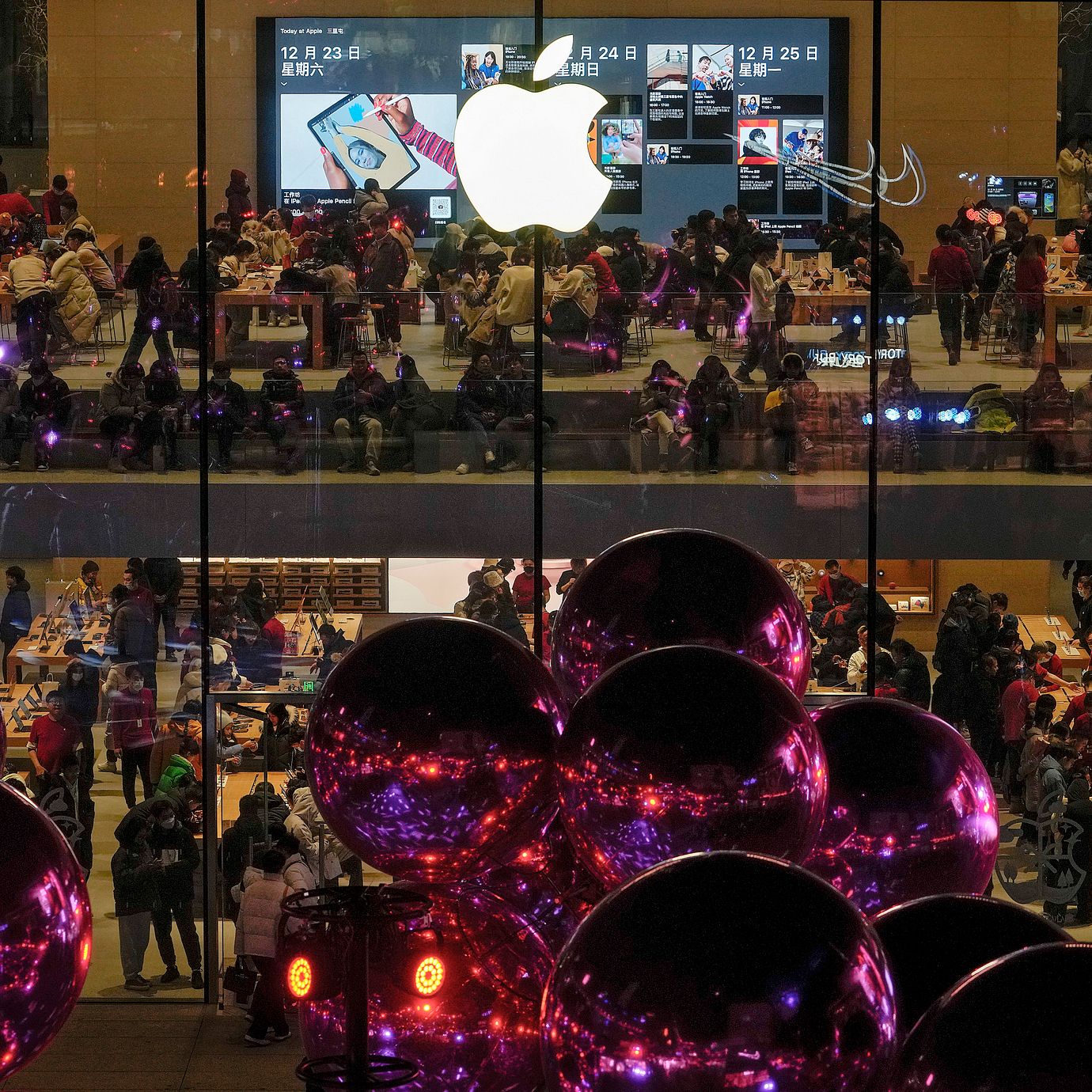
Apple still has a huge fan base in China, and there were long lines at the company’s flagship store in Beijing in December as buyers waited to pick up their new iPhones. Apple has sought to reiterate its commitment to the country, pointing out that its supply chain employs some 5 million people in China. During a March visit to Beijing, Cook gave a speech touting Apple’s “symbiotic” relationship with China.
Behind the scenes, though, Cook seems to be trying to hedge amid increasingly hostile rhetoric between China and the US, and concerns about the dangers of supply chain concentration raised by Covid-19 restrictions as well as violent protests at an iPhone factory in late 2022. Apple has intensified its efforts to move some manufacturing to India and Southeast Asia. Suppliers such as Taiwan’s Foxconn Technology Group and India’s Tata Group are expanding or planning new factories in India, where Apple is also eager to sell more devices.
The supply chain diversification looks, at least in part, like a sensible attempt to reduce Apple’s exposure to geopolitical blowback. But it may be having the opposite effect. Apple is a major employer in China, and the government crackdown on iPhones could be seen as a warning about moving jobs out of the country. In November, Apple’s top executive in China, Isabel Ge Mahe, offered what looked like a response: a rare interview with state media in which she praised Chinese manufacturers for playing a critical role in the company’s supply chain.
If her interview was designed to calm tensions, it may not have been enough. New restrictions on state-backed companies followed the next month, threatening to cut off Apple from some 80 million people who work at companies owned by the government—at a time when Chinese competitors are offering increasingly credible alternatives to the same group. “Apple phones are still the best on the market,” Lewis says. “But every year the margin closes.”
—With Yuan Gao, Jane Lanhee Lee and Debby Wu
For more articles like this please visit us at bloomberg.com