Stor granskning: Så plundrar Orbáns oligarker staten
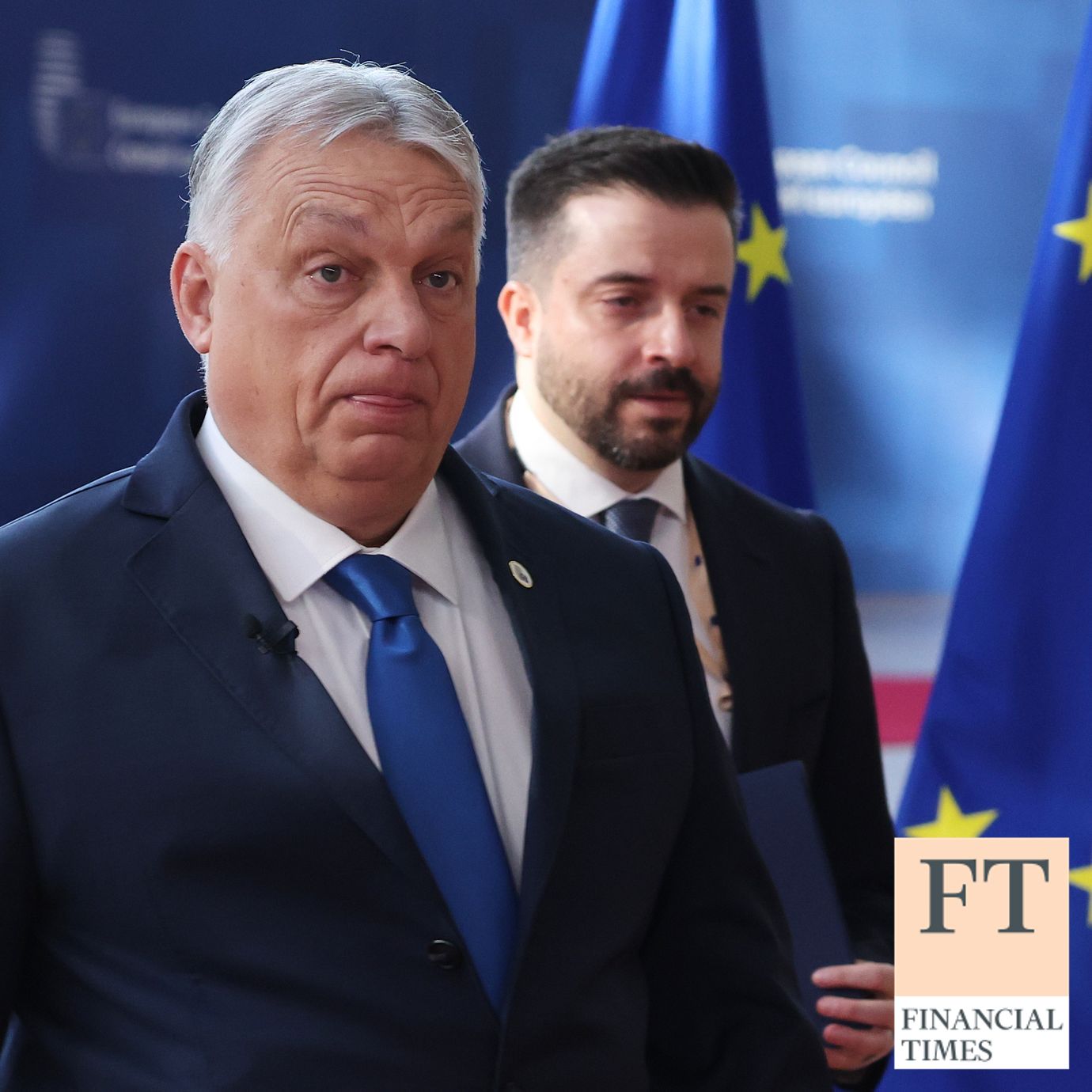
En krets på 13 personer nära Viktor Orbán har fått en stor del av Ungerns statliga kontrakt. Bland dem finns barndomsvänner, en vandringspartner och premiärministerns svärson. Deras bolag har dragit in över 28 miljarder euro sedan Orbán kom till makten, rapporterar Financial Times.
Tidningen har analyserat hundratusentals upphandlingar.
– Orbáns system är en kleptokrati. Eliten plundrar staten på offentliga medel, säger ekonomen István János Tóth, enligt Financial Times.
 Financial Times
How Viktor Orbán’s oligarchs reaped billions in public contracts
FT investigation finds 13 associates of Hungary’s premier won large share of state works after he took power.
Near Hungary’s border with Croatia and Serbia, a €747mn bridge across the Danube is being built by a company belonging to László Szíjj, a business partner of Prime Minister Viktor Orbán’s oldest friend.
Szíjj, whose luxury yachts have hosted top cabinet officials, owns companies that have won a bevy of contracts worth €7.9bn since Orbán was elected in 2010. In the five years before Orbán’s election, his company Duna Aszfalt won just €247mn in tenders.
He is one of 13 men close to the prime minister’s administration whose companies began winning a major share of Hungary’s public contracts after Orbán’s election, according to an FT analysis of almost 350,000 public procurement contracts.
The Orbán model — which the prime minister calls the “System of National Co-Operation” (NER) — claims to harness the power of the government and the private sector. But opponents label it cronyism, alleging that taxpayer funds are used to enrich associates of Orbán who in turn have supported his re-election bids.
The FT’s analysis shows that 14 per cent of all the funds awarded in state tenders under Orbán went to 42 companies owned by the 13 associates. They had won just 1 per cent between 2005 and his election in 2010.
In total, they netted more than €28bn in government tenders from 2010 to late 2025, either alone or as part of consortiums — an average of €1.8bn a year. In the five years before Orbán took power combined, they won only a third of that annual average: €608mn.
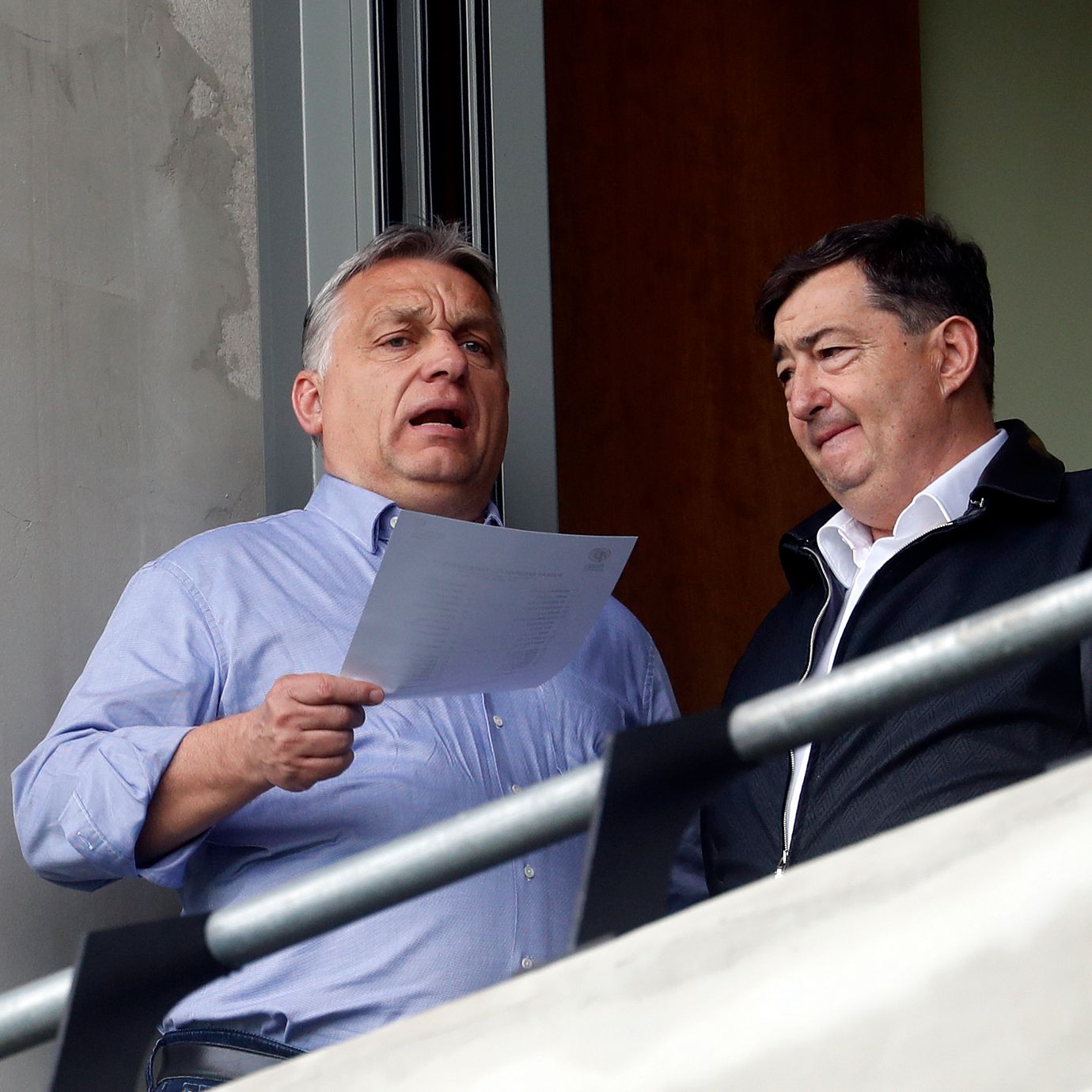
The €1.8bn average is a 15-fold increase from the €121mn per year earned in the five years before Orbán’s election. The group was also disproportionately likely to be awarded contracts in tenders where no other companies submitted bids.
“Orbán’s system is a kleptocracy,” said István János Tóth, an economist and director of the Corruption Research Center Budapest, who has studied the system for the European Commission. “The elite robs the state of public funds, abusing a lack of the rule of law.”
A key node in the system is Lőrinc Mészáros, Orbán’s childhood friend, who has risen from obscurity to become Hungary’s richest person, thanks in part to huge state construction contracts. The list of individuals identified as major beneficiaries by the FT is littered with Mészáros’s business associates — including Szíjj.
Szíjj founded Duna in the 1990s and grew it steadily into a midsized group. But it became exceptionally successful in the 2010s when he and Mészáros began applying for public tenders together. He then started doing business with other members of the 13-man group.
The network once also included Orbán’s former college roommate Lajos Simicska. He fell out with Orbán in 2015, then saw his corporate empire fall apart, with assets picked up by Mészáros and others. Other prominent members include Orbán’s son-in-law István Tiborcz as well as the prime minister’s longtime hiking partner István Garancsi and Gyula Balásy, the man behind the advertising empire serving the government.
Some companies enjoyed a striking rise in public contracts after they were bought by members of the system
These individuals are included in the FT analysis, which uses the same methodology as Tóth’s work for the European Commission, identifying people who are no more than one step removed from Orbán personally. The reporting uses Hungarian government data as well as Tóth’s.
Hungary’s procurement data often revealed “awards to new or dormant companies” and “close alignment between beneficiaries and public office holders”, said Farley Mesko, chief executive of risk intelligence company Sayari.
Orbán has consistently rejected allegations of corruption, which has become a major issue ahead of next month’s election. The opposition, which has been hammering Orbán with graft allegations, has surged to a double-digit lead in some opinion polls, leaving his 16-year rule in serious jeopardy.
Peter Magyar, his opponent, has tied Orban personally to the issue, calling the prime minister “the terrified emperor of Hatvanpuszta” at a rally last week — a reference to a former Habsburg manor now owned by Orban’s father.
Duna Aszfalt has denied benefiting from political favours, chalking up its growth to experience and quality work. It said Szíjj’s rise began well before Orbán took power and that it often won competitive tenders against international companies.
“Duna Group has completed all jobs on time,” its spokesman said. “The resulting confidence has allowed us to apply for more work. The increase in revenue reflects that organic development.”
Tiborcz, Orbán’s 39-year-old son-in-law, has become one of Hungary’s richest businessmen
A government spokesperson did not respond to requests for comment, nor did Mészáros, Garancsi, Balásy and Simicska.
Some companies enjoyed a striking rise in public contracts after they were bought by members of the system. For example, before Mészáros and his family bought construction company Euro General in 2017, it had only ever won contracts worth €36mn. It has since won, either alone or in consortiums, €175mn. The company did not respond to a request for comment.
Tiborcz, Orbán’s 39-year-old son-in-law, has become one of Hungary’s richest businessmen, partly via deals with the government and financing from banks owned by either the state or Orbán’s associates.
He denies his rise is due to his relationship with Orbán, and told the FT he had stayed away from procurement since 2015, when the EU’s anti-fraud watchdog began investigating his company Elios. In 2017, it concluded Elios had breached EU procurement rules, and ordered that €43mn be paid back to Brussels. Local authorities found no wrongdoing.
“I had to learn that I can’t be involved in just anything,” he said. Since Elios, “I’ve paid very close attention — and still do — to ensure that companies directly controlled by me do not participate in public procurement tenders.”
The issue has been a flashpoint with the EU, which began freezing about €27bn owed to Hungary in 2022 over concerns about corruption and fraudulent tender processes. Research it commissioned from Tóth’s think-tank found politically connected actors were 2.5 to 3.3 times more likely to win government contracts. About €18bn remains frozen.
“Direct or indirect political connections” to Orban’s Fidesz party were “a decisive factor for increasing their probabilities of success of tender procedures”, the paper said.
”I think they expect they may lose the elections”
The FT analysis shows the 13 associates’ companies have won €12bn in EU-funded contracts since Orbán’s election in 2010, including €700mn awarded even after the EU started freezing funds to Hungary. They had won just €379mn in the five years before Orbán took power.
“It is telling that the numbers continue to rise even though the Commission has said they have frozen the most vulnerable budget lines,” said Daniel Freund, a Green lawmaker in the European parliament who specialises in anti-corruption. “They have still found ways to get money.”
Brussels has targeted the use of single-bid contracts — tenders in which only one company participates. This practice has significantly worsened among politically connected companies since 2023, despite Hungary’s pledges to tackle the issue.
From April 2010 to 2023, the politically connected companies won 45 per cent of all their contracts in single-bid processes. In 2024-25, the figure surged to 69 per cent. The average for all Hungarian companies has remained steady at around 29 per cent.
“One interpretation . . . is they are in a sort of panic, with these people on a last-minute public-funds feeding frenzy. I think they expect they may lose the elections,” said Tóth, who is also an economist at the SGH Warsaw School of Economics.
Several people working on EU procurement told the FT it was difficult to sustain corruption allegations because Hungary’s public tenders generally complied with the rules. They added that it was generally legal to set out criteria in tenders that only specific bidders could meet.
The FT’s analysis found the Orban-linked companies were about one-third more likely to win uncontested tenders than their peers, even after the sectoral mix was taken into account.
Mészáros’s Euro General was a joint winner of a single-bid contract to build a €55mn water theme park in 2020. A year earlier, another of his companies was part of a group that won a €49mn single-bid contract to build gas infrastructure.
“It’s difficult to speak about corruption, which has a strict definition in the criminal code, but the statistics indicate a distortion or anomaly of competition procedures,” said an expert at Olaf, the EU’s anti-fraud authority, who was not authorised to speak publicly.
“In the construction sector, certain companies are very dominant,” they added. “That is not logical because you don’t really need local knowledge for construction. It should be more open to competition from elsewhere in the EU.”
Duna attributes its success to timing: already a big company before Orbán, it retained assets and employees during the 2008 economic crisis and benefited from Hungary’s EU-funded road-building boom after Orbán took power in 2010.
We “made a lot of failed offers before getting to this point”, Duna said in a statement. “Access to EU-funded procurement became significant only after 2010. Before 2010, big multinationals built motorways in Hungary.”
A European Commission official said it “continues to monitor the situation in all member states, including Hungary, and stands ready to make full use of the range of tools at its disposal”.
Methodology
The FT used data from Hungary’s official Electronic Public Procurement System for all public contract awards from 2022 to the first half of 2025. For 2005 to 2021, the data came from the research project by Corruption Research Centre Budapest (2022), “Disclosure of Hungarian Public Procurement Data 2005-2021”.
The data was validated using the latest version of the CRBC’s dataset. The contract values were converted from forints into euros using the ECB’s exchange rate series.
The FT’s results use a narrow group of individuals to include in the network. The list of connected individuals is based on the latest version of the CRBC’s research and includes one more individual than the European Commission analysis. The FT used corporate data from Sayari to find additional companies to include.
©The Financial Times Limited 2026. All Rights Reserved. FT and Financial Times are trademarks of the Financial Times Ltd. Not to be redistributed, copied or modified in any way.