Supermiljardärer äger mer än någonsin – och de blir fler
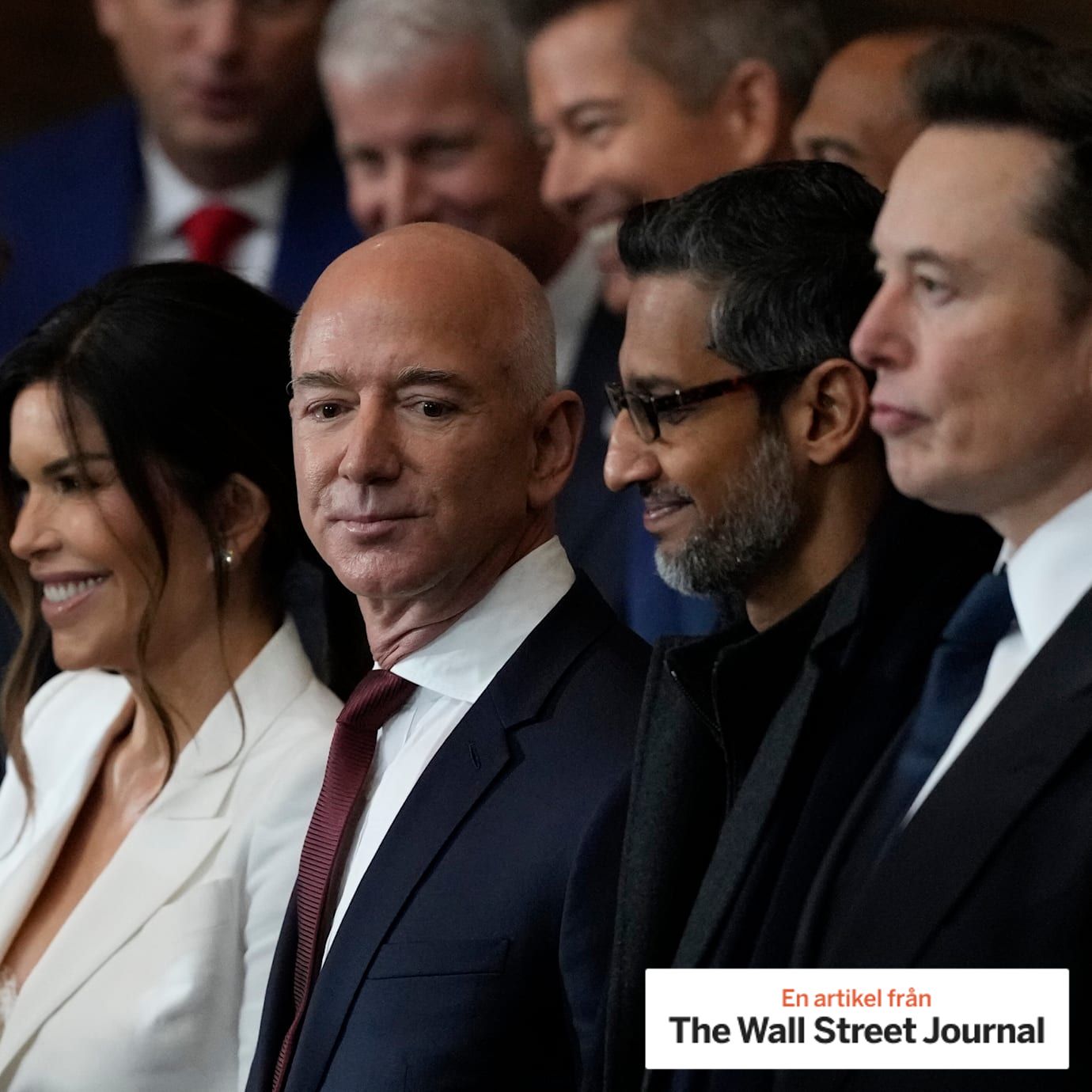
En ny ekonomisk elit växer fram: de så kallade supermiljardärerna. Endast 24 personer i världen har en förmögenhet på över 50 miljarder dollar, och tillsammans kontrollerar de hisnande 3 300 miljarder dollar – lika mycket som Frankrikes BNP.
– Det är ganska häpnadsväckande hur mycket vissa av förmögenheterna har vuxit, säger Maya Imberg, analyschef på Altrata.
Techjättar som Elon Musk och Jeff Bezos toppar listan. Samtidigt tyder allt på att gruppen av superrika kommer att fortsätta växa, skriver Wall Street Journal.
 The Wall Street Journal
Meet the World’s 24 Superbillionaires
The ultrarich are growing in numbers, and changing wealth as we know it.
In 1987, Forbes published its first billionaires list, featuring 140 individuals whose combined wealth totaled $295 billion. At the time, the richest person in the world was Japan’s Yoshiaki Tsutsumi, a real estate tycoon worth $20 billion.
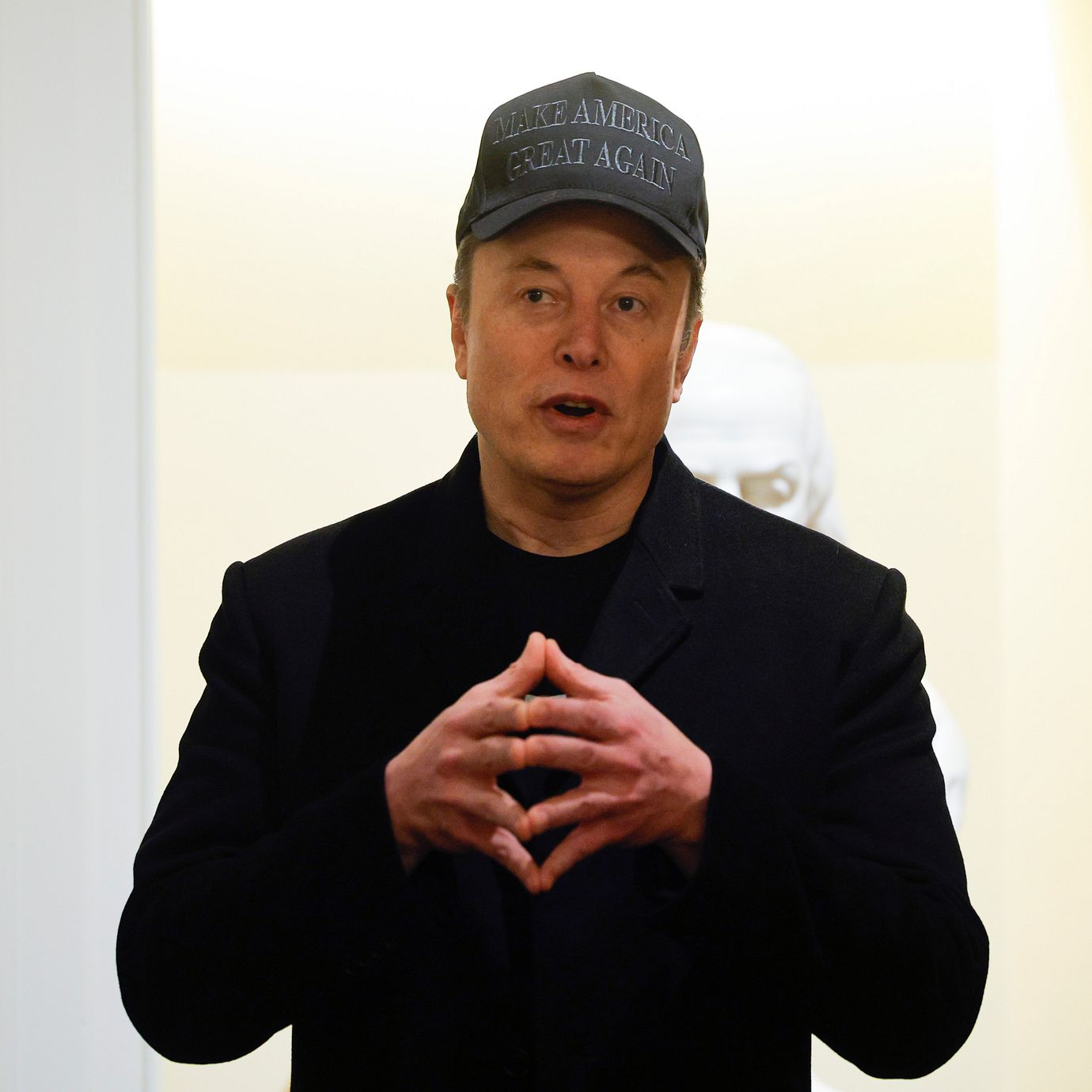
Today, the world’s richest person, Elon Musk, is worth $419.4 billion, roughly 21 times as much as Tsutsumi at his peak and more than two million times as much as the median net worth of an American household, according to exclusive data from global wealth intelligence firm Altrata.
As the ranks of global billionaires have swelled dramatically in recent years, a new category of ultrarich has emerged—the superbillionaire. Musk is one of just 24 people worldwide who qualify for that distinction, which is defined as individuals worth $50 billion or more.
As of early February, those superbillionaires’ fortunes accounted for more than 16% of all billionaire wealth, a dramatic increase from 4% in 2014, according to Altrata. Their combined net worth totaled $3.3 trillion, equivalent to the nominal GDP of France. Of those 24 people, 16 qualified as centi-billionaires, meaning they have a net worth of at least $100 billion.
The rise of the superbillionaire has coincided with a significant leap in luxury markets across the world, including real estate, as these individuals cobble together massive portfolios of luxury homes around the globe.
Experts say the data shows how the ranks of the ultrarich have begun to pull away from the merely wealthy, and how a subset has been propelled to new heights.
“Billionaires have always obviously controlled significant amounts of wealth, but now you’re talking about differences in the billionaire population themselves,” said Maya Imberg, head of thought leadership and analytics at Altrata, who has been researching the superbillionaire set. “It’s quite staggering just how much the net worths of some of these people have grown.”
In major luxury real-estate markets like New York, Miami, Palm Beach, Fla., Los Angeles and Aspen, Colo., new supertall towers and spec mansions have popped up geared specifically to the billionaire set, and there has been an explosion of nine-figure home sales across the country.
Each of the superbillionaires on Altrata’s list has direct personal residential real-estate holdings of at least $100 million, and often far more, according to the company. Imberg said that number is likely to be a significant underestimate in some cases because real estate can often be held in a partner’s name or owned by one of these billionaires’ companies or holding companies.
“Monopoly power has given rise to the potential of enormous amounts of wealth”
The world’s superbillionaire population is made up in large part by entrepreneurs who made their money in the tech sector, or whose industry was catapulted to new levels by technological advances. Of the top 10 richest individuals on the list, six fall into that category. Of the total 24 superbillionaires, only three were female. Only seven were headquartered outside of the United States.
The rise of the superbillionaire marks a transformation in the composition of the world’s ultrawealthy, experts said. In the 19th and early 20th centuries, the richest men were industrialists: John D. Rockefeller built Standard Oil into a monopoly, Andrew Carnegie dominated the steel industry, and Cornelius Vanderbilt amassed a fortune through railroads. Their wealth, while vast, was spread across industries that defined an era of physical infrastructure and manufacturing. Through Standard Oil, John D. Rockefeller became the world’s first confirmed billionaire in 1916.
During that period, a company’s value accounted for physical assets like property and machinery, more so than the types of intellectual property and promise of future scale and earnings that push up values today.
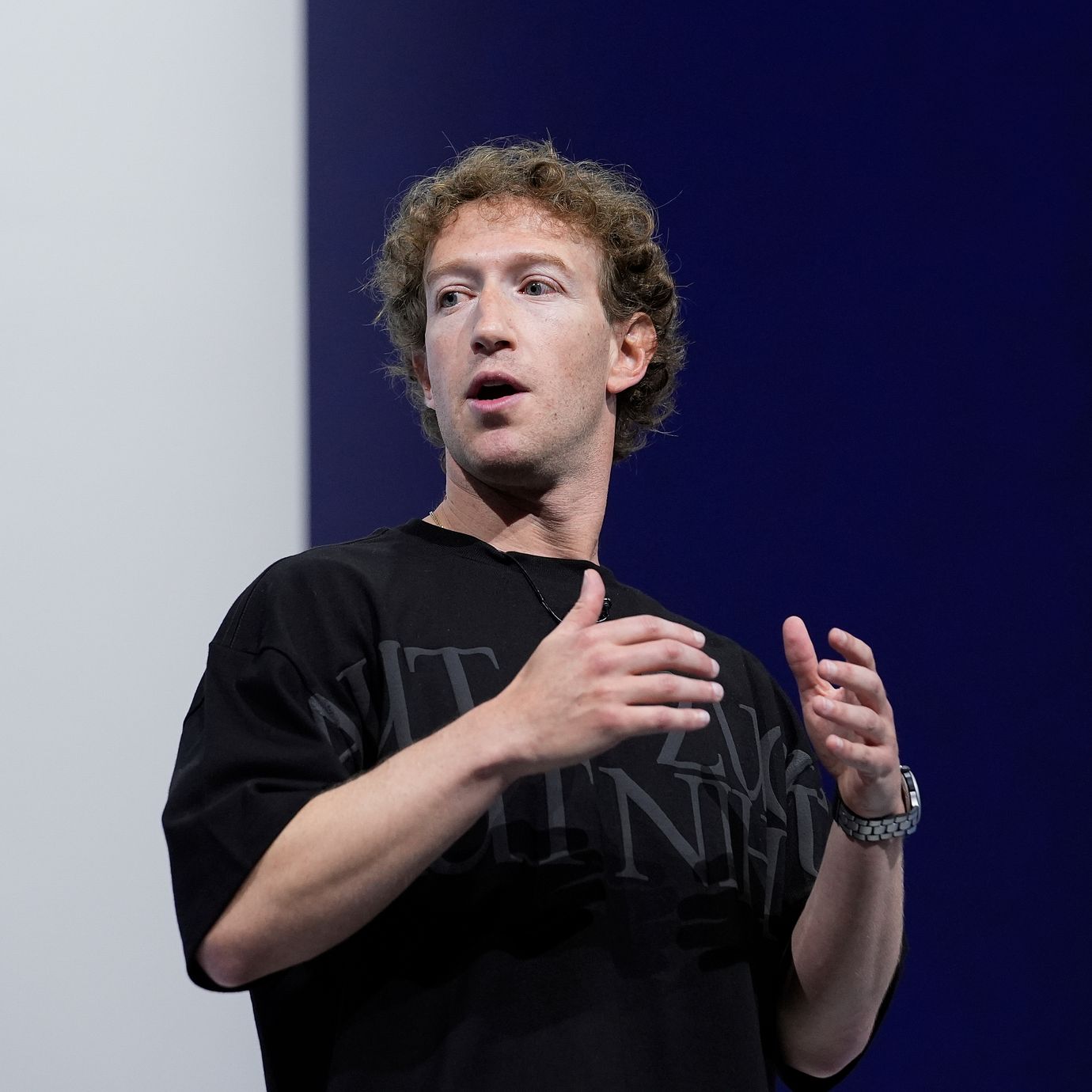
Today’s tech billionaires make up a significant portion of the superbillionaire pool. In addition to Musk, there’s Amazon founder Jeff Bezos, Oracle co-founder Larry Ellison, Meta founder Mark Zuckerberg, and Steve Ballmer, the former chief executive of Microsoft.
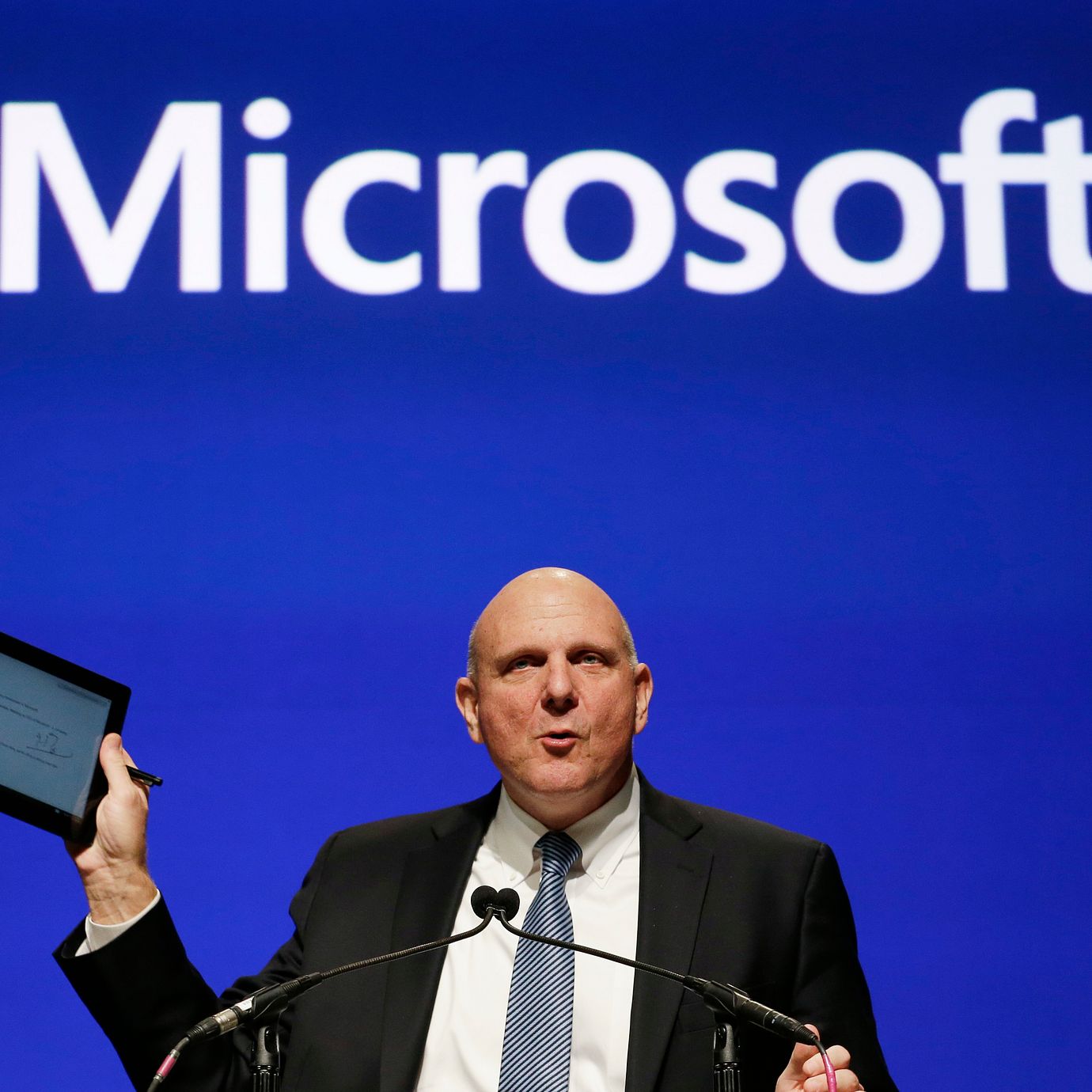
Their wealth is linked almost entirely to the stock prices and therefore future cash flows of the companies they started. Bezos, Zuckerberg and Nvidia’s Jensen Huang have all recently seen their fortunes fluctuate by tens of billions in a single year, depending on investor sentiment. As a result, the scale of their wealth is unparalleled—but so is its volatility.
Unlike past generations, where fortunes were built over decades, today’s tech-driven economy has also enabled founders to amass enormous sums in a matter of just a few years. Before his arrest in 2022, Sam Bankman-Fried, the now-disgraced founder of cryptocurrency exchange FTX, was worth $26 billion before the age of 30, for instance.
“We have had huge technological change the last 40 years, and that has allowed some of these businesses to scale, and created a huge amount of shareholder value,” said Steven Kaplan, a professor at the University of Chicago Booth School of Business who studies finance and inequality. “Walmart is an example, Amazon is another. These are businesses that couldn’t have scaled to this level without technology.”
“The great American fortunes of today are new money, not old”
The current makeup of the superbillionaire population also shows a shift from the world’s richest people inheriting their wealth to a rise in self-made billionaires.
“The great American fortunes of today are new money, not old,” said a 2024 report by the Heritage Foundation, a conservative think tank, which noted the absence of names like Astor, Carnegie, Mellon, Rockefeller and Vanderbilt on lists like the Forbes 400.
“Of the approximately 97 still-living billionaires on the 2005 Forbes 400 list who inherited fortunes, less than half are still on the list today…. The minority of heirs and heiresses who remain on the list today were three times more likely to have fallen in the Forbes rankings than to have risen,” the report said.
Those shifts can be traced to the 1980s and 1990s. That’s due to vast advancements in technology during that period and, with that, a rise in the globalized nature of business.
Nobel Prize-winning economist Joseph Stiglitz, a professor at Columbia University, said he attributes some of the rise of the super wealthy to the inability of antitrust laws to contend with monopoly power in the tech sector.
“We have antitrust laws that were well adapted to Standard Oil but that don’t work well in the tech sphere,“ he said. “Monopoly power has given rise to the potential of enormous amounts of wealth.“

He also pointed to how today’s superbillionaires have become masters at tax avoidance and adept at taking advantage of weaknesses in corporate governance laws to extract “obscene amounts of money” in salary and bonuses. One example, he said, is the $50 billion compensation package from Tesla that Elon Musk has been in court fighting for over the past year.
“These guys have, both at the corporate level and at the individual level, been even better at avoiding taxes than in making good products,” Stiglitz said. “The level of taxes they pay as a share of their profits should be an embarrassment to them.” The 24 superbillionares declined to comment or didn’t respond to requests for comment.
Estimations of billionaire net worth are by nature an inexact science. While it’s simple to calculate the value of publicly traded corporate stock, it’s much trickier to reach an estimate of value for a privately held company. Imberg said Altrata’s findings can vary from rankings in Forbes and the Bloomberg Billionaires’ Index because of factors like methodology and the daily fluctuations of stock prices.
The explosion of billionaire net worth comes at a time of growing economic disparity in the U.S. In 2024, the top 1% of American households held $49.2 trillion in wealth, or about 30% of the country’s total wealth, according to federal data. In the late 1980s the top 1% held 23%.
“A good capitalist system is a system that doesn’t reward exactly anybody too much”
The rise of the superbillionaire raises fundamental questions about the future of wealth distribution and economic power in the U.S. and globally. Economists and politicians remain split over the importance of allowing billionaire wealth to remain uncapped as a means to encourage innovation, or whether society can function equitably when so much capital is concentrated in the hands of so few.
Inarguably, the concentration of wealth among a small number of tech entrepreneurs gives these individuals unprecedented influence over policy, media and society. Musk controls SpaceX, Tesla, and X, influencing everything from space exploration to online discourse, as well as more recently having the ear of President Trump. Bezos owns the Washington Post. Zuckerberg heads Instagram, Facebook and Threads, platforms used by billions. These superbillionaires operate in a largely deregulated digital landscape where oversight is limited.
Kaplan, a self-described optimist, said he sees the same advances in tech and globalization that fueled the rise of the superbillionaire as being a net positive for society, though in the U.S. they have hurt the manufacturing sectors that used to be an economic driver for the middle class.
Luigi Zingales, an economics professor and host of the podcast “Capitalisn’t,” said he sees the rise of the superbillionaire class as a symptom of the failure of capitalism in the U.S.
“A good capitalist system is a system that doesn’t reward exactly anybody too much, because it remains very competitive, and every new innovation is quickly copied,” he said.
Zingales blamed the U.S. legal system for allowing tech companies to protect their trade secrets and innovations to the point where competition is impossible. “I’m the first one to say we need incentives for people to innovate. However, that somebody is reaping such large rewards suggests that the incentives are too much that we could have gotten the same outcome with much less,” he said.
Stiglitz also cautioned that wealth inequality can eventually translate to political inequality, which in turn compounds wealth inequality. “These guys live in a totally different world from ordinary Americans. So they don’t have to deal with public schools, public hospitals and they don’t rely on health insurance in the way that ordinary Americans do,” he said. “That kind of deep divide is polarizing and I think it undermines the kind of solidarity that is important for the functioning of a society.”
Regardless, the growth of the superbillionaire segment shows no signs of slowing.
Imberg said it’s plausible that we could see the world’s first trillionaire in the next few decades.
“One would probably have said no in the past, but anything’s possible these days,” she said.
The world’s superbillionaires
A ranking of those whose net worth is above $50 billion
- Elon Musk – $419.4 billion (Tesla)
- Jeff Bezos – $263.8 billion (Amazon)
- Bernard Arnault – $238.9 billion (LVMH)
- Lawrence Ellison – $237 billion (Oracle)
- Mark Zuckerberg – $220.8 billion (Meta)
- Sergey Brin – $160.5 billion (Alphabet)
- Steven Ballmer – $157.4 billion (Microsoft)
- Warren Buffett – $154.2 billion (Berkshire Hathaway)
- James Walton – $117.5 billion (Walmart)
- Samuel Robson Walton – $114.4 billion (Walmart)
- Amancio Ortega – $113 billion (Inditex)
- Alice Walton – $110.2 billion (Walmart)
- Jensen Huang – $108.4 billion (NVIDIA)
- Bill Gates – $106 billion (Microsoft)
- Michael Bloomberg – $103.4 billion (Bloomberg)
- Lawrence Page – $100.9 billion (Alphabet)
- Mukesh Ambani – $90.6 billion (Reliance Industries)
- Charles Koch – $67.4 billion (Koch)
- Julia Koch – $65.1 billion (Koch)
- Francoise Bettencourt Meyers – $61.9 billion (L’Oréal)
- Gautam Adani – $60.6 billion (Adani Group)
- Michael Dell – $59.8 billion (Dell Technologies)
- Zhong Shanshan – $57.7 billion (Nongfu Spring)
- Prajogo Pangestu – $55.4 billion (Barito Pacific)