Förvaltaren slår index med Tesla, Space X och Spotify i portföljen
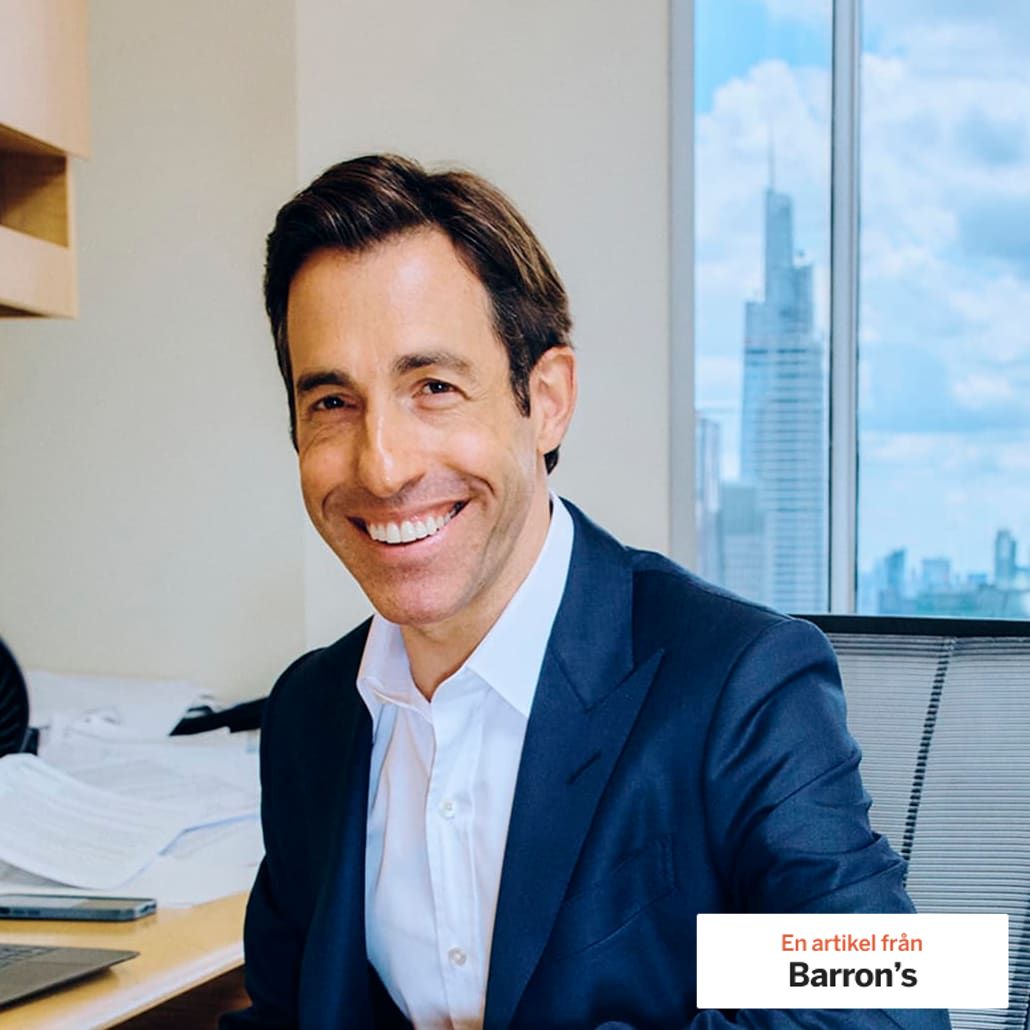
Fondförvaltaren David Baron, som leder Baron Focused Growth, har framgångsrikt investerat i entreprenörsdrivna tillväxtföretag som Tesla och Space X.
Fonden har överträffat både Russell 2500 Growth Index och S&P 500 sedan starten 1996, och fokuserar på att fördubbla investerarnas pengar inom fyra till fem år.
Bland innehaven finns den svenska streamingjätten Spotify.
– Grundaren och vd:n Daniel Ek har en stor andel. Hans intressen är i linje med våra. Det skulle lätt kunna bli ett bolag med 30 procents bruttomarginal över tid, säger förvaltaren till Barron’s.
 Barron's
This Fund Manager Scores with Tesla, Spotify, and Other Founder-Led Firms
David Baron, manager of Baron Focused Growth fund, looks to double investors’ money every four or five years.
Baron Capital, which oversees about $43 billion in 19 funds, occupies offices high up in the old General Motors building on Fifth Avenue in Manhattan, just a stone’s throw from the Plaza Hotel at the southern end of Central Park. There aren’t too many views of New York like the ones outside Baron’s windows, and there aren’t too many firms like Baron, which often takes large positions in founder-led growth companies trading at a discount to the firm’s calculation of what they might be worth in four or five years.
Tesla is one such holding. Baron owns 17.2 million shares, or 0.5%, of the electric vehicle maker, worth about $4.2 billion based on recent prices.
David Baron, founder Ron Baron’s elder son, works in the business, as does his younger brother, Michael. Raised in Manhattan, David attended Emory University in Atlanta, worked as an analyst at Jefferies, and later earned an M.B.A. at Columbia Business School. He joined Baron in 2005, and currently serves as co-president and a portfolio manager. He co-manages the $1.4 billion Baron Focused Growth fund.
Ron Baron looms large at the office and just turned 81, which inevitably brings up questions of succession. “My dad is never retiring,” says David Baron, 44. “He loves what he does and it keeps his mind sharp.”
Baron Focused Growth has beaten the Russell 2500 Growth Index handily over the past three, five, and 10 years. Since its inception in 1996, $1,000 invested in the fund has grown to almost $31,000. The same $1,000 invested in the S&P 500 over the identical span is worth closer to $13,000 now.
David Baron recently spoke with Barron’s about the firm’s investment philosophy and some of its favorite stocks, including Tesla, Birkenstock, and Spotify. An edited version of the conversation follows.
How do you feel about the stock market today?
David Baron: The market is at record levels and people think ‘Oh, it probably can’t go any higher,’ but I don’t really believe that. There is so much capital on the sidelines. As interest rates come down over the next year, we’ll see private equity come back. Blackstone has $200 billion in dry powder to put to work. Apollo has $100 billion. That’s just two firms. Private equity [investors] must be licking their chops right now [waiting] to invest.
There could be 10% to 15% downside in a lot of stocks. There could also be 20% to 30% upside. The risk/reward is skewed favorably. We’re finding opportunities to invest capital.
How do you evaluate companies?
We’re trying to figure out what companies can become. If a stock is trading at a 50% discount to what the company can be worth in four to five years, we’re buyers.
But how do you determine value?
We don’t do [discounted cash-flow analyses]. There are too many variables. We have full models [with] income statements, balance sheets…and assume a reasonable multiple based on what earnings can be in four to five years. The market tries to double your money every 10 years. We try to double it every four to five years.

SpaceX is one of the most valuable aerospace companies on the planet, but it is privately held and not many people own it. How did you get involved?
We started investing in 2017, specifically because of our relationship with Elon [Musk] and Tesla. He didn’t just give us stock. We did the research and thought it was a good investment.
SpaceX has a huge market opportunity. There are 2.5 billion people in the world who don’t have proper internet service. The company just tripled its [Starlink Wi-Fi] subscribers from one million to about three million. It doesn’t need cash. Elon still owns about 45% of the company. Even after SpaceX invested billions of dollars in the business, cash flow is positive.
What makes SpaceX so special?
Its competitive advantage is the reusability of the rockets, which allows the company to have 70% [lower] costs than competitors. Tesla gets three million job applications a year for 30,000 spots. Tesla and SpaceX are getting the best and the brightest.
Yet, the electric vehicle market is only growing more competitive. How much more upside does Tesla have?
As Tesla lowers production costs, it will continue to bring down the price of its cars. There is a lot of opportunity to continue to grow. Combine that with selling customer insurance and full self-driving [software].
As for competition, it is a big enough market for everyone to play in the sandbox. It isn’t a winner-take-all market, and Tesla is still the leader.

You don’t seem caught up in the Wall Street drama about quarterly earnings or vehicle deliveries.
It is much easier to invest in Tesla now than it was 10 years ago, when the company was on the verge of bankruptcy. Today Tesla has a sustainable balance sheet with $30 billion in cash, and it generates billions of dollars a year in free cash flow.
No one pays cash for cars, so as [interest] rates come down, growth will reaccelerate. We’ll see volume growth in 2025—maybe not at the historical rate of 50% a year, but the company can grow by 15% to 25% in 2025 and beyond.
SpaceX is 9% of your portfolio, Tesla is 8%. Let’s talk about the other 83%—specifically, two footwear makers you own.
We started investing in On Holding last year. What we love about that business is innovation. The company is constantly investing and figuring out how to make its sneakers better. It is expanding into tennis and lifestyle footwear. Apparel is 5% of the business today. Over time, it can be 10% to 15% of the business. On is founder-led. The co-CEOs own about 20% of the business, and their interests are aligned with ours.
What does that mean for the stock?
In 2021, this business was doing $800 million in revenue. In 2023, it did $2 billion in revenue at 15% Ebitda [earnings before interest, taxes, depreciation, and amortization] margins. On has a new plan to double revenue to $4 billion in three years. [ON] can generate $700 million to $800 million in Ebitda by then. Why shouldn’t it trade at 25 to 30 times Ebitda? [On currently trades for 21 times estimated 2024 Ebitda.] Nike isn’t growing, but it trades for 17 times Ebitda.
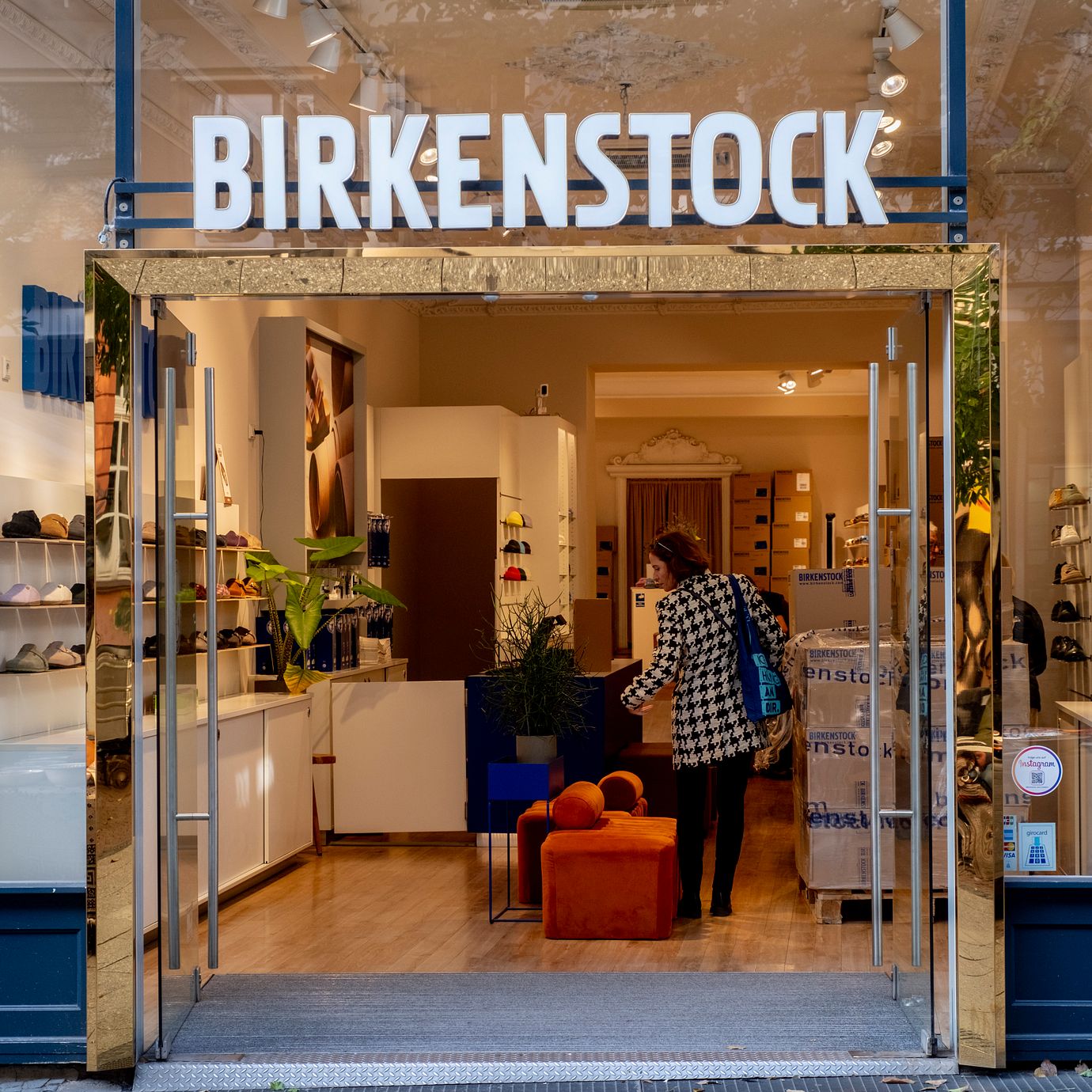
What do you like about Birkenstock?
It is a 250-year-old company that is all about the shoe and the footbed. Birkenstock is known for sandals. There is a huge opportunity to go into closed-toe shoes. People know the brand and love the brand, and are willing to pay a premium price. The product sells itself.
Birkenstock’s Ebitda margins are 30%. Other footwear companies’ are in the mid- to high-teens.
[Private-equity firm] L Catterton currently owns 73% of Birkenstock and LVMH Moët Hennessy Louis Vuitton and LVMH CEO Bernard Arnault own 40% of L Catterton. I want to invest with guys like that.
What are some other investments that excite you?
Spotify tanked [in 2022] as people worried about profitability. The company has a 30% market share in the music-streaming business. Yes, they compete with Apple and Amazon.com, but streaming is their business. The company is constantly looking for ways to make it better.
[Spotify has] 600 million subscribers today. Some 230 million pay for the service; 370 million are getting it free. [Spotify gets] zero pushback when it raises prices—whether it’s a family plan or an individual plan, people need the service. The subscriber count could grow to one billion.
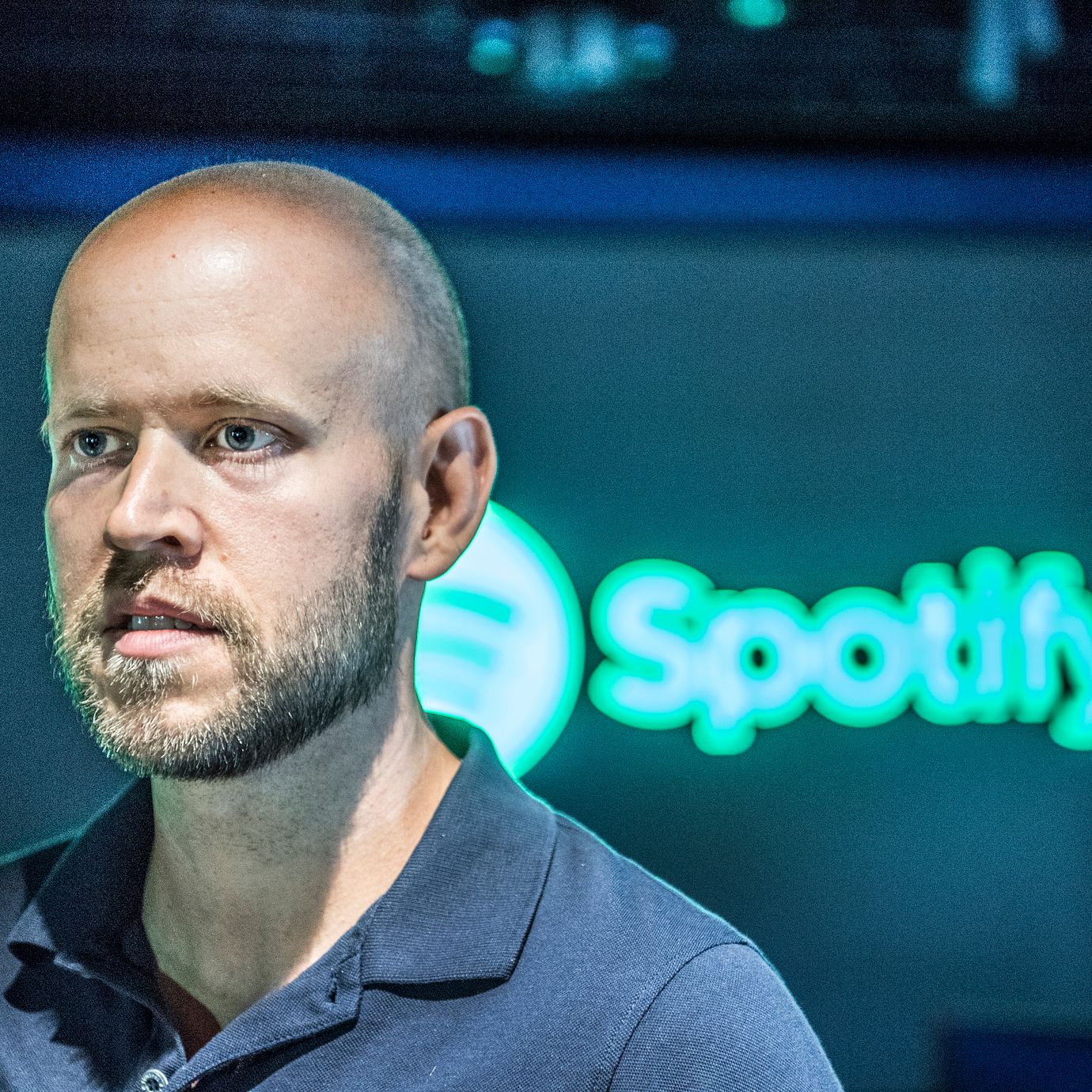
Spotify fits the founder theme.
Yes. Founder and CEO Daniel Ek has a large stake. His interests are aligned with ours. This could easily be a 30% gross margin business over time. [Gross margins were 26% in 2023.] We believe Spotify will start returning capital to shareholders within a year.
There is another ‘ify’ in your portfolio: Shopify. What do you like about it?
Shopify is a good story. The shift to e-commerce is a big deal for this company. Shopify just signed a deal with Target to distribute some of [Shopify’s] merchants on the Target platform.
All Shopify cares about is the merchant, and being the best platform for the merchant to sell its products and acquire new customers. The company is growing revenue at 20% annually. It is investing in marketing, leaning in when others lean out. We love those kinds of businesses. Founder Tobias Lütke owns 7% of the company.
In the bricks-and-mortar world, you own Hyatt Hotels. What is the attraction?
Hyatt has made a huge pivot. By the end of this year, 85% of its business will come from fees. Ten years ago, fees contributed 25%. The fee-based business gets a higher multiple, and has more recurring earnings.

What is the growth outlook?
Hyatt is significantly underpenetrated versus Marriott International and Hilton Worldwide Holdings , with 2.8 million rooms combined. It has a pipeline of hotels that will add 40% to the current room base if all come online in the next three to four years.
Hyatt should be able to grow units by 6% to 7% a year, and pricing by 2% to 3% a year. With a little bit of margin expansion, you’ll see low double-digit Ebitda growth. All the cash flow is being returned to shareholders through buybacks.
The chairman, Tom Pritzker, owns 20% of the business. His shares are voted by the board.
One of your holdings stumped me: FIGS. What does the company do?
FIGS makes outfits for healthcare workers. They make scrubs. A competitor just filed for bankruptcy protection. FIGS has $500 million of revenue in an $80 billion global market opportunity.
The stock is down this year because the company had some issues with its core consumer, who is more impacted by higher interest rates and cost inflation due to debt taken on to pay for school. FIGS’ customer is young and more susceptible to changes in the macro environment.
Pre-Covid, FIGS had 25% Ebitda margins. Now Ebitda margins are 10%.
What is the outlook?
Inventory is in a better position now. There is a huge opportunity for international growth. There is an opportunity in outerwear scrubs. The company is [getting] sports franchises: It just struck a relationship with Everton [a British soccer club] to dress up their emergency medical technicians. Over the next five to seven years this could be a multibillion-dollar business.
FIGS is also founder-led. The two women who co-founded the company own 15% of the business and are buying more stock at current prices.