Xi Jinping redo för en tredje mandatperiod – så påverkas investerare
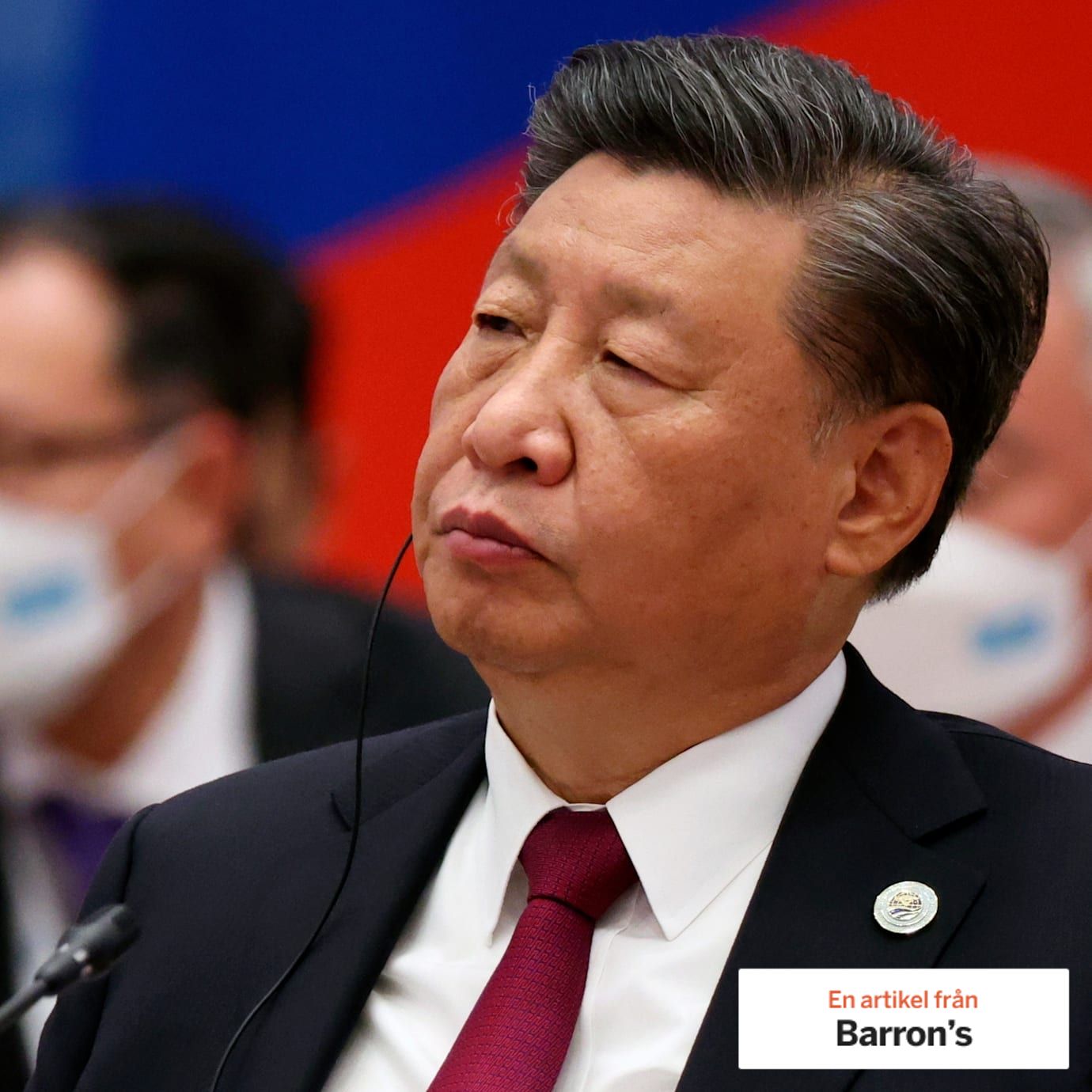
Den 16 oktober inleds det kinesiska kommunistpartiets tjugonde kongress då bland annat en ny femårsplan ska antas och Xi Jinping väntas omväljs som president för en tredje mandatperiod. Tilldragelsen kommer samtidigt som investerare och multinationella företag omvärderar sin exponering mot Kina, skriver Barron’s.
Den som ändå vill fortsätta att investera i Kina bör fokusera på strategiska branscher som 5G, grön energi och halvledare, eller de som gynnas av partiets ambitioner att trigga en ny babyboom och förbättra levnadsstandarden för medelklassen.
 Barron's
China’s Xi Is Getting a Third Term. Investors Hope Something Gives.
Investors have been unsettled by China’s weak economic growth prospects, its drastic Covid policy, and the next phase of the contentious U.S.-China relationship. They are about to get some direction from this month’s meeting of top leadership of the Communist Party of China, when President Xi Jinping is expected to secure a norm-busting third term in office.
The twice-a-decade party congress—this is the 20th—begins on Oct. 16, and is part of an opaque political leadership transition that includes a five-year road map for China’s economy, including glimpses of policies that it may prioritize as it grapples with a shrinking population, rising unemployment, and a need to become more self-reliant in critical technologies.
The gathering comes as investors and multinational companies reassess their exposure to China amid weakening consumer and business confidence. Adding to the unease: rare flashes of unrest and escalating tensions over the Taiwan Straits.

The MSCI China index has lost about 40% of its value in the past two years amid a volatile mix of regulations and crackdowns that sent the property market spiraling down and upended the business models of sectors from widely held school tutoring companies to internet giants. Those looking for a reversal of China’s ideology and its aggressive foreign policy stance may be disappointed.
Despite murmurs that Xi’s power is diminishing, analysts widely expect the 69-year-old, who broke tradition by eliminating term limits at the last party congress, to secure a third term.
There is no obvious successor to Xi, who is also the Communist Party’s general secretary, allowing him to control key positions of power in an authoritarian government—public security, intelligence, and the military—through close allies or those who have worked with him since he was in provincial government.
“Xi’s report to the congress could lean more toward an ideological view of international relations and the idea of separate camps with China and like-minded countries and then the West,” says Neil Thomas, a senior China analyst at Eurasia Group. “That’s going to feed into a deepening of U.S.-China strategic competition and add further stress to China’s economy.”
Investors are monitoring nuances around policy as officials navigate a confluence of challenges, including a yuan that is flirting with a nearly 30-year low against the dollar and hamstringing policy makers’ efforts to help the economy.
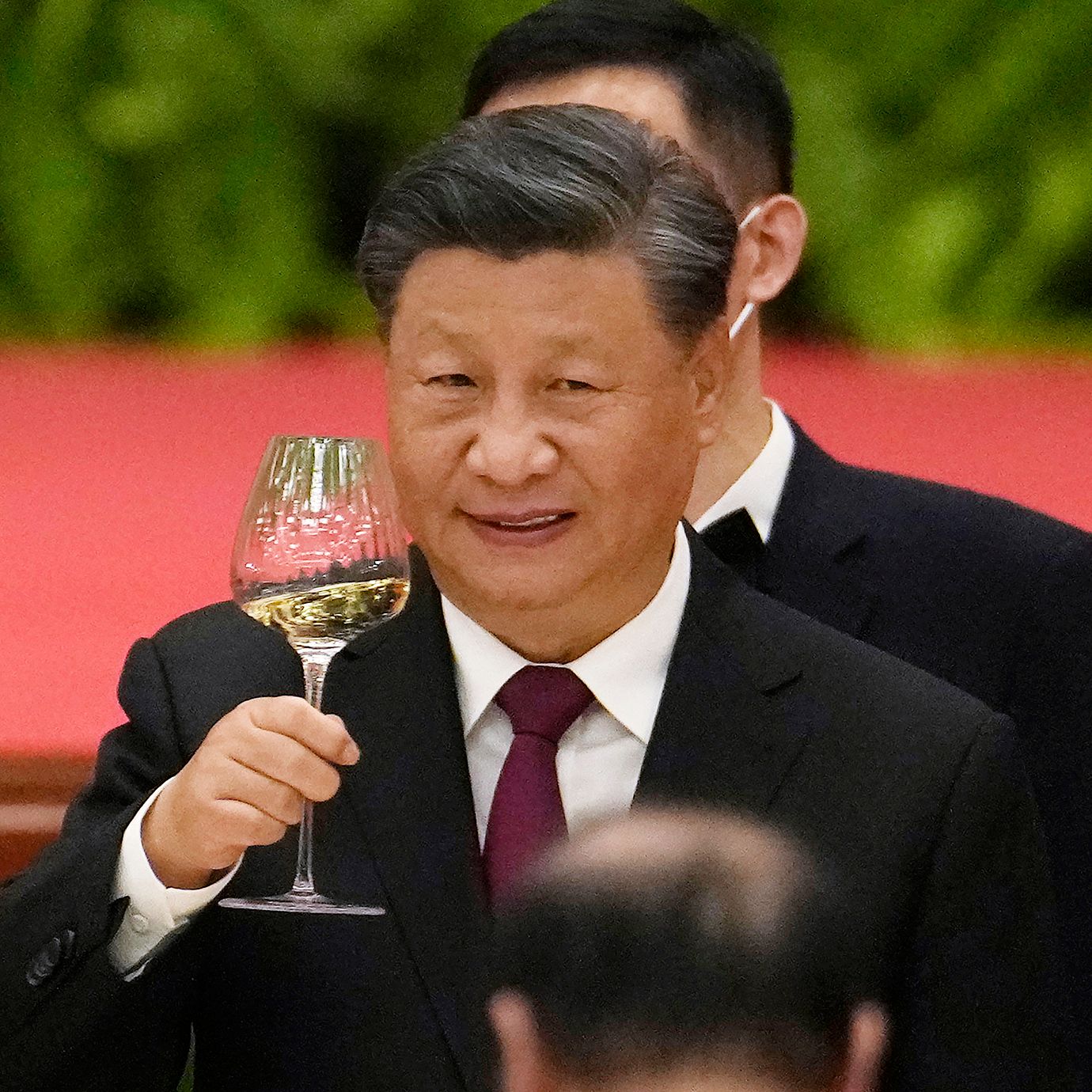
One major catalyst for Chinese stocks would be an easing of Covid restrictions, or even language that stresses that China will focus on science to navigate that path, says Victor Shih, associate professor and Ho Miu Lam Chair in China and Pacific Relations at the University of California, San Diego.
Xi has doubled down on his efforts to eradicate Covid, taking pride in the country’s low death toll compared with other countries. Yet China hasn’t had access to therapeutics or the most effective vaccines. Among the elderly, full vaccination rates hover around 60%, and China’s public-health infrastructure, with hospitals that have too few beds, is ill-suited to handle widespread outbreaks.
There are glimpses of easing, with restrictions softening in Hong Kong and a public-health adviser to Xi stating that Covid should be treated more like the flu, said Brookings Institution Senior Fellow Cheng Li at a recent event hosted by the think tank. But analysts don’t see a meaningful change in China’s Covid approach until early next year.
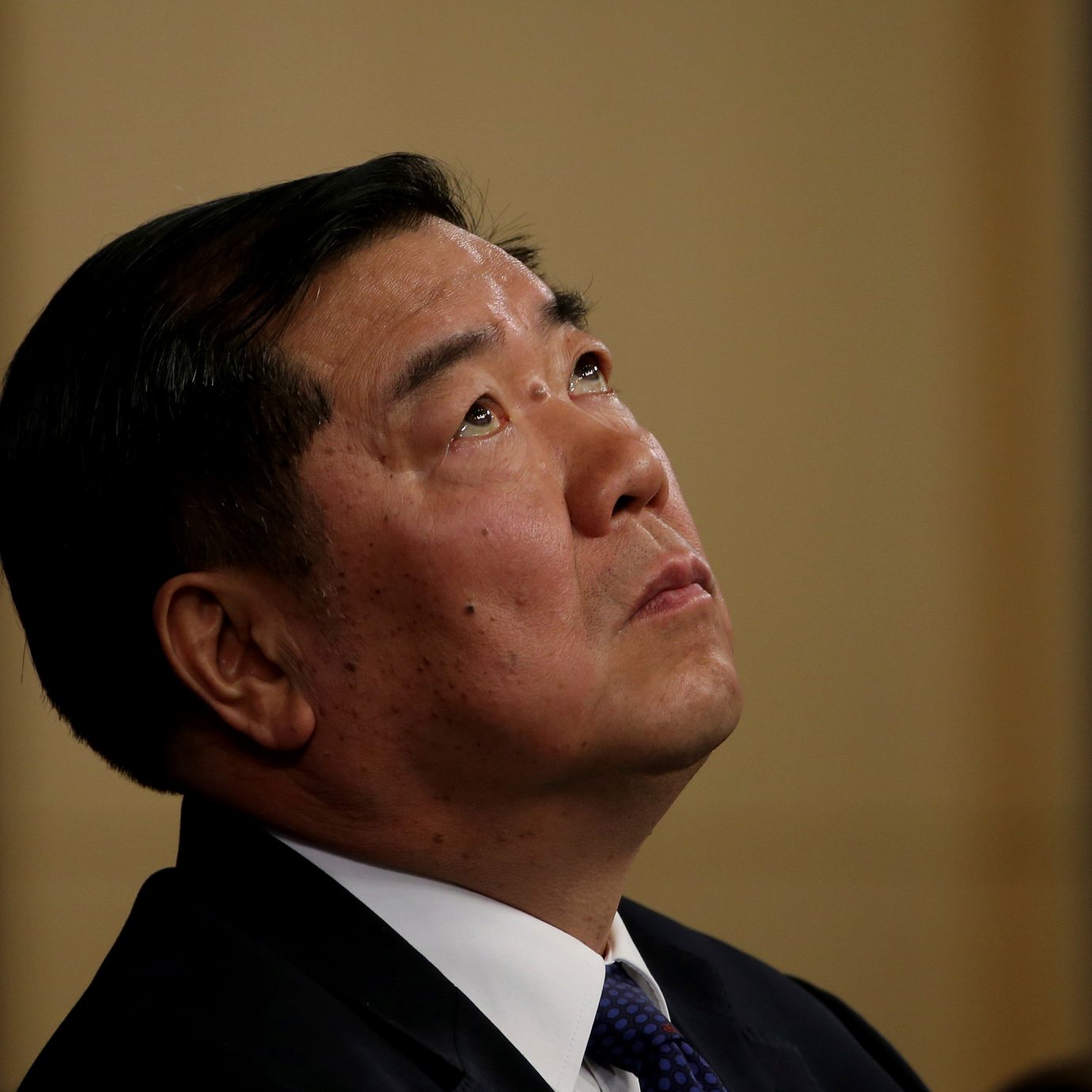
More aggressive stimulus would help revive the economy, either through an acceleration in infrastructure spending or an intensive effort to ease credit conditions. One signal that could be forthcoming is if He Lifeng is promoted to the Politburo Standing Committee, the highest policy-making body. He heads up the National Development and Reform Commission, the state economic planning agency, and is seen as pro growth. Loosening credit conditions to revive the property market would be a near-term positive, though it would exacerbate China’s debt problem, says Shih.
Other priority areas could provide investment opportunities. As China tries to become a more formidable rival to the U.S., self-reliance in critical technology will continue to be a focus in sectors such as semiconductors and artificial intelligence.
Investors should note the prospect of Xi becoming leader for life. “The fact that Xi has been able to organize a third term means that all bets are off in terms of China’s efforts to become more institutionalized, more predictable, and more open to foreign investment,” says Christopher Smart, chief global strategist at Barings Investment Institute, who formerly worked in the Treasury Department.
That is not encouraging for companies and investors whose forays into China were based on the old model. The shuffling of top posts in the Politburo could also be bad news for repairing the U.S.-China relationship.
“The go-to guys for people in Washington or Wall Street to raise concerns with won’t be there anymore”
Three of the seven standing committee members are expected to retire, including top trade negotiator and vice premier, Liu He, and Premier Li Keqiang, two powerful officials with their own support bases. They took a more technocratic approach and leaned, at least on the margin, toward reform and opening up China.
“There will be fewer big names to push back against ideologically led policy making. Both led the turn in policy in March when “common prosperity” was being put on its back foot and there was an easing up on the technology and property sectors,” says Rory Green, head of China and Asia research for TS Lombard. “The go-to guys for people in Washington or Wall Street to raise concerns with won’t be there anymore.”
Candidates to replace them include Politburo standing committee member Wang Yang, Executive Vice Premier Han Zheng, and He—all Xi loyalists. Worth watching: The promotion of Vice Premier Hu Chunhua, who is close to former leader Hu Jintao. That would signal some pushback to Xi, and the potential to reassess policies that have roiled the markets, Green adds.

The first decade of Xi’s tenure was about consolidating his power inside the Communist Party with aggressive campaigns against corruption, military reforms, and combating poverty. A third term will give Xi the mandate to accelerate changes that could include state market interventions and redistributive policies aimed at improving the lives of the middle class, including the quality of care, cheaper home prices, and better work benefits, says Green.
“These changes are going to be substantial to China’s political economy. Xi is quite Marxist and socialist, and there is a recognition that China’s previous growth model—debt and property focused, and overreliant on exports and imported technology—is at its limit,” he says.
That’s one reason that investors may hear more about “common prosperity,” a nebulous idea to make economic growth more equitable that underpinned the internet crackdowns and pushed top technology executives to pledge a share of their profits to address inequality.
While policy makers may not push such reforms until they can stabilize the economy, investors should be prepared. “It’s not a question of if but when,” Green says. “As soon as there’s an upturn, perhaps in the second quarter, and they get the confidence and growth back up, the common prosperity agenda will come forward, including possible measures like a pilot property tax.”
While analysts don’t expect Xi to invade Taiwan, the self-ruled island that China claims as its own, they see nationalism rising as the Communist Party shifts from prioritizing growth and looks for other factors to underpin its legitimacy.
“It’s more complicated shoals to navigate,” Smart says. “If you’re a Chinese company looking at America or an American company looking at China, there is an increasing likelihood you will be taken hostage by one government or the another in retaliation for some political event unrelated to your operation.”
A beaten-up market that gets a boost from more economic stimulus or a Covid exit plan could become a tactical opportunity in a couple of months for investors. Those willing to wade in should focus on beneficiaries of China’s push to spur a baby boom, improve the lives of its middle class, and bolster its competitive positioning, such as 5G, clean energy, and semiconductors.
In other words, invest with the party.