630 000 konstverk avslöjar världsekonomins känsloliv
Genom att analysera hundratusentals målningar från sex århundraden visar forskare hur konstens känsloläge kan spegla ekonomiska skiften, skriver The Economist.
När BNP stiger och handeln blomstrar tycks konstverken bli ”gladare”, med mindre sorg och mer förnöjsamhet i motiven.
Studien pekar på att konstnärer inte bara fångar sin samtid, utan även fungerar som oväntade indikatorer på ekonomi och tillväxt.
 The Economist
What 630,000 paintings say about the world economy
Kandinsky, Monet and Rembrandt were economists as well as artists.
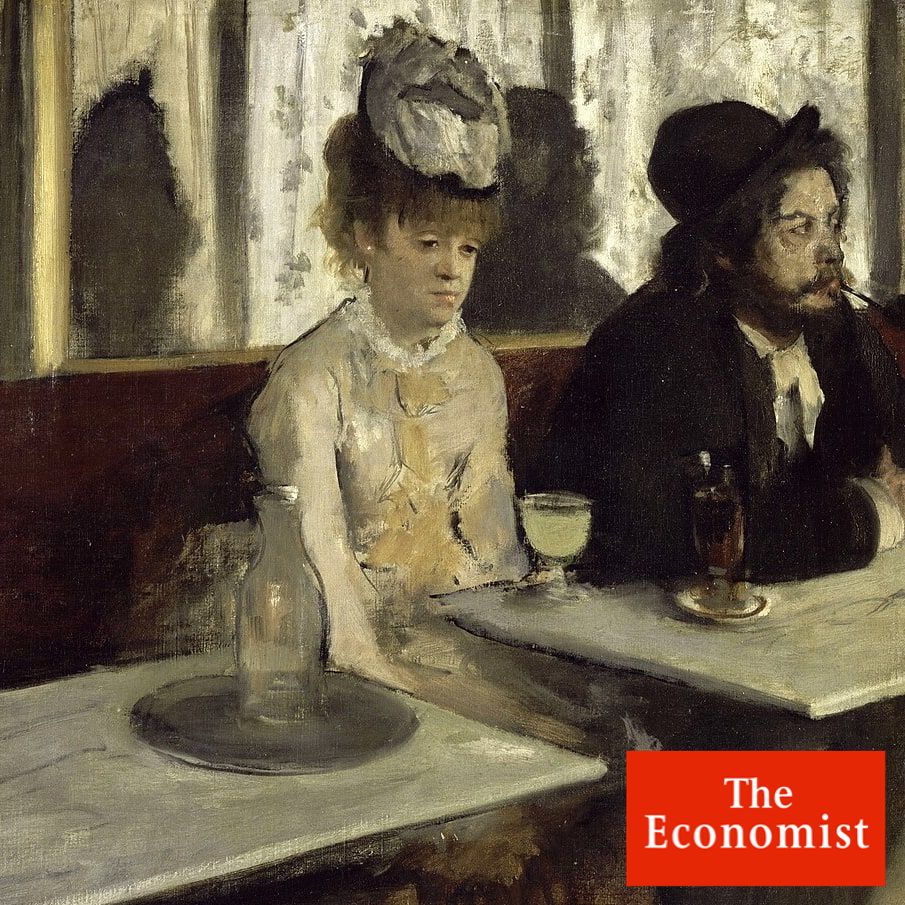
Two figures share a table, but not much companionship, in a Parisian café. The man looks distracted, a pipe gripped in his mouth. The woman, eyes down, shoulders slumped, nurses a glass of moss-green absinthe. The painting, unveiled by Edgar Degas in 1876, boasts several titles (“L’Absinthe”, “In a Café” and others). It also divides opinion. One viewer, appalled by the woman’s loose morning shoes and the thought of her soiled petticoats, saw the painting as a cautionary tale against idleness and “low vice”. He then changed his mind. “The picture is merely a work of art”, he later said, “and has nothing to do with drink or sociology.”
The three authors also find suggestive correlations between artistic mood and economic openness
Great paintings can inspire entire volumes of interpretation. The ArtEmis project, which concluded in 2021, took a more concise approach. It recruited people to log their emotional responses to thousands of paintings in a digital archive. These “annotators” could choose one of eight feelings, each illustrated by an emoji. Based on this exercise and a later, bigger project called ArtELingo, complex works of art like Degas’s 1876 masterpiece can be succinctly summarised in a handful of numbers. When asked how L’Absinthe makes them feel, over three-fifths of people choose “sadness”. Almost a fifth choose amusement. About a tenth pick contentment (perhaps they appreciate roomy footwear). None chooses the other listed emotions: anger, awe, disgust, excitement or fear. A few pick a ninth, residual option: “something else”.
ArtEmis carried out polls for 80,000 or so paintings. The project also tried, with mixed success, to emulate human responses with artificial intelligence, training a model to predict how people might feel. A new paper, entitled “State of the Art”, by Clément Gorin of the Sorbonne School of Economics, Stephan Heblich of the University of Toronto and Yanos Zylberberg of the University of Bristol, tries to do the same. The authors trained a model on 70% of the paintings, and tested if it could predict poll results for other works. Once satisfied, they unleashed this automated aesthete on over 630,000 paintings from the 15th century onwards.
The trio describe the data as a “historical time series of emotions”, subscribing to a theory of art laid out by Tolstoy in 1898. He believed that artists could transmit feelings to an audience through their work, as if by contagion. “The stronger the infection, the better is the art as art.” If paintings do communicate in this way, then, in principle, the steps of transmission can be retraced in the reverse direction, from audience back to origin. The emotional response of people today to an artwork of yesteryear tells you something about its creator and the world that shaped them.
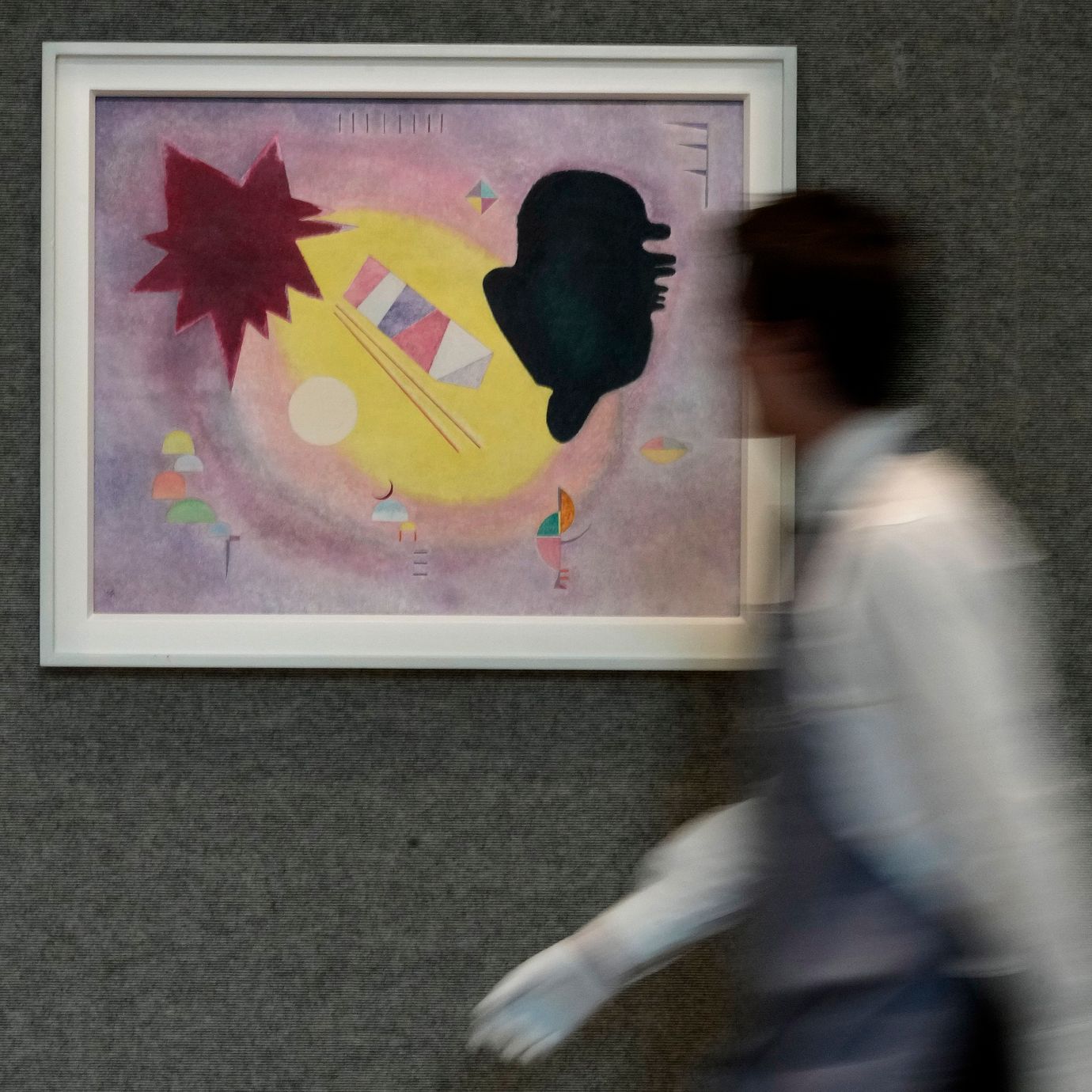
Messrs Gorin, Heblich and Zylberberg show that painters have their own emotional signatures. Kandinsky tends to excite or amuse, Monet evokes contentment, Rembrandt sadness. If you simply know the artist, you can explain 40-50% of the variation in art’s emotional valence, the authors calculate. But that leaves a lot to be explained by other factors. There are, for example, small but systematic differences between countries in the impact of their art. Pick a random year and painting, and the chances that it will evoke contentment are 31-32% if it was produced in Denmark or Britain but only 26% if in Italy or Spain. These probabilities also respond to historical upheavals, such as the Spanish civil war.
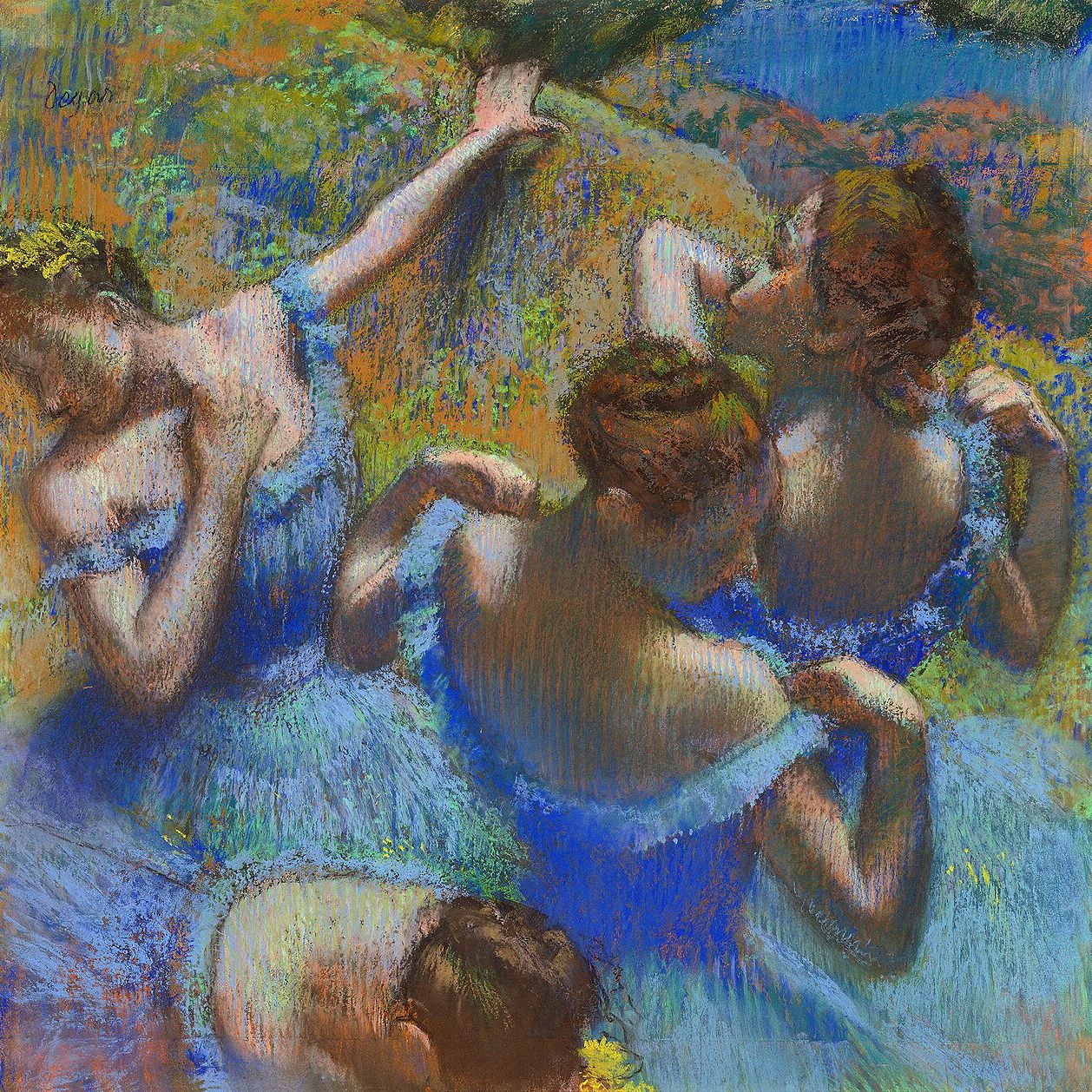
Individual painters change over the course of their career. Evocations of fear increased in the later work of El Greco, a Greek painter who moved to Spain, perhaps because of the Counter-Reformation. Degas himself had ups as well as downs. About a quarter century after “L’Absinthe”, he produced another famous painting, “Blue Dancers”, depicting four ballerinas, yet to take the stage, their gleaming limbs and (unslumped) shoulders arrayed in striking diagonals across the canvas. When asked how this work made them feel, only one out of 20 people chose sadness.
Messrs Gorin, Heblich and Zylberberg wonder if shifts in an artist’s emotional repertoire can be linked to changes in their country’s economic circumstances. This is not straightforward. Look at a chart of GDP per person in almost any country over recent centuries and it tends to look like a “hockey stick that is more or less delayed”, Mr Zylberberg points out, whereas the output of a country’s artists is always far more crooked. The trio nonetheless find that economic growth was associated with changes in artists’ emotional mix. If GDP per person were to rise by 4% a year over 25 years, the chance that a given artist’s painting would convey sadness falls by 2.2 percentage points from 11% to 8.8%. The chance it would evoke contentment rises from 31.4% to 33%.
Globalisation and its contents
The three authors also find suggestive correlations between artistic mood and economic openness. In the last three decades of the 19th century, for example, Britain’s trade with the rest of the world expanded briskly: imports grew from 28% of GDP to 48%. This kind of globalisation is associated with happier artwork, according to their calculations: a decline of 1.4 percentage points in the chances that a given artist’s work will evoke sadness, and a rise in the probability that it will convey contentment or even awe. This newspaper was established in the 19th century in the belief that free trade is good. It turns out it can also be awesome.
Art critics may object to the reduction of great paintings to emotional percentages, especially as most of the numbers are generated by a machine. None of the three economists claims any qualification in art history. But as it happens, Mr Zylberberg’s father was a professional painter. Deeply marked by the Holocaust, his early work evoked “fear and anger”, says his son. Towards the end of his career, his art “became more positive”. This data does not appear in the paper. It is nonetheless a poignant illustration of the thesis that art reflects society—and that shifts of feeling in an artist’s oeuvre can serve as an emotional index of the times.
© 2025 The Economist Newspaper Limited. All rights reserved.