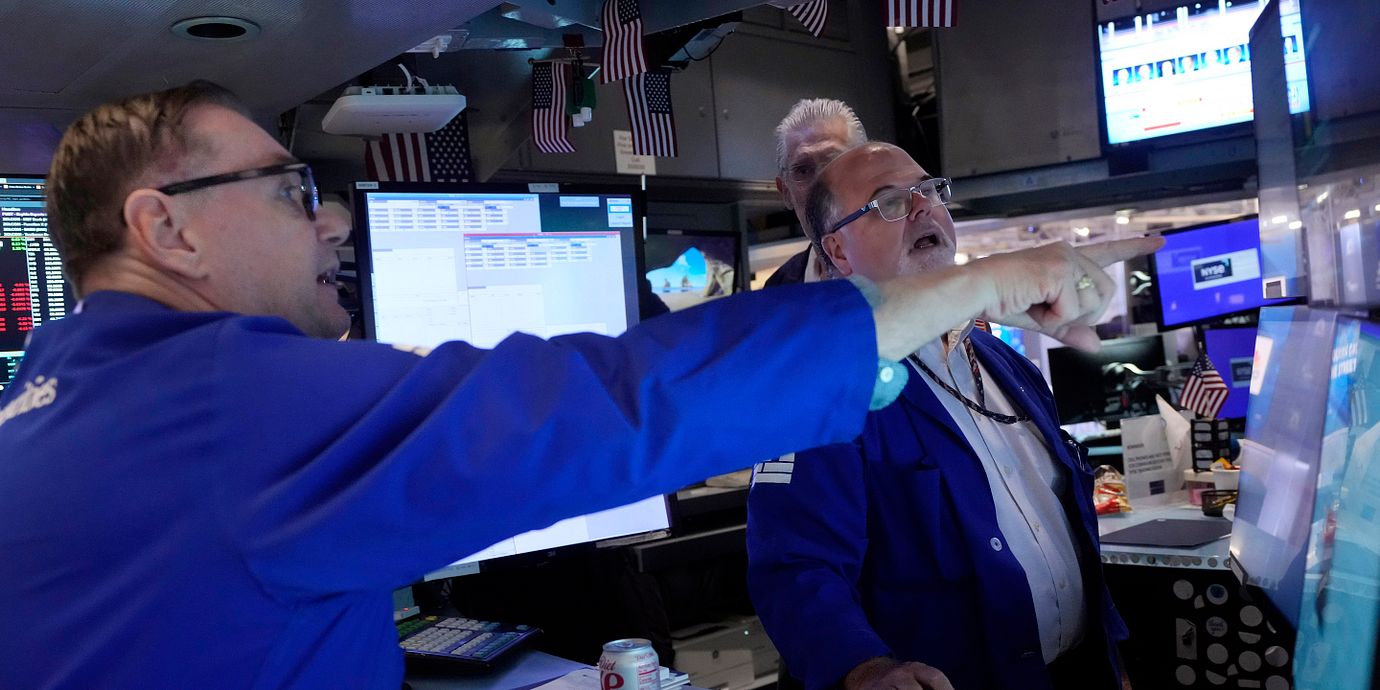
Handlare på börsgolvet i USA. (Richard Drew / AP)

Analyser: Tina är tillbaka när USA är enda alternativet

Fenomenet ”tina” är tillbaka – men i en ny skepnad, skriver Financial Times Katie Martin. I vanliga fall brukar förkortningen referera till att det inte finns något alternativ till aktier. Nu menar investerare att det inte finns något alternativ till specifikt amerikanska tillgångar – oavsett om det gäller aktier, räntepapper eller dollarn.

Tullarna väntas suga musten ur resten av världen, vilket gör caset för amerikanska aktier överväldigande. Och även om en kris drabbar USA skulle det sannolikt bara öka efterfrågan på amerikanska obligationer, konstaterar Martin.

När prognossäsongen inför nästa år nu når crescendo är budskapet från banker och analyshus solklart: Fortsätt att luta dig mot amerikanska aktier, skriver Katie Martin.

Bloombergs John Authers är däremot skeptisk till prognossäsongen, som han menar är slöseri med tid.

”Det är inte bara fånigt att ägna tid åt att titta på slumpmässiga, korta tidsperioder, för de flesta institutioner är det långsiktig utveckling som verkligen betyder något”, skriver han.

bakgrund
 
There is no alternative (tina)
Wikipedia (en)
"There is no alternative" (TINA) is a political slogan originally arguing that liberal capitalism is the only viable system. At the turn of the 21st century the TINA rhetoric became closely tied to neoliberalism, and its traits of liberalization and marketization. Politicians used it to justify policies of fiscal conservatism and austerity. The slogan is strongly associated with the policies and persona of Margaret Thatcher, the British prime minister and leader of the Conservative Party during the 1980s, and, as German: alternativlos, with Angela Merkel, a Chancellor of Germany (2005-2021). Researchers of populism generally agree that its growth since the 1990s is the result of political elites accepting certain concepts (like free market) as unalterable truths and the associated disappearance of the political discord (so-called post-politics). This created a virtual "party cartel", where the views of established parties did not differ on policies. Due to growing inequality, part of electorate found itself on the losing end of these policies, but the agency of voting became hollow, as no mainstream parties were able to challenge the consensus. As a result, the political doors swung wide open for the populist newcomers like the aptly named Alternative for Germany or Viktor Orbán's post-2016 version of Fidesz in Hungary.

Läs också

Omni är politiskt obundna och oberoende. Vi strävar efter att ge fler perspektiv på nyheterna. Har du frågor eller synpunkter kring vår rapportering? Kontakta redaktionen