Faxkrav och tullkaos – nu ska EU rensa byråkratin
EU:s inre marknad är fortfarande splittrad, med hundratals regler som skiljer sig åt mellan medlemsländerna. Företag vittnar om ett lapptäcke av byråkrati – från krav på faxar och blått bläck till olika förpackningsregler.
Nu vill kommissionen rensa upp. Den nya strategin fokuserar på att harmonisera regler, stärka tjänstemarknaden och förenkla för småföretag.
– Vi måste agera, annars kommer de strukturella förändringar som sker globalt inte gynna Europa, säger Danmarks näringsminister Morten Bødskov.
Men nationella intressen hotar att urvattna ambitionerna, skriver Financial Times.
 Financial Times
Europe’s plan to finally make its single market work
Three decades after it was launched, hundreds of barriers still persist within the EU. In an era of trade wars, Brussels has made it a key priority.
When Belgian-based multinational Umicore ships rubbish within the European Union, it has to send through authorisation documents via a fax machine in one EU country and ensure signatures are in blue ink instead of black in another.
These are just some of the obstacles Umicore faces to get waste shipments from all over the European Union to its giant recycling plant in the city of Antwerp.
The list of different requirements is so long it resembles a trade route across the Hanseatic League, which peaked in the Middle Ages, rather than one through the world’s largest single market created in 1993.
Umicore recycles much-desired critical raw materials, for example from old electronics, within the EU. But suppliers are sometimes more inclined to export their waste outside the EU instead of shipping it within the bloc given the bureaucratic challenges, such as dealing with documents in several different languages and managing myriad licence regimes.
“And if we decide because of a logistical challenge to deviate from the initial route, we have to apply again in the different member states,” says Bart Sap, Umicore’s chief executive.
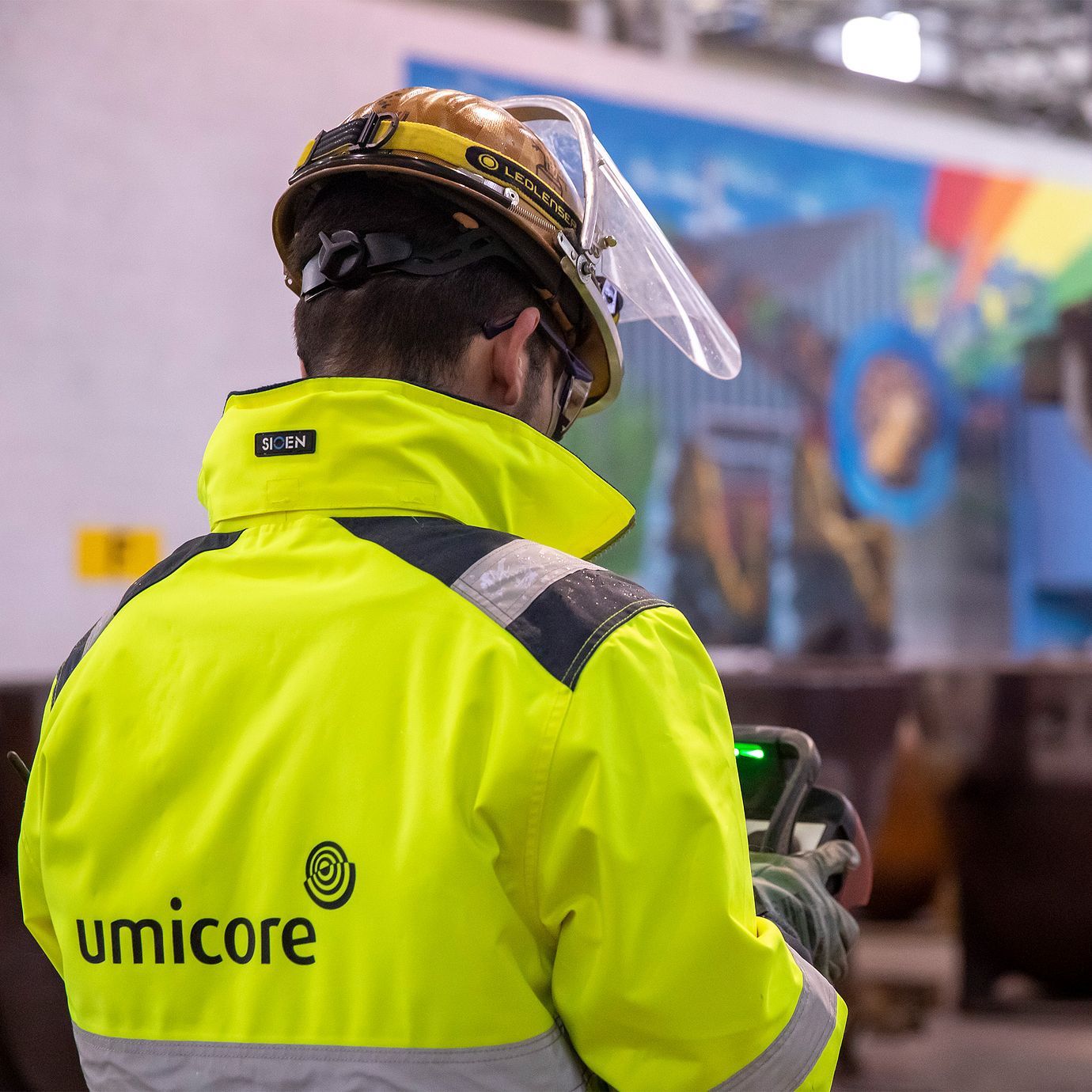
The administrative obstacle course that Umicore faces with every shipment is the upshot of the incomplete promises of the EU’s single market.
Bringing together 450mn consumers, the project was meant to allow people, goods, services and capital to move seamlessly across the continent. But more than 30 years later, hundreds of barriers still persist. The inability of EU governments to overcome their own national interests has slowed down the bloc’s push to become more competitive.
A series of global crises has sharpened resolve among EU leaders. At stake, they believe, is Europe’s economic survival in an era of trade wars and the struggle for dominance in everything from artificial intelligence to the green transition. The war in Ukraine, deepening instability in the Middle East and Europe’s faltering economy have added to a renewed momentum.
“The international trade order is in disarray, the US market is partially closing down,” says a senior EU diplomat. “We need improvements in the single market to compensate for these external factors.”
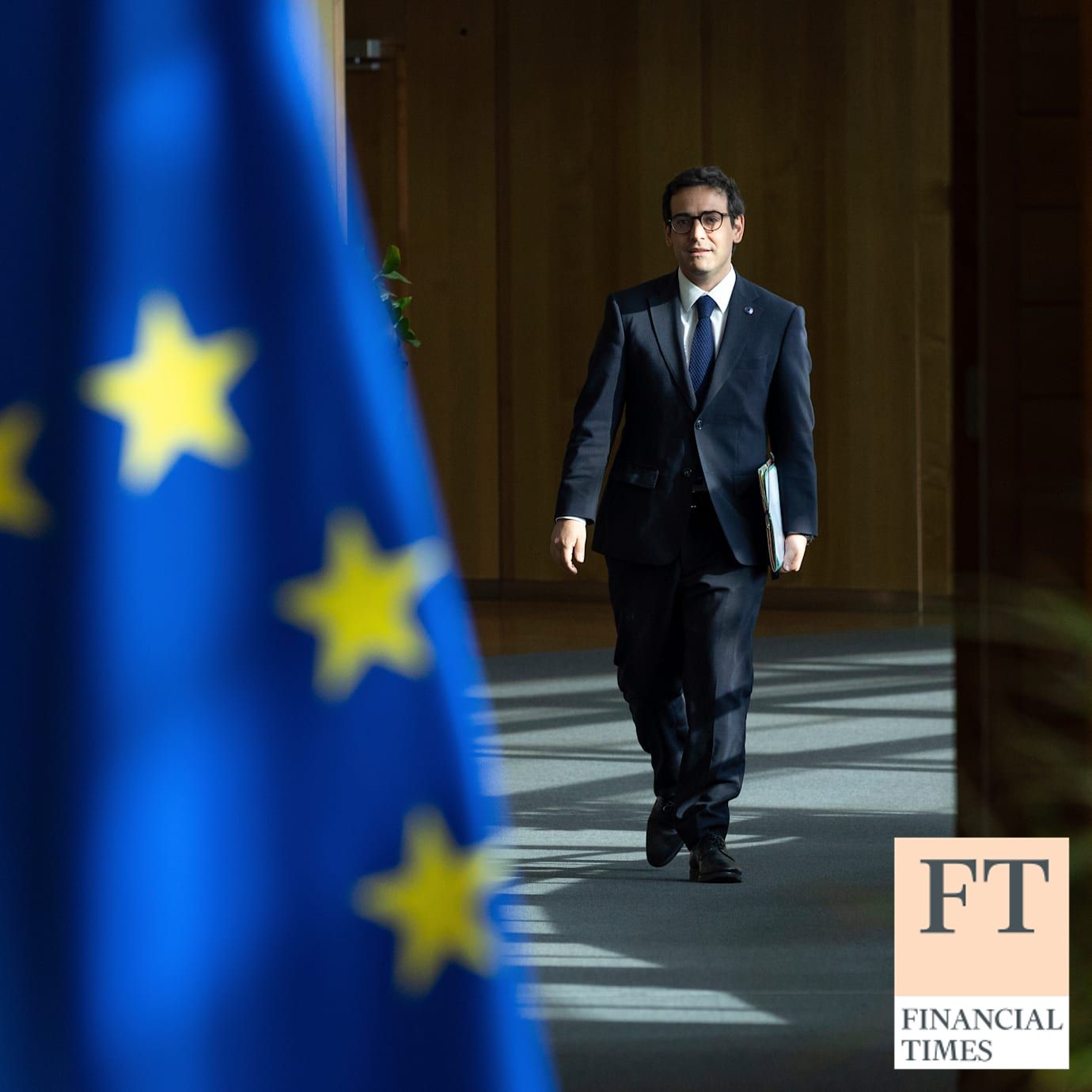
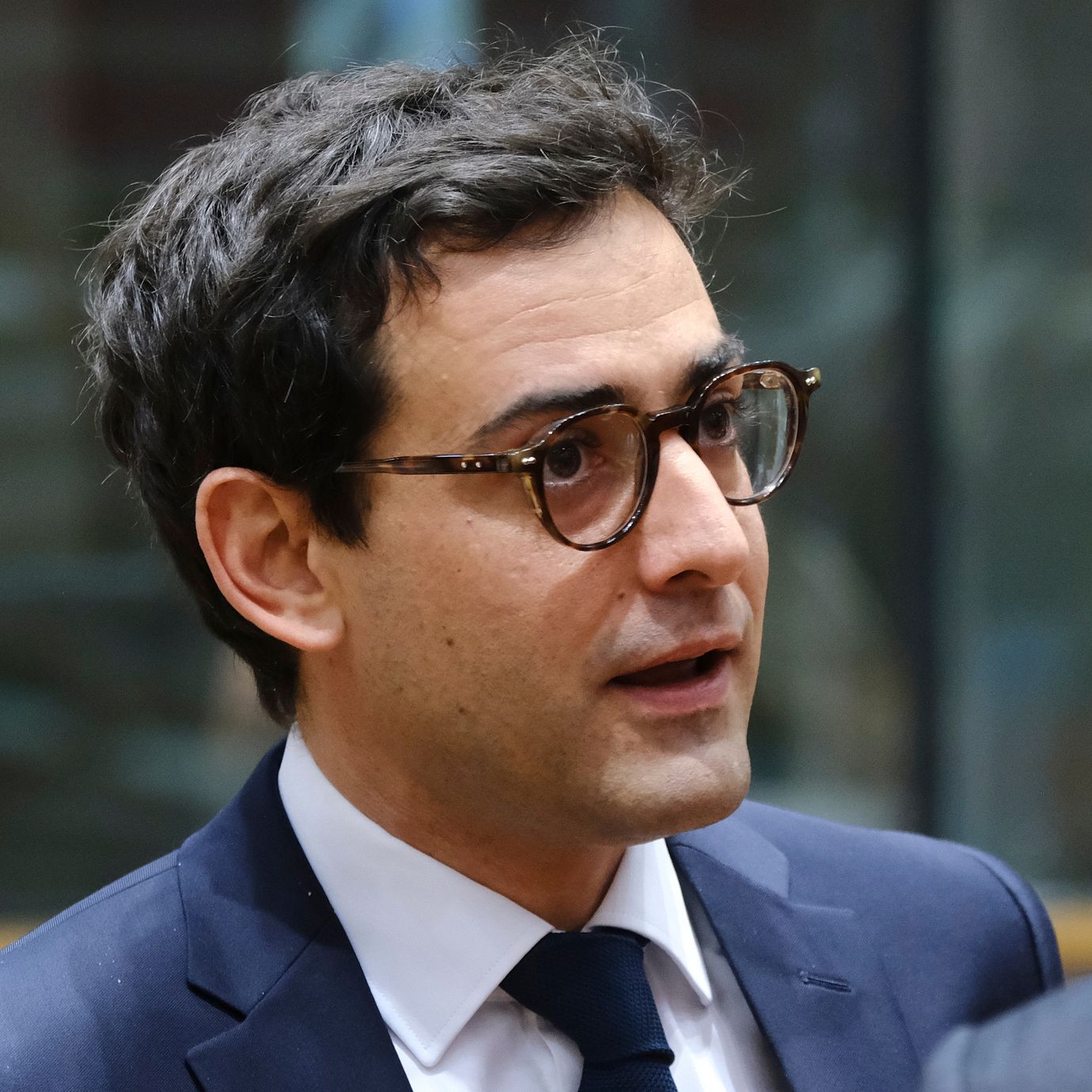
On Thursday the EU’s 27 leaders will meet in Brussels to discuss the “challenging international context and our internal economic priorities, such as deepening the single market”, according to a letter sent to them by European Council President António Costa. This follows the unveiling of a new single market strategy by the EU’s industry chief Stéphane Séjourné in May.
“Unlike transatlantic trade, we can act on the single market ourselves”
Costa says that the single market is the “cornerstone of European competitiveness and a key geopolitical asset”.
“That’s why we need to be bold in pursuing its further integration and in removing remaining internal barriers,” he tells the FT.
But earlier attempts to unite the bloc have floundered on national sensitivities and the inability to push through the necessary measures in its 27 capitals. Translating the newly found political momentum into the necessary reforms proposed will be the toughest challenge.
Some leading companies have noted that there is less paperwork involved in sending a worker to the US or Taiwan than attempting to move them within the EU.
“The time for big speeches is over. We know where to go,” says Danish industry minister Morten Bødskov. Copenhagen will gain greater policy influence in Brussels when it takes over the rotating presidency of the Council of the EU in July.
Bødskov warns that “if we don’t act now, the structural changes happening globally will not favour Europe.”
The aims of the single market date back to the EU’s precursor, the European Economic Community. When it was established in 1957, one of its central goals was to create a common area with free movement of goods, services, capital and people — known as the “four pillars”.
But the single market, which was formally launched in 1993, has been eternally hampered by overriding national interests and fears among member states of handing over too much power to Brussels. Now, the European Commission is trying again.
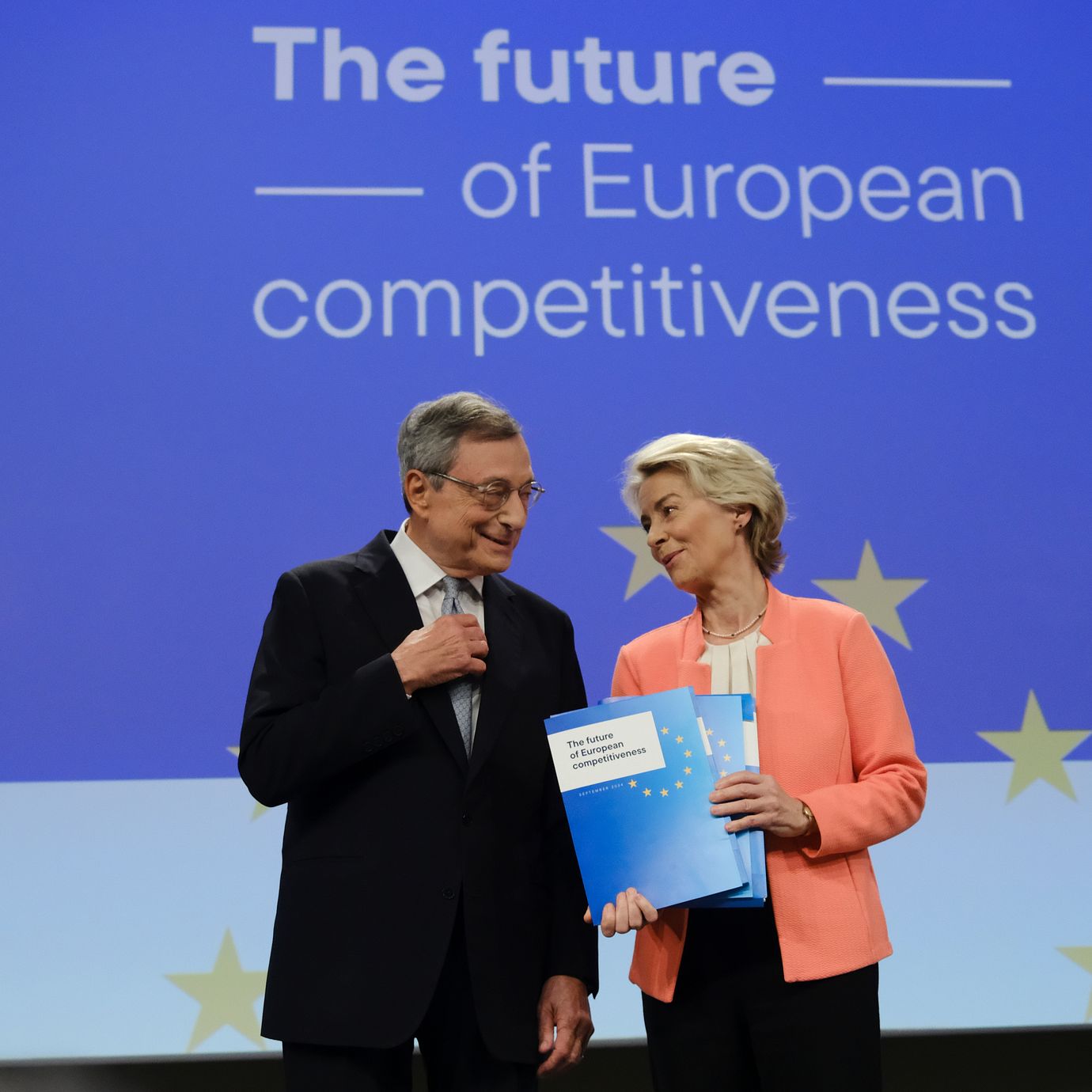
Séjourné’s new single market strategy builds on the reports of former Italian prime ministers Mario Draghi and Enrico Letta. Officials in Brussels joke that the reports are the bibles of European Commission President Ursula von der Leyen’s second term, with barely a speech on industry or the economy going by without an invocation of one or the other.
When Draghi released his report in September last year — ahead of Donald Trump’s return to the White House — he warned that if the EU did not boost its economic competitiveness, it would face “a slow agony”.
Since then the picture has darkened. Brussels has been negotiating with Washington to avoid an all-out trade war while trying to open new markets via trade agreements that attempt to sell the merits of the EU’s single market across the world.
“It’s something we control entirely,” Séjourné says. “Unlike transatlantic trade, we can act on the single market ourselves.”
“Competitiveness and the single market are two sides of the same coin”
Nor is Europe alone in its renewed interest in economic integration. Ottawa in February, hot on the heels of Trump announcing his first executive orders to impose 25 per cent tariffs on all goods from Mexico and Canada, announced a “federal action plan” to eliminate barriers within its own internal market. China has similarly been pursuing a project of deeper economic consolidation.
In the EU, officials increasingly frame the single market not just as a technical matter of integration, but as a strategic asset for defending Europe’s industrial base, which has been struggling for years. Per capita disposable incomes have grown almost twice as much in the US as the EU since 2000. The bloc is lagging behind in new technologies, with only four of the world’s top 50 tech companies hailing from the EU.
“Competitiveness and the single market are two sides of the same coin,” says Rebecca Christie of Brussels-based think-tank Bruegel. “If the EU’s businesses do better in the global economy, it will be because they are able to make better use of the single market. I don’t see how you can be more competitive without the single market.”
Trump’s tariff blitz has spurred the EU’s 27 capitals to do their homework on more intra-European economic integration. Some cures, such as creating a single European capital market to free up investment from trillions of euros stashed in European savings accounts, have long been discussed.
For most European companies, some of these fixes cannot come soon enough. Doing business across the EU is about nitty-gritty gruelling hurdles that have to be overcome on a day-to-day basis.
The European Round Table for Industry (ERT), a business lobby group, identified more than 100 obstacles in the single market in one of the few full studies done on the matter in February last year.
The barriers covered everything from a lack of harmonisation over the frequencies allocated for telecoms to different interpretations of EU customs rules by national authorities. Divergent implementation of tax rules, differing building standards and a lack of harmonisation on regulatory requirements in the health sector were other hurdles listed.
Dutch chip manufacturing equipment maker ASML, for example, flagged to the ERT that EU governments require hundreds of different data points on an employee being sent from one EU country to another. The format for submitting documents also differs across member states. France requires an online form; Ireland asks for a Microsoft Word document attached to an email.
The directive on rules around posting workers says that EU countries may require a “simple” declaration when a worker is sent on assignment within the bloc.
“Our experience is that member states have a different interpretation of simple,” the company observed in its feedback. The red tape also meant that companies can exploit differences in labour standards across borders, it said.
Some frustrations are over things as apparently simple as how a chocolate bar, make-up set or sparkling water bottle should be packaged
In a separate survey of 55 chief executives of leading multinationals by the ERT in June, the majority said that only in two areas — transport and research — is the single market more harmonised than fragmented.
Some frustrations are over things as apparently simple as how a chocolate bar, make-up set or sparkling water bottle should be packaged.
France, for example, has been warned twice by the EU executive for mandating that all packaging should be labelled with its “Triman” symbol — a man with three arrows — to indicate that it should be sorted for recycling.
That means that packaging companies have to build separate production lines for, say, water bottles going to France from ones destined for the Benelux region or elsewhere in the EU. Even Séjourné has described the situation as “pretty crazy”. France has sent a response to the commission but could, in theory, face action at the European Court of Justice if the commission decides to pursue the case.
Overall costs for changing packaging labels, reviewing contracts with suppliers and destroying unusable stocks can amount to €13,000 per category of products, according to industry figures. Multiplied over potentially thousands of different categories, the numbers can quickly add up to the millions of euros.
“There is a lot of fuss, and rightfully so, on tariffs with other countries,” says Sap, the Umicore CEO. “But inside, we also have huge inconsistencies.”
Moreover, the existing rules that are in place to ensure free access of goods, people and services are not always enforced throughout the bloc. While the number of single market infringement cases is going down, those cases are still taking too long, the European Court of Auditors warned in an audit last year.
Letta, the former Italian premier whose report of the bloc’s internal market diagnosed the gaps, argues that this will cost the EU in the long term.
“We pay an enormous price for this fragmentation and it is clear this fragmentation has to be eliminated,” he says.
Based on recommendations from Letta’s report, Brussels will now work on its single market strategy for the next few years.
It aims to reduce the well-known barriers, boost the European services markets and enable small and medium-sized companies to benefit from a more integrated single market. Measures to be proposed include reducing the amount of time it takes to set environmental and consumer standards, harmonising the rules of packaging and waste, and simplifying the recognition of qualifications for professionals working across European countries.
The commission also wants to ensure the existing rules are better enforced by national capitals. A well-functioning single market requires “decisive enforcement action, including more systematic infringement proceedings”, the commission document says.
“The ball is firmly in the court” of national governments to match words with actions
The strategy has been met with mixed reactions by industry groups and officials. Several observed that the proof of the pudding will be in national capitals agreeing to the proposed reforms.
“Consider the scale of what [former commission president Jacques] Delors achieved in overcoming so many national interests to establish the single market. Now is the moment for a second wave,” says Anthony Gooch Gálvez of the ERT, adding that “the ball is firmly in the court” of national governments to match words with actions.
“Séjourné’s single market strategy misses an overarching vision,” says Christie, from the Bruegel think-tank. For her, more needs to be done in terms of “eliminating red tape for smaller businesses and helping them operate within the single market as it exists”.
Some industry officials, diplomats and even officials within the commission argue that Séjourné should have been more ambitious in his opening bid, given that upcoming negotiations with European capitals risk watering down the EU executive’s proposals.
“We expected more,” says one EU diplomat.
There is more to come. Early next year, the bloc will propose the introduction of a simplified regulatory regime specifically to let start-ups expand more easily and avoid having to navigate 27 sets of national rules. European companies would be able to opt in to an EU-level business code to avoid bureaucracy and allow small businesses to scale up fast.
Esther Lynch, general secretary of the European Trade Union Confederation, warns that the commission must be careful how far deeper integration goes. The commission’s “28th regime” idea could “erode decades of employment rights” built up in national law, she says.
“We don’t want people working side by side with each other with different rights, that doesn’t make things simpler, that makes things more complicated.”
For Sander Slootweg, managing partner at Forbion, a life sciences venture capital firm with €5bn under management, it’s a matter of missed opportunity. Europe is not so far behind in innovation: in 2021, for example, it accounted for 17 per cent of global patent applications versus 21 per cent for the US and 25 per cent for China.
But when it comes to scaling up that innovation into a company, the lengthy approval processes for drugs, which differ from member state to member state, means that “Europe is not a very attractive market” and many early stage pharmaceutical companies are sucked over to the US.
”We have to think about what we want for those next generations”
It is also a stifling atmosphere for EU venture capital firms, which not only have to register in their home country but also in every other EU country in which they want to raise capital. They also have to pay maintenance fees averaging around €3,000 per year per fund, Slootweg says.
In some countries “if we withdraw registration the rule is we can’t market for at least three years in that jurisdiction,” Slootweg adds. “It’s very inefficient and it’s a lot of admin.”
Séjourné admits that “everyone agrees on paper, but when you get down to the details, everyone has arguments to protect their market.”
For Sap, this is not just about the daily grind of irritating fax requests.
“It’s about Europe and our next generations. I believe in European values and the European project, so we have to think about what we want for those next generations.”
©The Financial Times Limited 2025. All Rights Reserved. FT and Financial Times are trademarks of the Financial Times Ltd. Not to be redistributed, copied or modified in any way.