Ferrari byter skepnad – vill bli en Hermès på fyra hjul
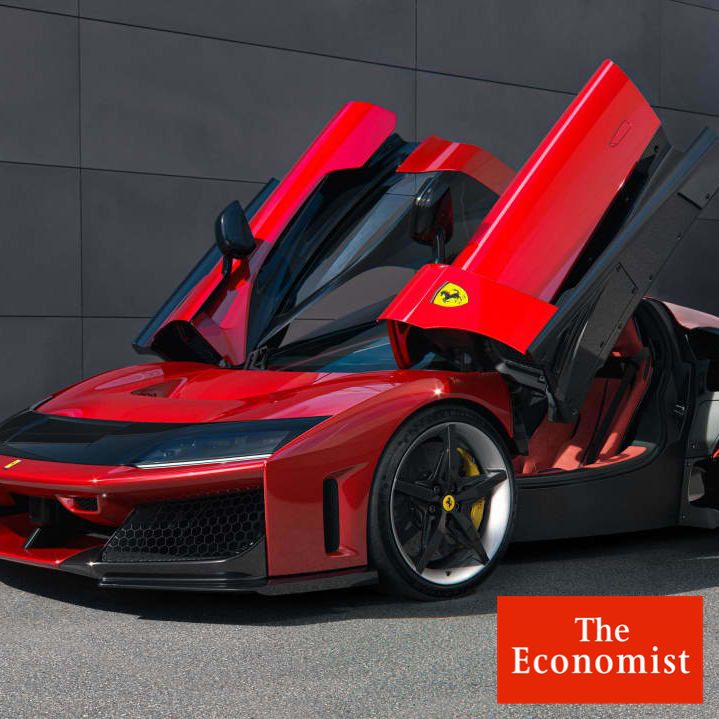
Ferrari rullar allt längre bort från traditionell bilindustri och in i lyxvärlden. Vd Benedetto Vigna ser bolaget som en Hermès på fyra hjul, där specialmodeller säljs i förväg till lojala samlare.
Med ett snittpris på över en halv miljon euro per bil och en vinstmarginal på 28 procent har märket seglat upp som ett av världens mest exklusiva.
Men elomställningen oroar. Första elbilen kommer 2026 och nästa har redan skjutits upp till 2028 – något som kan skada Ferraris image, skriver The Economist.
 The Economist
Ferrari is looking less like a carmaker and more like Hermès
But will it thrive in the electric age?
The workaday town of Maranello, near such architectural jewels as Bologna and Modena, shares little of their charm. Nevertheless, its main attraction is a centrepiece of Italian culture. A statue of a prancing horse on a roundabout reminds visitors that this is the home of Ferrari. Italian design, exclusivity and racing heritage have made the company both a champion of the car industry and something altogether different.
There are staggering dissimilarities between Ferrari and the dowdier end of the industry. Compare it with Stellantis, a mass-market carmaker created by the merger in 2021 of Fiat Chrysler, which sold Ferrari in 2016, and Groupe PSA, home of the Peugeot and Citroën brands. Ferrari and Stellantis have in common Exor, the investment company of Fiat’s founding Agnelli family, which owns a stake in both firms (as well as The Economist’s parent company). The commonalities stop there. Last year Stellantis sold 5.7m vehicles; Ferrari fewer than 14,000. Yet Ferrari’s market capitalisation, at €76bn ($90bn), dwarfs that of Stellantis, at €25bn. Among carmakers, only Tesla, Toyota and BYD are more valuable. Ferrari, which has an order book that is full for two years, had an operating-profit margin of 28% last year, compared with low single digits for most big mass-market carmakers.
Despite its expansion, Ferrari insists that it is as exclusive as ever, having grown fastest in places such as the Middle East where sales were once small
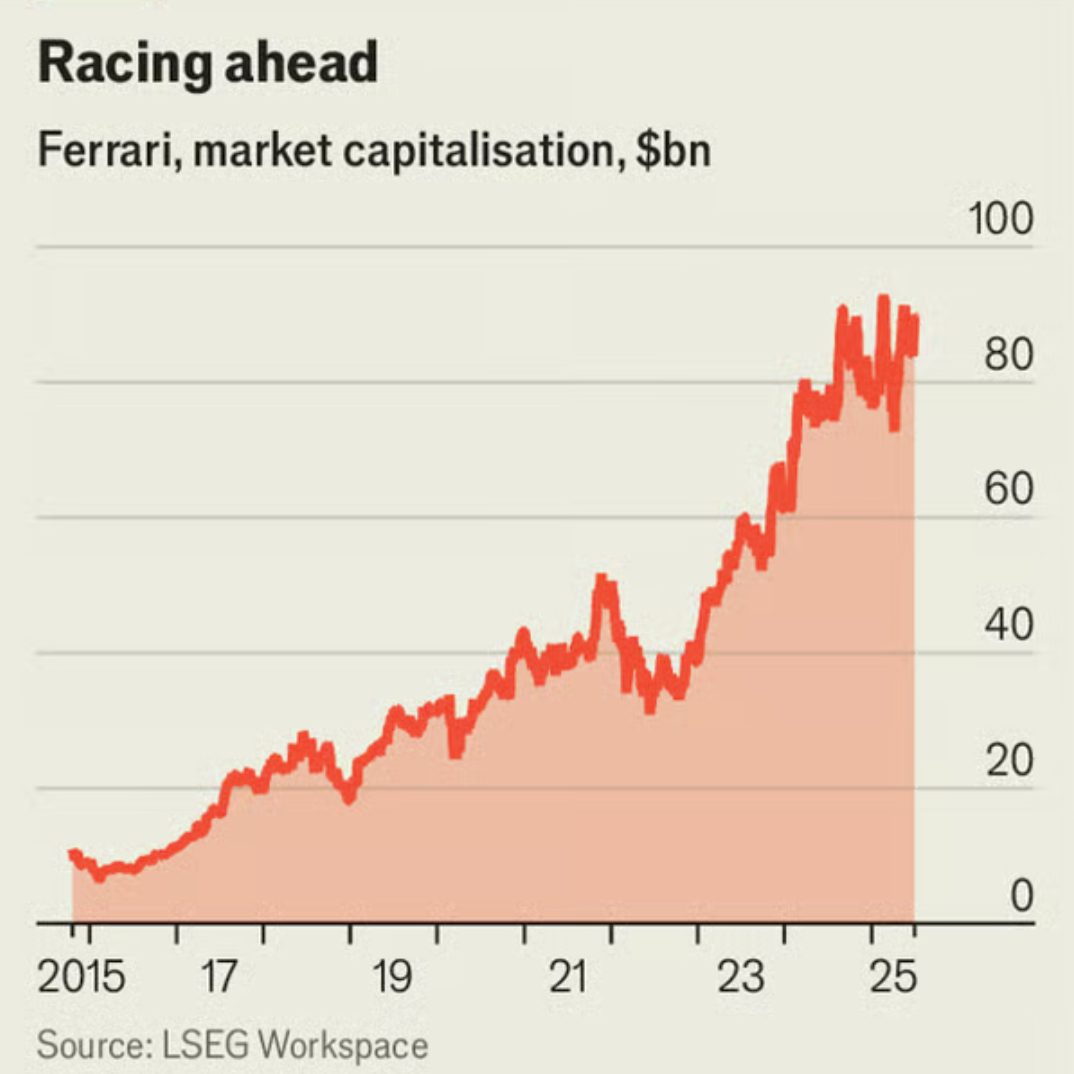
The company has grown impressively since it was unshackled from Fiat Chrysler. Last year it sold almost twice as many cars as in 2015, and generated more than twice as much revenue. Its market value is around nine times higher than when it went public (see chart).
Much of Ferrari’s recent success is down to the stewardship of Benedetto Vigna, its ebullient boss, appointed in 2021. In a break from tradition in an industry where insiders usually get the top job, he previously ran part of STMicroelectronics, a chipmaker. Mr Vigna’s background as a theoretical physicist is apparent as he illustrates his thinking with diagrams sketched on pieces of paper like a professor at a blackboard. His contention is not just that Ferrari is a luxury-goods company, comparable in some ways with France’s Hermès, the most valuable firm in that industry—but that it is a unique one.
The maker of high-end sports cars has succeeded in boosting sales while adhering to the maxim of Enzo Ferrari, who founded the firm in 1947, that it should sell “one less car than the market demands”. Despite its expansion, Ferrari insists that it is as exclusive as ever, having grown fastest in places such as the Middle East where sales were once small. In recent years it has also raised prices at a far faster pace than in the past. As Stephen Reitman of Bernstein, a broker, points out, the price of new models used to be 3-5% higher than those they superseded, whereas the new 12Cilindri is a whopping 30% more than the 812 Superfast it replaces.
That is also true for Ferrari’s hugely profitable flagship cars, which arrive at irregular intervals, justified by improved technology learnt from racing. Deliveries of the latest, the F80, which costs €3.6m, will begin soon, 12 years after the launch of the LaFerrari, which set owners back a mere €1m or so. Total revenue from the F80 will exceed €2.3bn, says Jefferies, a bank. To plug the gap between launches of these moneyspinners, Ferrari has started to make special limited-edition cars, such as the Daytona SP3 unveiled in 2021 (price: €2m), which are high-margin styling exercises underpinned by existing models.
The firm is able to charge such eye-watering prices thanks to the devotion of its loyal fans
Ferrari also now offers far more opportunities for personalisation, from custom paint-jobs to added carbon fibre and lavish interiors. These can add 20% to the price of its cars, which Barclays, a bank, reckons will set back buyers an average of more than €500,000 next year.
The firm is able to charge such eye-watering prices thanks to the devotion of its loyal fans. Some 80% of customers are already owners. Many make a pilgrimage to the factory; some, overcome by emotion, are said to shed a tear. Judging the mood of its customers by keeping in close contact with around 180 dealerships worldwide allows Ferrari to draw its most avid collectors into an inner circle. Tariff-induced price rises have made no difference to orders from America.
Sales of the F80 (of which Ferrari is making just 799) were three times oversubscribed. Getting chosen for one required buying several other Ferraris and acting as an ambassador, including turning up at car shows organised by the firm (and paying for the privilege). Even that was not a guarantee. Customers accept that Ferrari cannot serve everyone, explains Enrico Galliera, its marketing chief, dubbed “Mr No” for frequently rejecting requests from would-be buyers. They may fear that any sign of disgruntlement will mean being bumped down future waiting lists.
All this sounds similar to how ultra-luxe fashion brands such as Hermès operate. Yet Mr Vigna reckons Ferrari has even more going for it than the maker of pricey leather goods. His firm combines heritage with cutting-edge technology. It takes part in racing events such as the British Grand Prix on July 6th, which are central to the brand’s marketing. (Hermès organises a show-jumping tournament—classy, but less adrenaline-fuelled.) Chinese consumers, who have lately tightened their purse strings, account for just 8% of Ferrari’s sales, compared with as much as two-fifths at Hermès. And Ferrari relies almost exclusively on the very rich, who are more insulated from downturns. A good chunk of revenue at Hermès comes from cheaper goods such as scarves, ties and perfume, much of which are sold to consumers who are wealthy, but not outrageously so.
Mr Vigna still has to solve his trickiest problem yet
What could go wrong for the car industry’s ritzy star? Some say that its price rises are already too aggressive. Further increases in production may eventually threaten the brand’s perceived exclusivity. Revenue from personalisation has its limits.
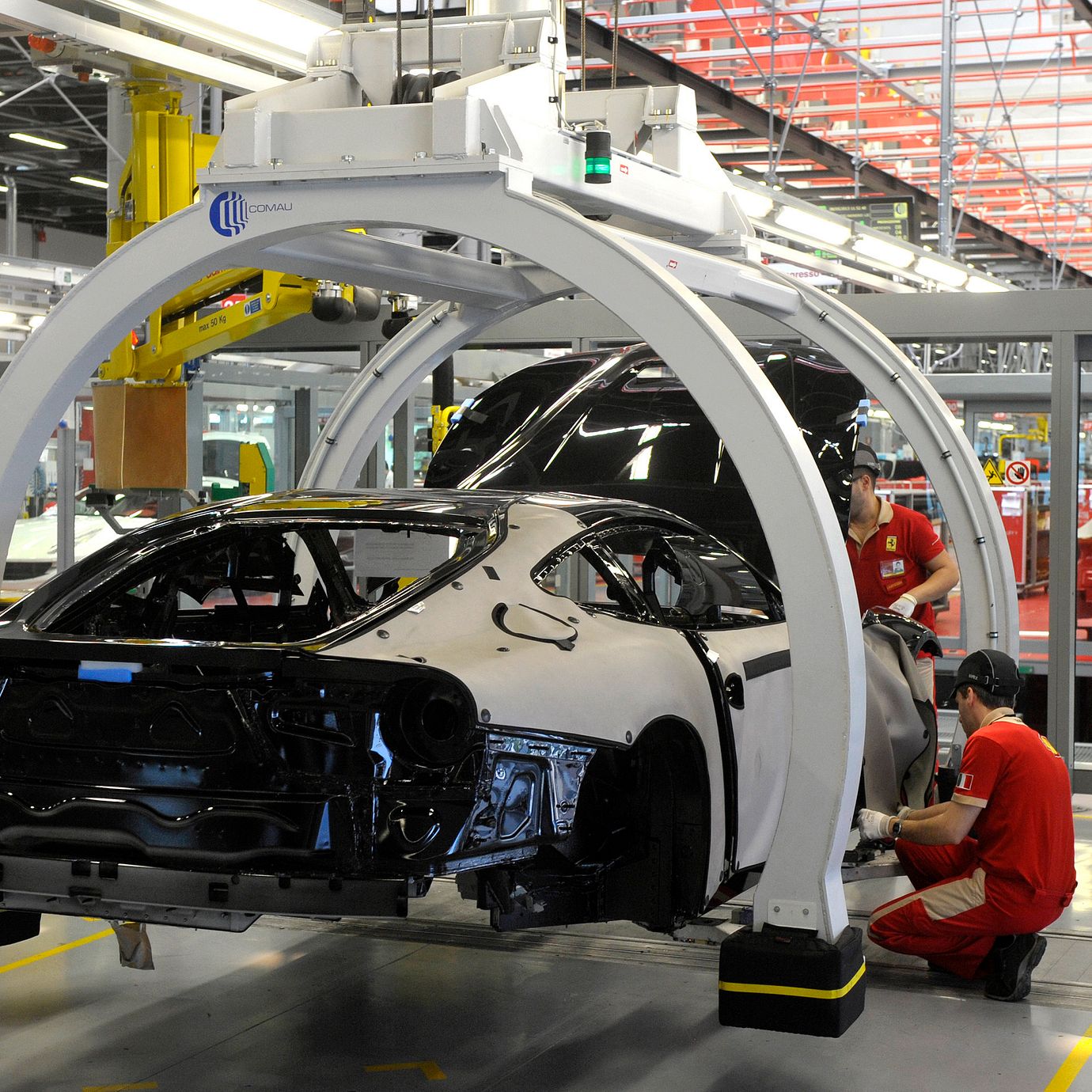
Ferrari also has one thing in common with more mundane car firms: the transition to battery power. The Elettrica, its first foray into that segment, will hit the road next year. The company recently doubled the size of its factory in Maranello, which will give it flexibility to make the electric vehicle without producing fewer of its current models. Yet other electric super-cars have been met with indifference. If Ferrari’s fails to impress, the carmaker’s pristine image could be damaged. Worryingly, on June 17th reports emerged that it would delay a second electric model by two years, to 2028. Mr Vigna still has to solve his trickiest problem yet.
© 2025 The Economist Newspaper Limited. All rights reserved.