Irankrigets ekonomiska följder i tio kartor
Hormuzsundet har varit blockerat i över två månader. Nu börjar det märkas vilka de ekonomiska effekterna verkligen blir.
Med hjälp av tio kartor visar The Economist på konsekvenserna av Irankriget.
Mapping the Iran war’s trade disruption
Petrol prices are rising. So are those of plastics and pistachios
The Strait of Hormuz has been all but shut for over two months. American attempts to open it by threatening and negotiating with Iran have amounted to little, as have offers of assistance to trapped vessels. One of the largest energy shocks in history shows no signs of abating. Here we trace its impact.
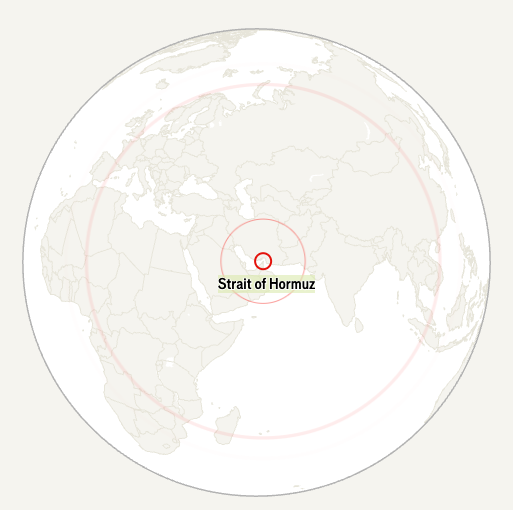
Strait of Hormuz
Before the war, around 1,500 tankers crossed the strait each month. Now traffic has thinned to a trickle: just 180 are thought to have made it through in April.
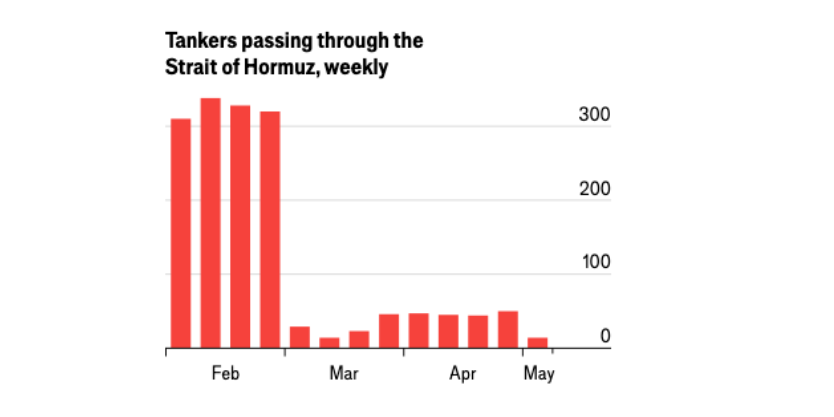
The resulting shortfall in oil supplies amounts to 12% of global consumption, according to our estimates. Every month the strait remains shut, the world loses out on liquefied natural gas equal to 2% of annual consumption.
Fuel Shortage
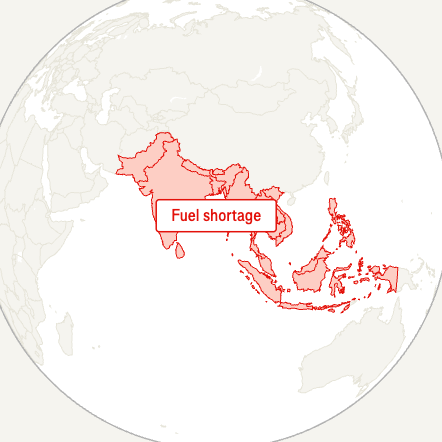
Around 85% of the oil and 90% of the gas that usually passes through the strait is bound for Asia.
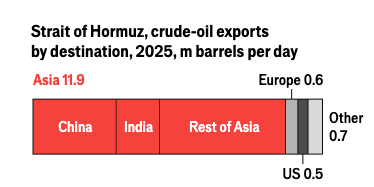
After its closure, petrol prices jumped—in some countries by more than 70%. The pain was sharpest in places with scant reserves, such as Pakistan and the Philippines.
Panic Buying
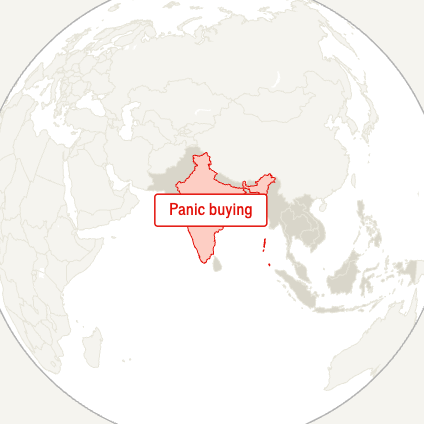
In many Asian countries people cook with liquefied petroleum gas, much of which is imported via the strait.
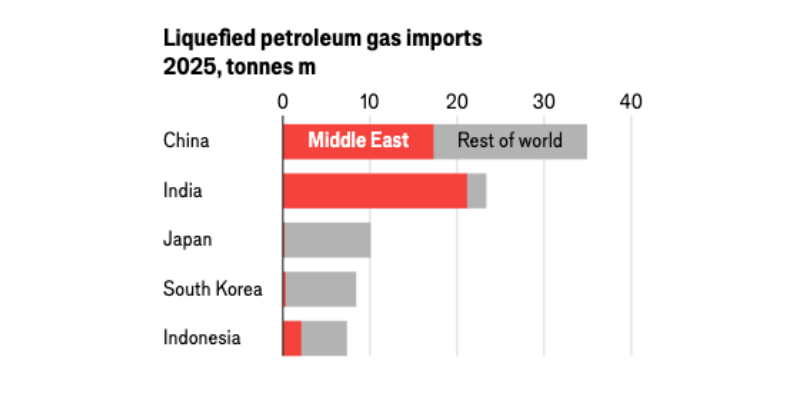
In India, where 90% of imported LPG passes through Hormuz, fears of shortages led to panic buying. Some restaurants shut owing to a lack of supply.
Plastics bottleneck
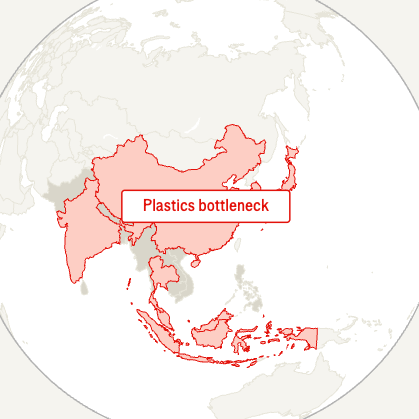
The price of plastics has soared along with that of crude oil, from which they are typically derived.
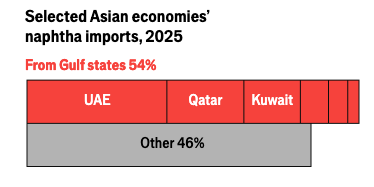
Other ingredients, including refined chemicals such as naphtha, are also sourced from the Middle East. Several plastic-makers in Asia have declared force majeure, exempting them from contractual obligations.
Chip production slowdown
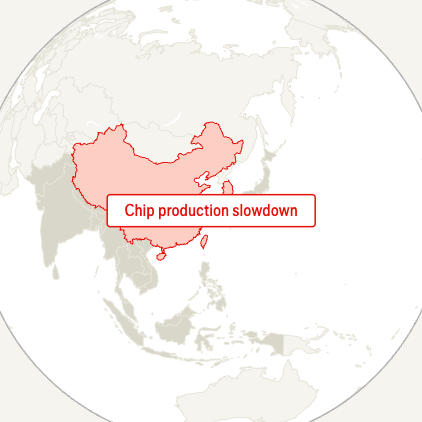
Ras Laffan—a factory in Qatar that produces a third of the world’s helium—shut during the conflict, owing to attacks by Iran.
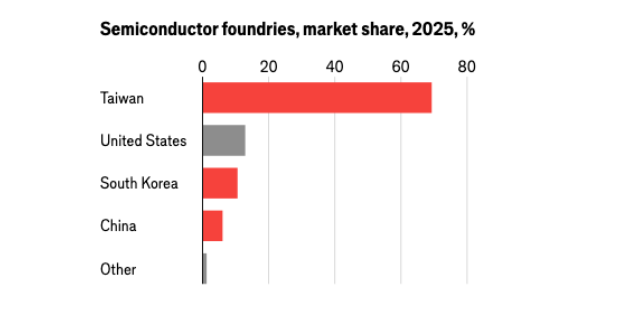
The loss of supply has been a particularly heavy blow to South Korea and Taiwan, Asia’s chipmaking powerhouses, which use the gas to cool the supermagnets used to make semiconductors. America, which produces lots of helium itself, is largely insulated.
Lower harvests
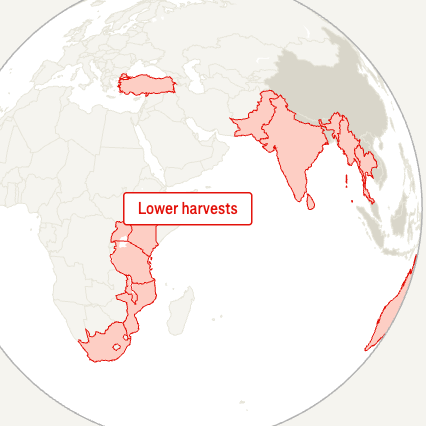
Fourteen non-Gulf countries (highlighted on the map) receive more than a quarter of their fertiliser imports from the Gulf.
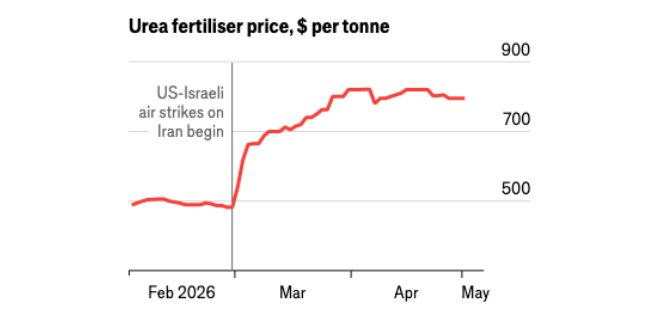
Asia is again feeling the squeeze. In this case, east Africa is, too. Some 35% of Kenya’s and Uganda’s imports of the stuff come from the region, as do more than 60% of Malawi’s. Farmers, unable to pay the higher price, will cultivate fewer crops.
Fuel-tax holiday
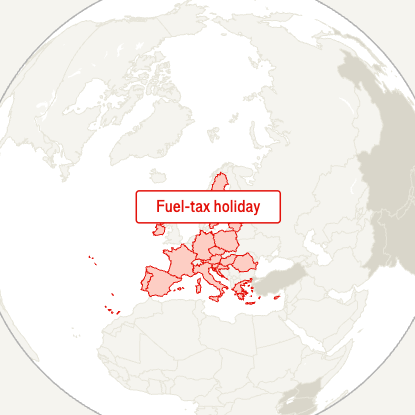
European governments have intervened to shield consumers from rising prices. Out of the 27 European Union countries, 19 (highlighted on the map) have provided subsidies or cut fuel taxes.
Flight cancellations
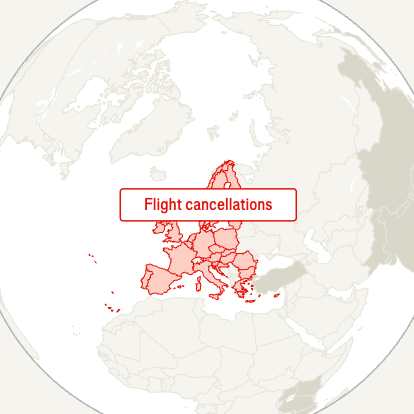
The continent relies on kerosene from the Gulf to make up for its limited refining capacity.
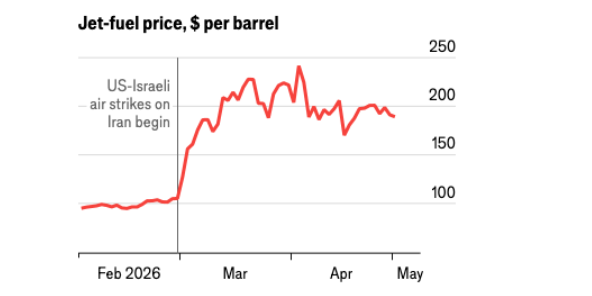
It has offset around half the shortfall by importing more from America. Prices have soared from $800 a tonne before the war to $1,500, forcing airlines to raise prices and change schedules. But the International Energy Agency, an official forecaster, has warned that Europe could face severe shortages of jet fuel by June, which would lead to more widespread cancellations.
Petrol-price spike
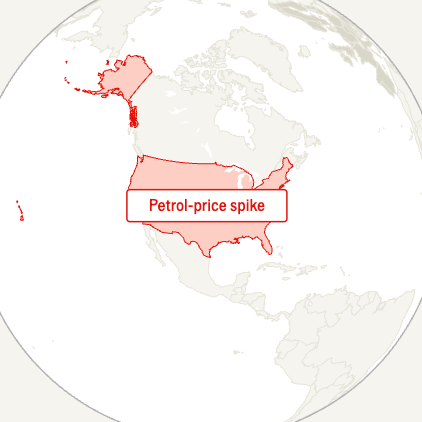
Demand for Uncle Sam’s exports of crude oil and refined products has also pushed up prices in America.
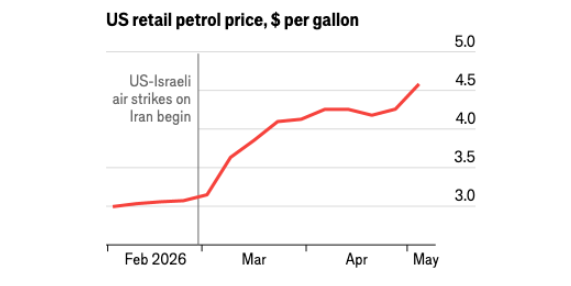
A gallon of petrol now comes to nearly $4.60, having risen from just over $3 in February. Summer, when many Americans take to the road on holiday, will provide further upward pressure. Forecasts suggest that prices could surpass $5 a gallon if the strait does not re-open—a level not seen since 2022.
Aluminum shortage
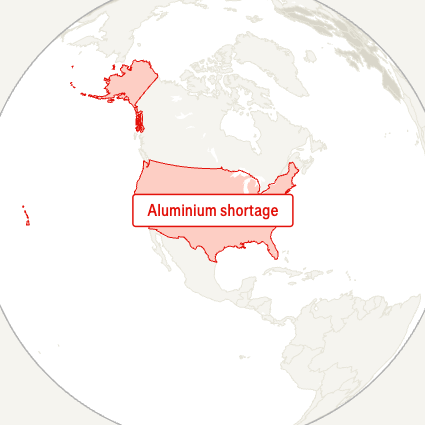
America sources about a fifth of its aluminium—the price of which has risen by 13% since the start of the war—from the Gulf.
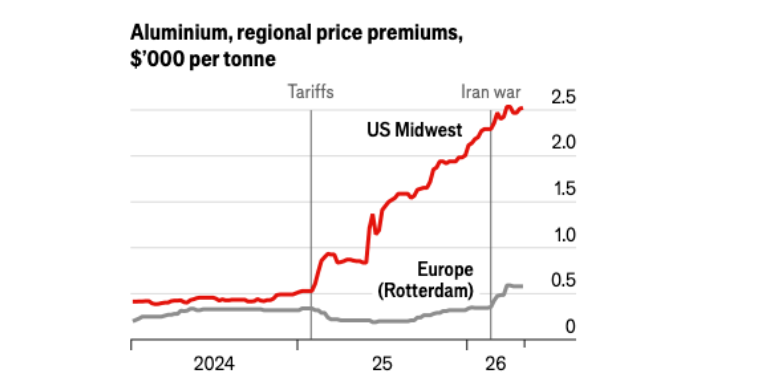
Its car industry is one of many struggling as a consequence. Unlike other sectors of America’s economy, it also faces much higher import levies: the Trump administration has introduced a 50% tariff on imports of the metal. Ford expects its commodity costs to double this year.
No nuts
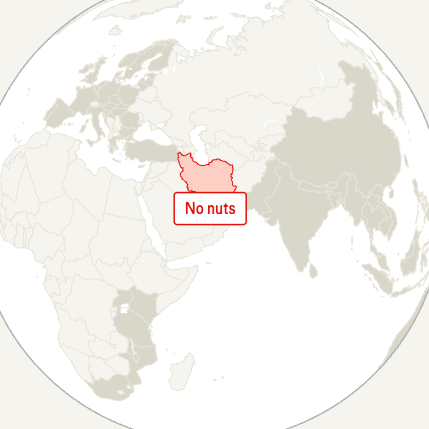
Even pistachio prices are going nuts. Iran is responsible for a fifth of the world’s supply. Prices were already elevated owing to the Dubai chocolate craze. With supply choked, they reached $4.57 per pound in March, an eight-year high.
Economic damage cannot be undone
Despite President Donald Trump’s hints of an imminent breakthrough, a lasting peace deal still looks some way off. Even if both sides manage to reach an agreement, the economic damage caused by the strait’s closure cannot be undone. It would take months for crude output, refining and shipping to resume in full. The present upheaval is just the beginning.
© 2026 The Economist Newspaper Limited. All rights reserved.