Kinas elbilar hotar inte med priset – utan med kvaliteten
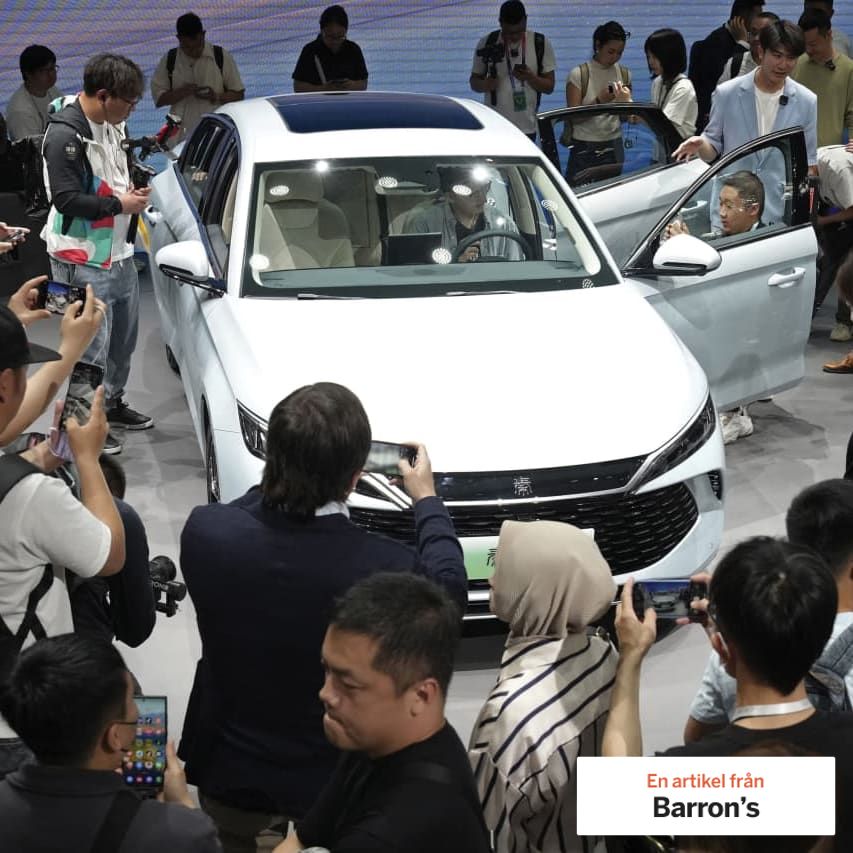
Amerikanska biltillverkare som Tesla, Ford och GM står inför en ny och växande utmaning från kinesiska elbilar. Men det är inte Kinas låga priser som är det största hotet, eftersom USA:s marknad skyddas av höga tullar. Den verkliga utmaningen ligger i stället i de bättre och mer innovativa kinesiska fordonen, skriver Barron’s.
Samtidigt satsar amerikanska tillverkare på att utveckla egna prisvärda elbilar, för att klara sig på en snabbt föränderlig marknad.
 Barron's
China’s Cheap EVs Aren’t a Threat to Tesla, Ford, and GM. Here’s What Is.
U.S. auto makers have a fighting chance against a flood of inexpensive cars from China. But better vehicles might pose a problem.
BYD ’s Seagull doesn’t look all that threatening. It’s a cute little four-door hatchback that’s three feet shorter than Tesla ’s Model Y. With its bright yellow paint job, the Seagull looks a little like a Minion from the back, even if it looks a tad grumpy from the front. It also comes with an adorable price—just $10,000.
But the Seagull and cars like it are apparently so frightening that the Biden administration raised tariffs on Chinese electric vehicles lest the cheap automobiles crush the U.S. auto industry. A 100% import penalty will be placed on EVs like the hot-selling BYD Seagull, or the GAC AION S, while select batteries and battery components will be hit with a 25% levy. Donald Trump, not to be left out, pledged even higher tariffs. The penalties effectively block Chinese companies from bringing their cars to America and prompt U.S. auto makers to invest in domestic EV component manufacturers.
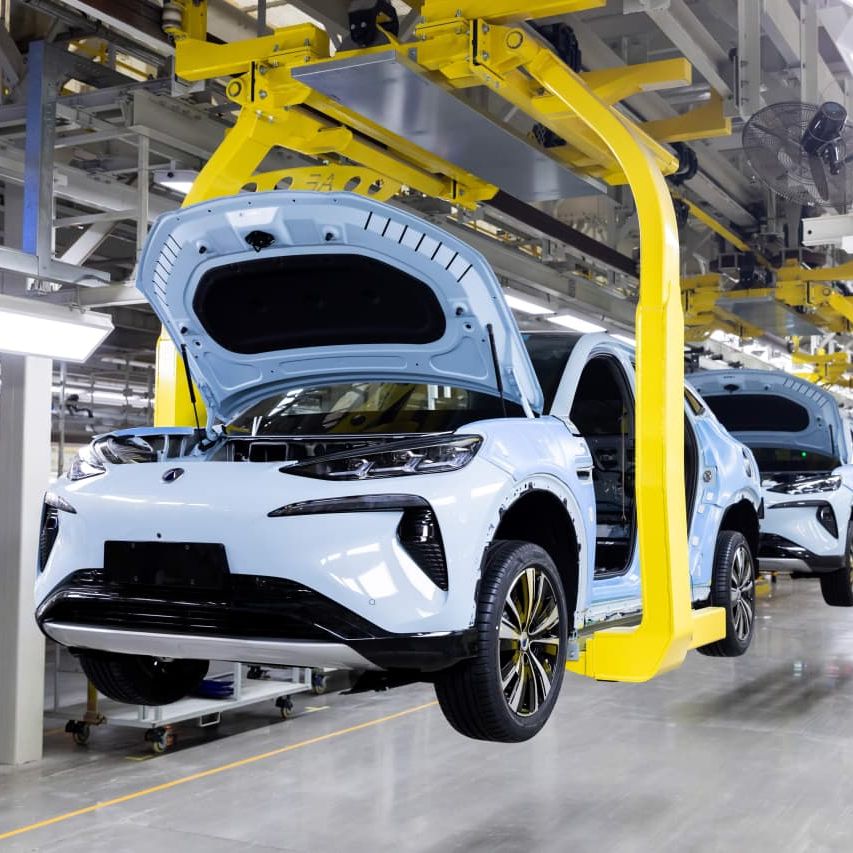
That U.S. auto makers need protection has been widely accepted as fact—memories of the devastation caused by Japanese companies in the 1980s are still fresh, if a little skewed, despite 40 years of distance—and there is good reason to fear the Chinese auto makers. China is now the largest market for new cars and EVs, and it’s also the largest exporter of cars. Even U.S. auto executives, including Tesla CEO Elon Musk, extol Chinese automotive quality and innovation. Cheap vehicles, though, pose no threat to the U.S. manufacturers—it’s better cars they need to worry about. And those cars will be coming even if tariffs delay them for a while. American auto makers must use the time to design and build affordable electric vehicles or risk seeing history repeat itself.
“You’re putting a wall around yourself,” says Pablo Di Si, CEO of Volkswagen Group of America, of the penalties. “These public policies are good for a maximum 10 years.”
There is nothing surprising about the ability of Chinese auto makers to produce cheap cars. BYD can produce a $10,000 vehicle because it makes its own batteries, has eliminated luxuries such as a “frunk” and a rear wiper, and includes just one wiper in front. None of this is particularly innovative. They’re simply choices made to keep costs down to meet market expectations. “There is nothing magic,” says BofA Securities analyst John Murphy. “A stripped-down, small [vehicle] in the U.S. is not what anybody wants.”
“I know everyone is concerned about China competitors”
The Chinese market can support more expensive cars, too. A Tesla Model Y starts at $35,000 in China and is the country’s best-selling EV. The higher price is partly due to its size—it’s 50% bigger than a Seagull, and requires more steel, plastic, copper, and other materials—and partly due to the much larger battery pack and more powerful electric motor that are needed because it’s a bigger, luxury car. The Model Y does cost $10,000 less in China than in the U.S. or Europe due to differing safety standards and labor costs. Ultimately, making cars in China is just cheaper, but that cost doesn’t translate overseas.
There’s nothing keeping American auto makers from building similarly cheap cars. General Motors has one of the better-selling EVs on the Chinese market, the Hongguang, which has sold about 130,000 units over the past 12 months and costs roughly $5,000. It has two doors, a range of 75 miles, and a top speed of about 60 miles an hour. It’s 115 inches long—about half the length of a full-size truck and about five feet shorter than a Toyota Corolla. It makes the Seagull look like a luxury vehicle.
Freedom Capital Markets analyst Mike Ward compares China’s cheap cars to the Yugo, the $4,000 Yugoslavian subcompact car that was all the rage in the U.S. for about five minutes in the mid-1980s. The Yugo sold about 150,000 units from 1985 to 1992, while capturing about 0.1% of the U.S. market. It was cheap but was also dissed by reviewers as one of the worst cars in America. Though China’s cheap cars are of higher quality, they’re made for the Chinese market.
“They’re not going to sell [in the U.S.],” says Ward.
The cheap cars also have an unfortunate side effect—Chinese auto makers are less profitable than their U.S. and European counterparts. While GM, Ford Motor , and Tesla posted average operating margins of 7% during the first quarter, BYD earned just 4%, while NIO , XPeng , and Zhejiang Leapmotor Technology lost money. “I know everyone is concerned about China competitors,” says Baron Capital portfolio manager David Baron. “The Chinese OEMs don’t make money…every car they sell is at a loss.”
“We have dozens of models in China. Not all of them are suitable for the European market”
Even Toyota Motor , one of the world’s most profitable auto makers, didn’t find success in the U.S. selling a cheap vehicle. The company started selling cars in America in 1958 with the Toyopet sedan, which sold for less than $2,000 and came equipped with a four-cylinder engine generating about 60 horsepower. It flopped. Early failure didn’t dissuade the Japanese auto maker. It built out its dealership network, and the Corolla, introduced in 1968, became a hit, but even then it took another two decades for Toyota to capture 6% of the U.S. market. It was only in 2000 that Toyota’s market share exploded as lower labor costs, the incumbent’s willingness to shift to trucks and sport-utility vehicles, and kaizen —the Japanese word for continuous improvement—helped the company become an equal player with GM.
Of all the Chinese EV makers, BYD has the best chance of becoming the next Toyota in the U.S. It’s growing fast—the company sold three million vehicles in 2023, up fivefold compared with 2021—and even sold more battery electric vehicles, or BEVs, than Tesla in the fourth quarter, the first time an auto maker in China had topped it. BYD also has a full lineup of cars, including plug-in hybrids, which range from the low-end Seagull to the $150,000 Yangwang U8, for Range Rover or Mercedes G Wagon buyers looking to go electric. The average price for a vehicle was roughly $22,000.
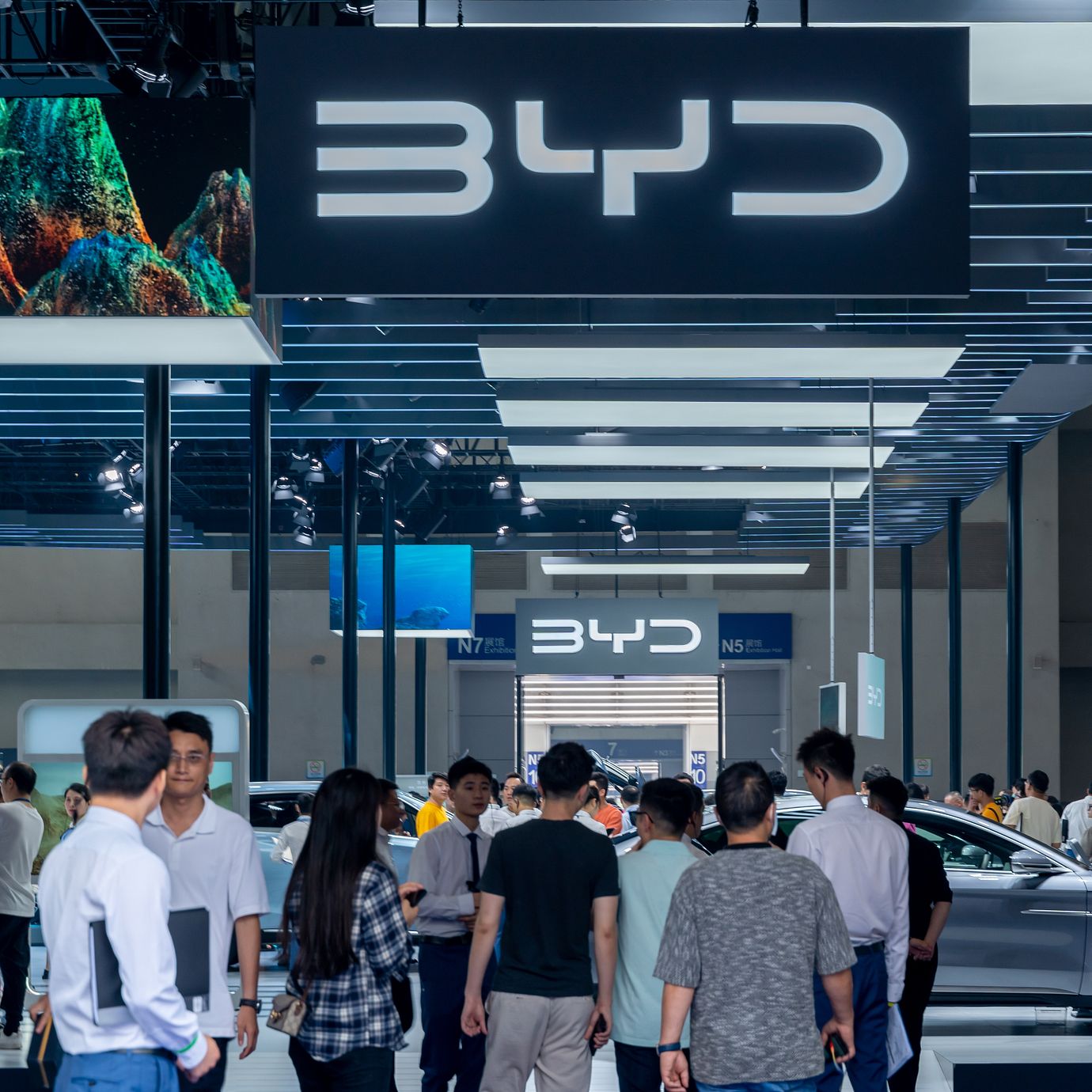
BYD is looking abroad, but low-cost cars should remain a Chinese phenomenon. The version of the Seagull sold in Brazil and Mexico starts at about $23,000 and $24,000, respectively, and BYD acknowledges that the Seagull will cost about 20,000 euros ($21,642) in Europe to meet the continent’s standards. “We have dozens of models in China. Not all of them are suitable for the European market,” said BYD Managing Director for Europe Michael Shu at a Financial Times conference on May 9.
That isn’t stopping BYD. It exports more than 10% of its volume, mainly in Southeast Asia. About 25,000 vehicles ended up in Europe during the 12 months ended on March 31, with Germany receiving just under 5,000 cars, the most of any single country on the continent. BYD’s goal is to have the leading electrified market share by the end of the decade—which could mean as much as 15% of all-electric or plug-in hybrid cars sold—an incredibly lofty goal considering it accounts for 0.7% of electrified sales in Germany today. Reaching it will require local capacity: BYD is building a plant in Hungary, while looking for a second location.
“North America isn’t a top consideration, given the tariffs, unstable policy environment, sluggish demand, and different consumer preferences”
Chinese auto makers aren’t interested in the U.S. just yet—and not just because of the tariffs. There are no Chinese-branded cars sold in America and only one Chinese car plant in Mexico, owned by JAC Motors . For now, the strategy appears to come down to one word—someday. “North America isn’t a top consideration, given the tariffs, unstable policy environment, sluggish demand, and different consumer preferences,” says BNEF analyst Siyi Mi.
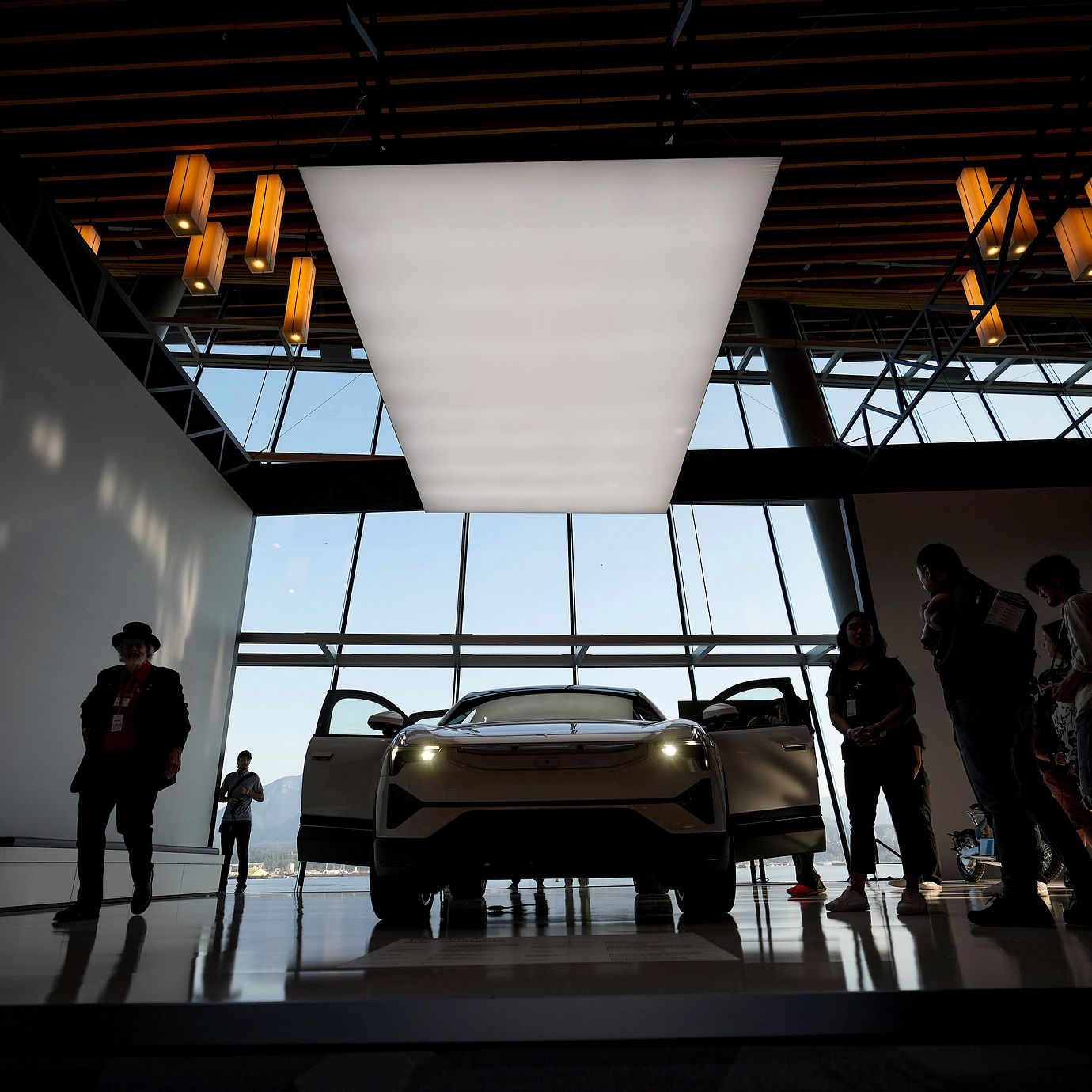
They aren’t ignoring it completely, however. While building capacity and distribution is the tried-and-true, though relatively slow, way to build a U.S. auto business, others will use backdoors to enter the U.S. market. Some brands, including Volvo, are owned by the Chinese. Polestar Automotive and Lotus Technology EVs are built by Geely in China and shipped to the U.S., paying a tariff along the way. Polestar plans to start manufacturing its Polestar 3 at a new facility in South Carolina later this year.
Investors will also start to see partnerships between the West and East. In 2023, Stellantis announced a $1.6 billion investment in Chinese EV maker Leapmotor. The deal included the formation of a joint venture for the “export and sale, as well as manufacturing, of Leapmotor products outside greater China.” Stellantis will own 51% of the venture, which means that a Leapmotor BEV could one day arrive at a local Jeep dealership near you.
The silver lining for GM, Ford, and Chrysler parent Stellantis is that China is unlikely to derail the U.S. industry the way Japan did in the 1970s and 1980s. For one, the U.S. auto industry is far more fragmented today than it was back then. In 1980, Detroit’s Big Three held 75% of the market. Today, they hold closer to 40%. Much of that share is concentrated in larger light-duty trucks that don’t lend themselves to rapid electrification. Electric vehicles are also different from traditional cars in another important way—the batteries cost roughly twice as much as labor in an EV. So, cheap batteries, and not cheap labor, can become the defining competitive advantage in smaller, less expensive automobiles.
That gives Ford, GM, and Chrysler a fighting chance. They don’t have to cede share to foreign auto makers for a second time. Ford seems to realize this and is investing heavily in next-generation EVs at its secretive “skunk works,” a now-generic term for secretive new product development taken from defense giant Lockheed Martin. The new EVs should include smaller SUVs and trucks. All investors really know is that profit margins are expected to rival traditional vehicles, which means Ford is focused on lowering the cost of the product.
“I am pathologically optimistic with time. Have been ever since I was a kid”
GM, with the Wuling Hongguang mini EV, understands the Chinese EV business better than most. But in the U.S., GM pins its hopes on company-controlled battery production and its modular Ultium EV battery technology platform. It’s making progress in offering lower-priced BEVs, including the all-electric Chevy Equinox, which launches later this year and starts at $35,000. (The traditional Equinox starts at about $27,000 and is one of the better-selling cars in the U.S. with 2023 sales of 212,701 units.) The next-generation Chevy Bolt is due in 2025. It’s also possible that GM might not need to get a sedan right to succeed in the U.S. as long as it can remain dominant in SUVs and pickups.
“The question is how rough is Chinese competition in those areas,” says Bill Nygren , a portfolio manager at Oakmark funds. “[In theory,] GM and Ford can live very comfortably with a passenger car market dominated by Chinese imports.”
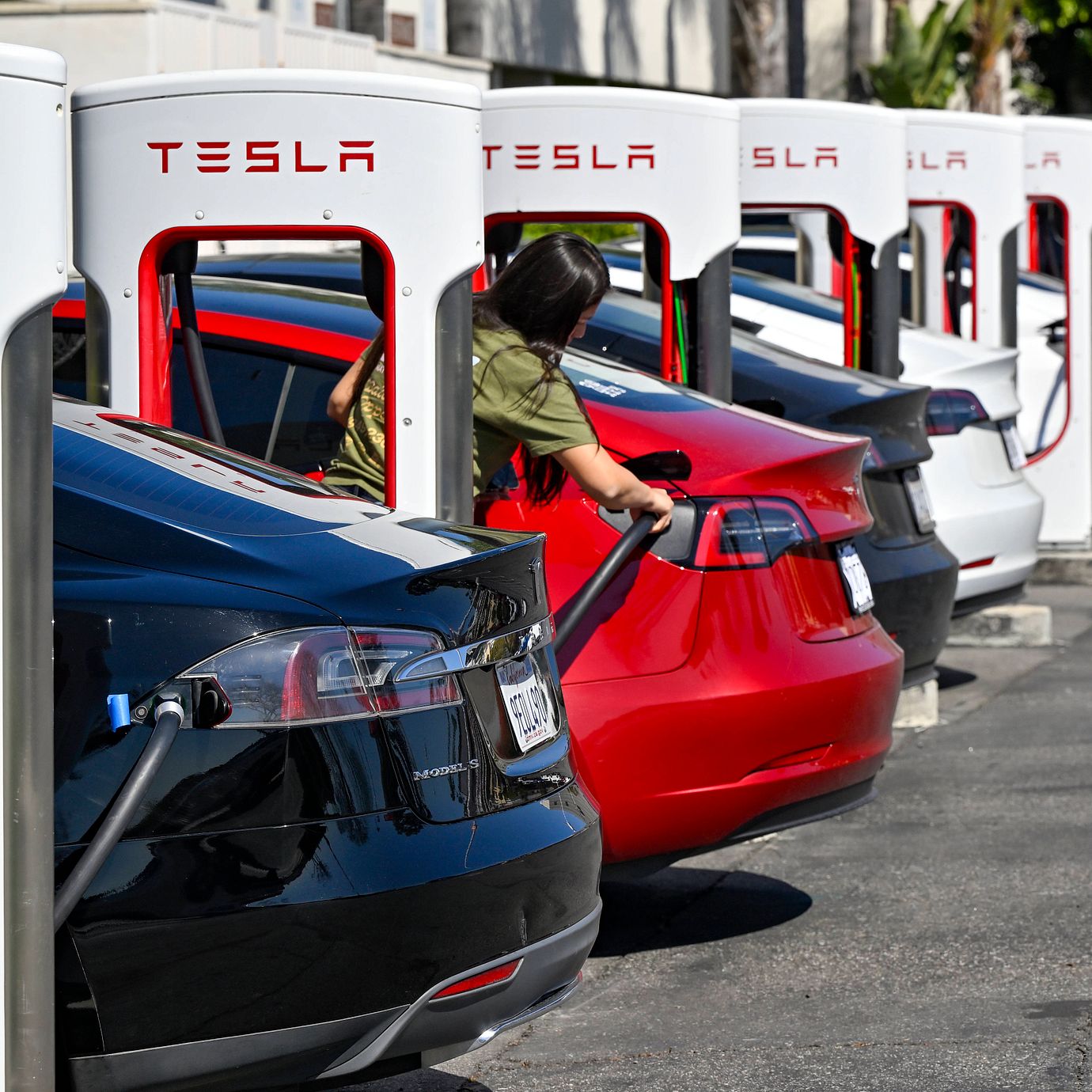
Tesla has the most to lose. While GM and Ford need to reduce costs and introduce EVs that their traditional buyers will try, Tesla needs to move faster. It slow-played its lower-priced electric vehicle, taking its time to fully implement new manufacturing practices designed to cut the total cost to build the car by 50% relative to a Model 3. That meant producing an EV in North America for a cost of close to $17,000. Then, EV growth collapsed, partly because there were few cheap EVs for Americans to buy. Tesla, in response, is accelerating the development of its lower-price car that investors call the Model 2. Accelerating production means the car will cost a little more, but could be on the road by early 2025.
Wedbush analyst Dan Ives called the decision a smart strategic move and believes that Tesla will be a leader in the lower-end segment. Now, Tesla needs to hit its timelines. That hasn’t been easy for the company. Musk predicted that a Tesla would drive without human assistance by 2017, while the Cybertruck, unveiled in 2019, didn’t ship until 2023. “I am pathologically optimistic with time. Have been ever since I was a kid,” said Musk on X in May.
The Model 2 timeline better move faster—or those cheap Chinese EVs might really be a problem.