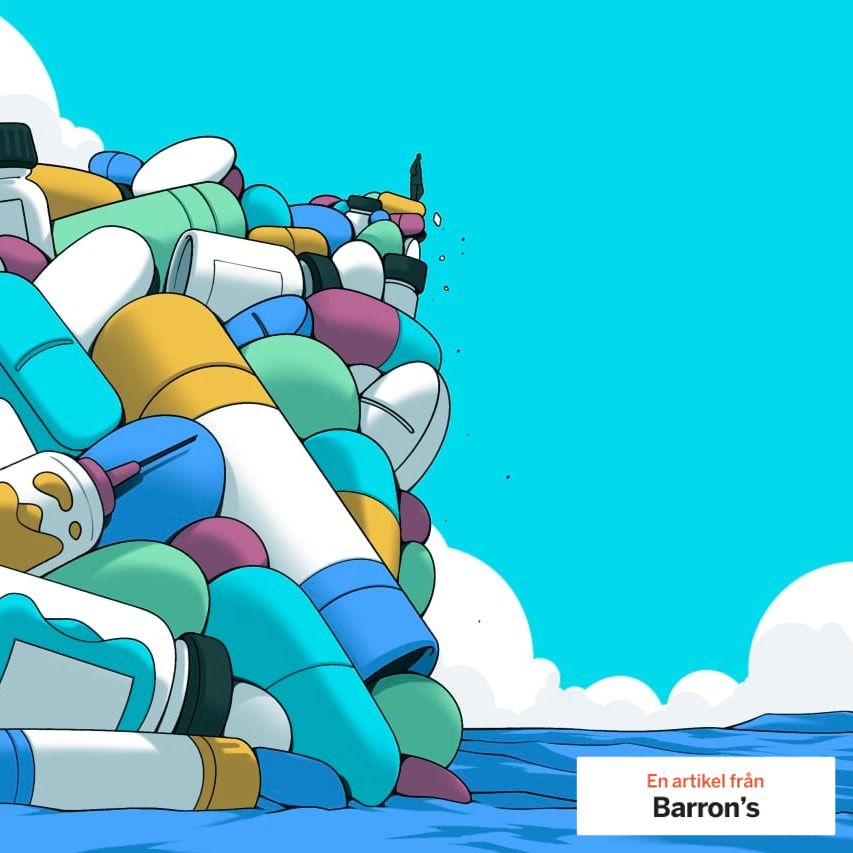
Läkemedelsbolagen står inför ett stup av utgående patent
Pfizer pumpade ut 3 miljarder vaccindoser på rekordtid och hjälpte oss börja leva vanliga liv igen. Det är bara ett av bolagets bedrifter de senaste åren. Men varför har då aktien rasat brant mitt i en pågående börsfest?
Bolaget står inför ett ekonomiskt stup när en mängd patent är på väg att gå ut, något som väntas kosta 17 miljarder dollar per år i omsättning, skriver Barron’s. Men Pfizer är inte ensamma – berättelsen återkommer i hela läkemedelsindustrin och är något dess investerare glömmer gång på gång.
 Barron's
Big Pharma Stocks Need a Rethink. Investors Keep Making the Same Mistake.
Pfizer’s patent expirations are great for humanity but terrible for investors. It’s a common story across the pharmaceutical industry.
Understanding the products from pharmaceutical companies could be the most arduous task on Wall Street. But the business itself? It’s rather simple: Big Pharma is essentially a series of lucrative exclusives balanced by angst over when those monopolies run out.
At Pfizer, that angst has overwhelmed just about everything else over the past five years, including a world-saving Covid-19 vaccine. Pfizer is staring down a barrage of patent expirations that will allow competitors to clone a long list of its products, stripping what Pfizer says will be $17 billion in annual revenue by the end of the decade.
Since Albert Bourla settled into the captain’s chair at Pfizer in early 2019, he has pulled every possible lever to help Pfizer brace for the patent expirations. He has spent $80 billion on acquisitions, and another $50 billion on research and development, while divesting the last of the company’s ancillary businesses, including the consumer health division that once sold Advil.
All this while Pfizer nabbed approval for 22 entirely new medicines, and two years in which the company’s Covid-19 vaccine grossed more than any other medicine in history.
Investors haven’t given Bourla credit for any of it.
Pfizer shares traded at $41.35 when he became CEO in January of 2019. They recently closed at $27, a 33% decline. The S&P 500 has more than doubled over the same period.
It isn’t just a Pfizer problem. Most Big Pharma stocks have struggled in recent years. Decades of efforts by these companies haven’t changed a fundamental truth: Drugmakers eventually lose exclusive rights to their best inventions. Think of rivals being allowed to sell perfect clones of Apple ’s iPhone, or McDonald ’s having to share its Golden Arches. New laws allowing Medicare to negotiate the prices it pays for some medicines—before patents expire—only exacerbates the issue.
Allowing companies to make cheaper copies of branded medicines has been a win for humanity, but it is an ongoing loss for investors—a fact that seems to get overshadowed amid hype for the next big drug. Over time, Big Pharma stocks haven’t worked as long-term investments.
Pfizer, Merck, Johnson & Johnson, and Bristol Myers Squibb have all trailed the S&P 500’s performance over the past five-, 10-, 15-, and 20-year periods, even if you take into account their generous dividends. European drug companies GSK and Sanofi have similar records. Eli Lilly and Novo Nordisk have been standout exceptions, but their performance has been boosted by the recent rapid success of weight-loss drugs. In just over a decade for Lilly, and just under a decade for Novo, those treatments will face patent expirations, too—and the pattern could restart.
The rallies by Lilly and Novo Nordisk, in fact, show that Big Pharma stocks are more like trading vehicles than blue-chip holdings, an idea that runs contrary to the conventional wisdom of buying pharma stocks and holding them for generations. That legacy, to be sure, isn’t unearned. From 1984 to 2004, Merck, Pfizer, and Johnson & Johnson all handily beat the S&P 500. But times have changed.
Pfizer has now become a crucial case study for anyone investing in a Big Pharma firm, nearly each of which is facing its own approaching patent cliff
For many, Pfizer’s recent stock performance is befuddling: Wasn’t this the company that made three billion doses of its Covid-19 vaccine in 2021, allowing normal life to resume after the dark days of 2020? Wasn’t this the company that dusted off an old antiviral, reworked it, and got the best Covid-19 antiviral, Paxlovid, into U.S. pharmacies in less than two years? Doesn’t it sell one of the new respiratory syncytial virus vaccines, which is transforming the way both seniors and parents of newborns think about a common, and potentially deadly, illness?
Barron’s itself has been confounded by the Pfizer problem. A year ago, our cover story called Pfizer a buy, and its pipeline “underappreciated.” The stock is down more than 40% since that story.
Pfizer has now become a crucial case study for anyone investing in a Big Pharma firm, nearly each of which is facing its own approaching patent cliff.
If Pfizer can’t make it work, who can?
The current Big Pharma model is a relatively new innovation—a response to years of weak stock performance. Today’s Pfizer, Bristol Myers Squibb, Eli Lilly, Novartis, AstraZeneca, and GSK, which now sell mostly branded, prescription drugs, evolved out of broad-based conglomerates. Bristol Myers is the corporate heir to firms that grew big on laxatives, toothpaste, and baby formula. The company now known as Merck once owned radio stations. Pfizer descends from companies that made Listerine and Chef Boyardee.
U.S. and European pharmaceutical giants have shed those ancillary businesses. There are exceptions here and there, but in general, the whole business of Big Pharma today is to invent or buy a drug that will bring in a billion dollars or more a year, then sell it into the healthcare system for as high a price as possible until the patents run out.
Big Pharma companies now look more like the large biotechs that began to emerge in the 1980s—companies like Genentech, Gilead Sciences, Celgene, Amgen, and Genzyme, which specialized in high-price, cutting-edge medicine and never pursued the diversification that defined big drug companies.
Investors treat biotechs as risky stocks that can swing wildly based on the outcome of a single clinical trial. Big Pharma companies, for some reason, have retained their reputation as safer, long-term holdings.
The stocks, with market values in the hundreds of billions of dollars, are owned by large institutional investors who want steady, predictable earnings growth over many years. Retail investors often turn to the stocks for the same reason.
Pharmaceutical executives have tried everything to comply, including embracing the biotech model. As Barron’s described in a 2022 cover story , drugmakers saw that the biotechs were getting away with setting extraordinarily high prices for their newer, more-complex medicines, while fetching higher multiples.
Biotech’s expensive medicines, generally for rarer conditions, were harder for generic drugmakers to duplicate than the pills Big Pharma had focused on.
Inspired, or perhaps envious, Big Pharma companies spun off their ancillary businesses and focused on more-complex drugs, hoping that less generic competition might allow them to charge high prices even after patents expired.
The strategy hasn’t played out as hoped. Biosimilars, as copycat versions of more-complex medicines are known, have gotten increasingly effective at lowering drug prices.
Meanwhile, the new Medicare price-negotiation regime, signed into law in 2022, is stepping in where biosimilars cannot, imposing its own revenue cliffs. The law won’t affect every drug, but it will shorten the time frame in which companies can charge whatever they want for drugs.
That leaves Big Pharma companies back to playing the same game: hunting for blockbusters, and trying to convince investors that the next big revenue cliff, when it comes, won’t be as bad as it seems.
The problem for Pfizer is that, by virtue of its enormous scale, it takes huge blockbusters to make any kind of impact on the company’s top line. Just look at the math: Pfizer had $58.5 billion in revenue last year. Assuming the company wants to grow at least 5% a year—a long-term goal set by J&J for its biopharma business—Pfizer would need $80 billion in revenue by the end of the decade.
“Pfizer’s problem is they’re so big, there’s just not enough things you can do to get growth to satisfy Wall Street’s expectations,”
That’s a significant gap to close, complicated by the fact that drugs that brought in more than $17 billion in revenue in 2023 will go off patent before then. To replace the lost business and satisfy its growth target, Pfizer will need to find some $38 billion in annual revenue—within just six years.
That’s an enormous sum, even by Big Pharma standards. Eli Lilly’s full-year revenue was $34.1 billion in 2023. Pfizer, in other words, needs to tack on the equivalent of another Big Pharma portfolio by 2030.
Those numbers highlight the challenge facing the entire enterprise. “Pfizer’s problem is they’re so big, there’s just not enough things you can do to get growth to satisfy Wall Street’s expectations,” says Lawton Burns, a professor of healthcare management at the Wharton School of the University of Pennsylvania.
Pfizer, for its part, says by 2030 it has targeted $20 billion in new revenue from recently launched products and $25 billion more from products acquired through recent deals.
“The company believes these contributions will help Pfizer overcome the [losses of exclusivity] expected in the back half of the decade and provide significant top-line growth beyond that,” a company spokesperson told Barron’s.
Merck faces the steepest patent cliff, with products that had combined sales of over $30 billion in 2023 set to go off patent through 2030
With steady growth increasingly difficult for these companies to achieve, investors need to accept big drug companies for what they are: trading stocks. Pfizer pays an attractive dividend, but years of total-return data show the stock still trailing a broad market index.
A trading strategy means paying close attention to the big patent expirations through the end of the decade.
Unlike in most other developed economies, the U.S. doesn’t restrict what companies can charge for medicines. In most cases, prices only come down once patents expire.
Companies use various tactics to extend those periods, including filing dozens of patents to protect various aspects of a single drug. But eventually, exclusivity periods all come to an end. Studies suggest that the average time between a drug launch and its first copycat competitor is between 12 and 15 years.
The “patent cliff” metaphor used to describe lost drug revenue isn’t hyperbole: Once a generic drug enters the market, prices can drop more than 95%.
Among Big Pharma companies, Merck faces the steepest patent cliff, with products that had combined sales of over $30 billion in 2023 set to go off patent through 2030. Most of that lost revenue is attributable to Keytruda, the cancer megablockbuster, which was responsible for 42% of Merck’s 2023 sales and is set to face a patent expiration in the U.S. in 2028.
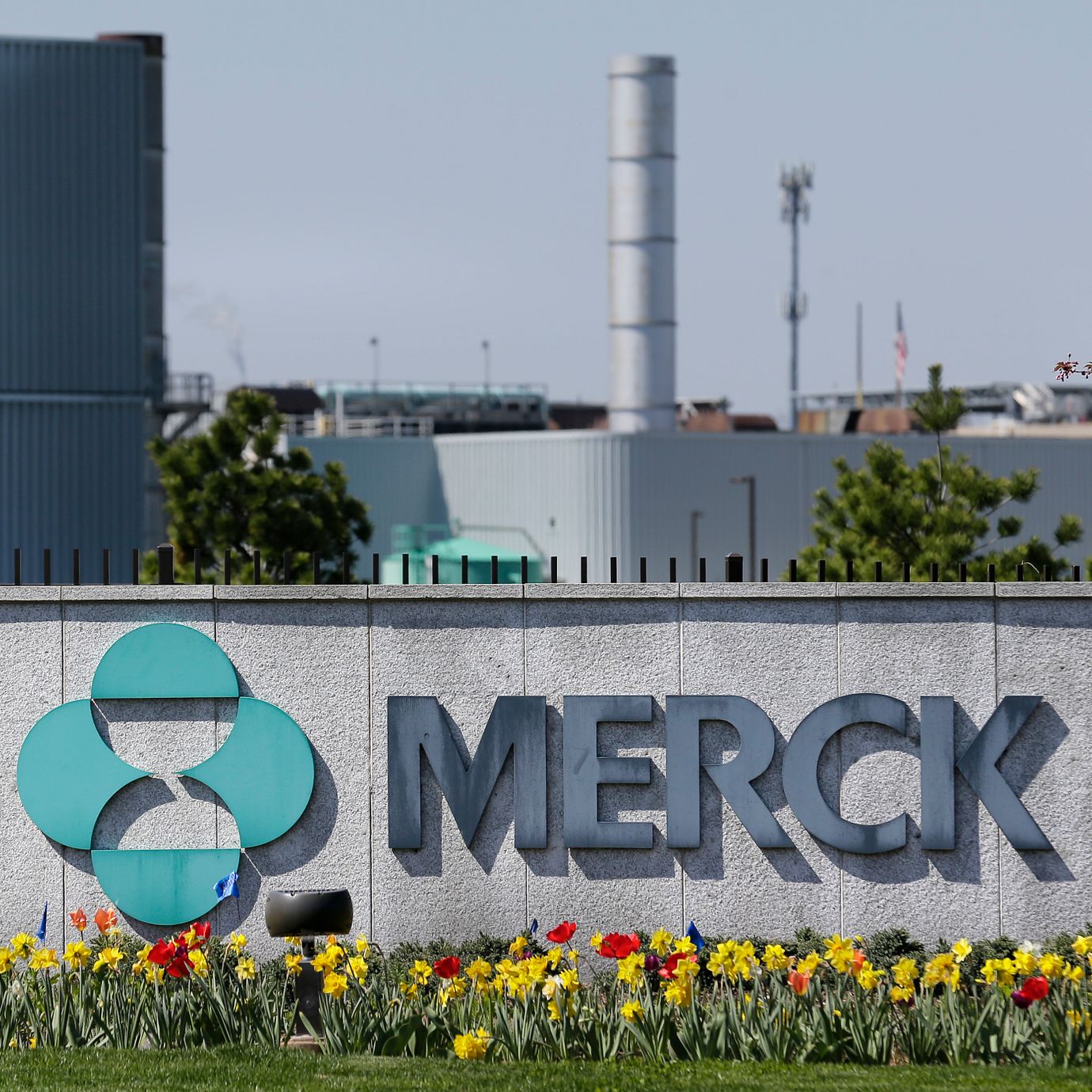
Bristol Myers is No. 2, with drugs that brought more than $23 billion in 2023 set to go off patent through 2030, including its blood thinner Eliquis and its cancer drug Opdivo.
For Pfizer, drugs that brought in more than $17 billion in 2023 will go off patent by 2030.
At an investor conference in January, Merck CEO Robert Davis talked about his company’s “Keytruda situation” as a “hill, not a cliff.” To be sure, Merck has a reasonable shot at slowing the decline in Keytruda revenue, in part because the company is testing a new version that can be injected under the skin that might fend off some competition from a wave of biosimilar versions of the drug.
Other than R&D efforts, Big Pharma’s other antidote to patent expirations has been dealmaking.
In December, Pfizer closed its big $43 billion acquisition of Seagen, a leader in the field of antibody-drug conjugates, which combine the tumor-targeting properties of cancer immunotherapies with the tumor-killing properties of chemotherapy. The technology seized the drug industry’s attention last year, when it became every company’s must-have accessory, and Merck, AbbVie , and Johnson & Johnson all signed multibillion-dollar deals to secure ADCs of their own.
“The magnitude of the difference in where we’ve ended up has been so dramatic that it really equates to uncertainty”
In January of 2023, Pfizer told investors to expect full-year revenue of between $67 billion and $71 billion, and adjusted diluted earnings of between $3.25 and $3.45 per share.
It didn’t happen.
In the end, Pfizer’s 2023 revenue added up to $58.5 billion. Its adjusted diluted earnings were just $1.84 per share.
Pfizer declined to make an executive available to speak for this story. In a conversation with Barron’s in January, Bourla acknowledged that 2023 had been a disappointing year for the company. Pfizer shares “went down because we missed our internal projections, and our external projections,” he said. “We had a very bad year.”
Pfizer was particularly wrong about demand for its Covid-19 products, namely its Comirnaty vaccine and its Paxlovid antiviral.
The company had once projected combined 2023 sales for the two medicines of $21.5 billion; they came in at less than $12.5 billion.
“The magnitude of the difference in where we’ve ended up has been so dramatic that it really equates to uncertainty, which has a way of eroding confidence of investors in management,” says Goldman Sachs analyst Chris Shibutani.
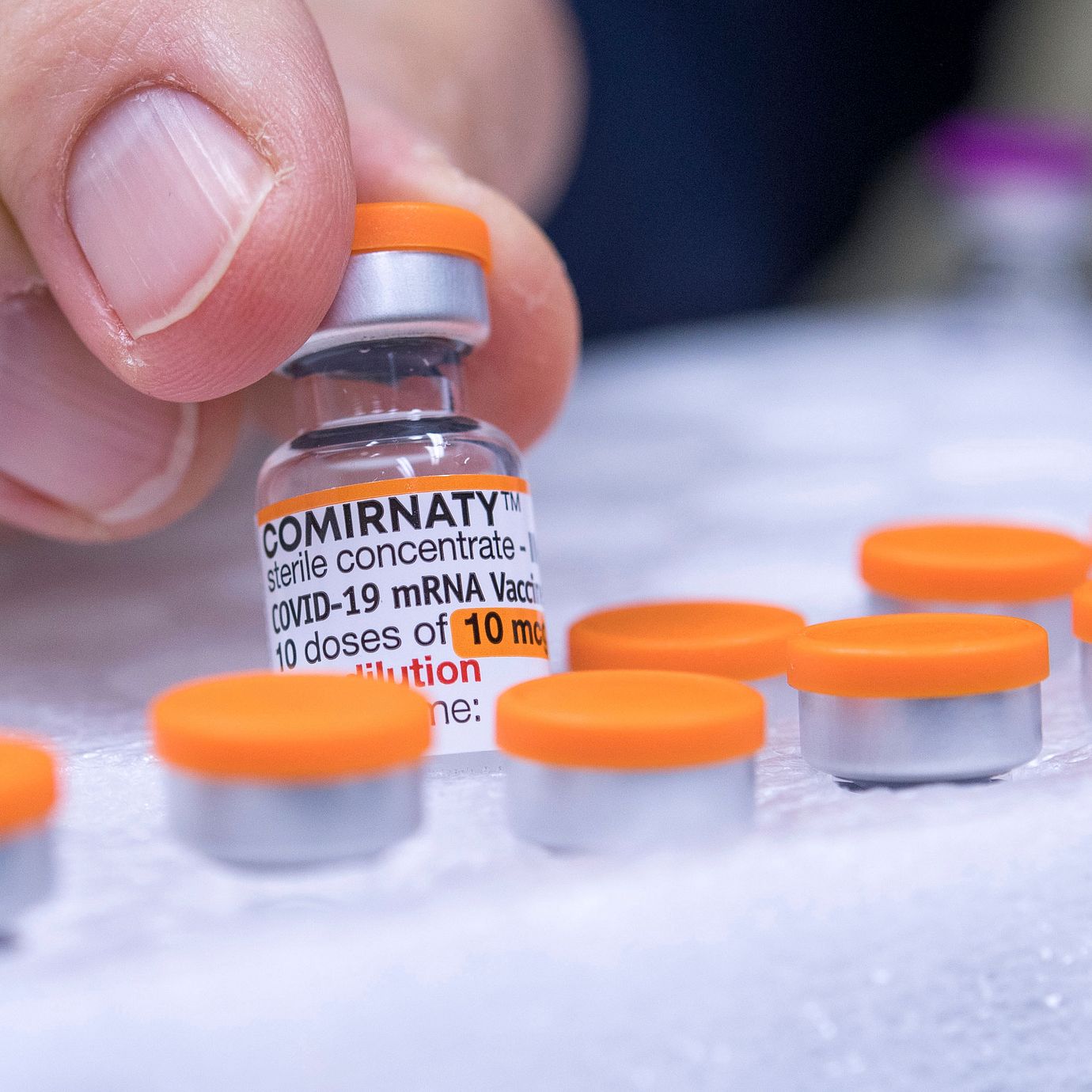
Making predictions about Comirnaty and Paxlovid that January was an unprecedented challenge. No one had ever managed the shift from a pandemic-era market, where the U.S. government was purchasing all Covid-19 products, to a commercial market, where the products fell back on the standard mix of insurers, employers, and government payers.
More worrisome for the company is the shakiness the year exposed in the company’s base business, and in its pipeline. Sales of Pfizer’s new RSV vaccine lagged behind rival GSK’s, while Pfizer cut revenue expectations for a new ulcerative colitis drug. Its efforts to develop a new weight-loss pill haven’t paid off.
Pfizer notes that it had a record number of FDA approvals for new medicines and vaccines in 2023, launches it expects will help offset the impact of the patent expirations through 2030.
But recent history suggests that no one—including company executives—have a good fix on the drug market. A new wave of Medicare price rules makes the industry less predictable than ever. Investors should embrace that reality. The days of putting Big Pharma investments on autopilot are long gone.