Lecornu får frikort att rädda Frankrike – offrar Macrons pensionsreform
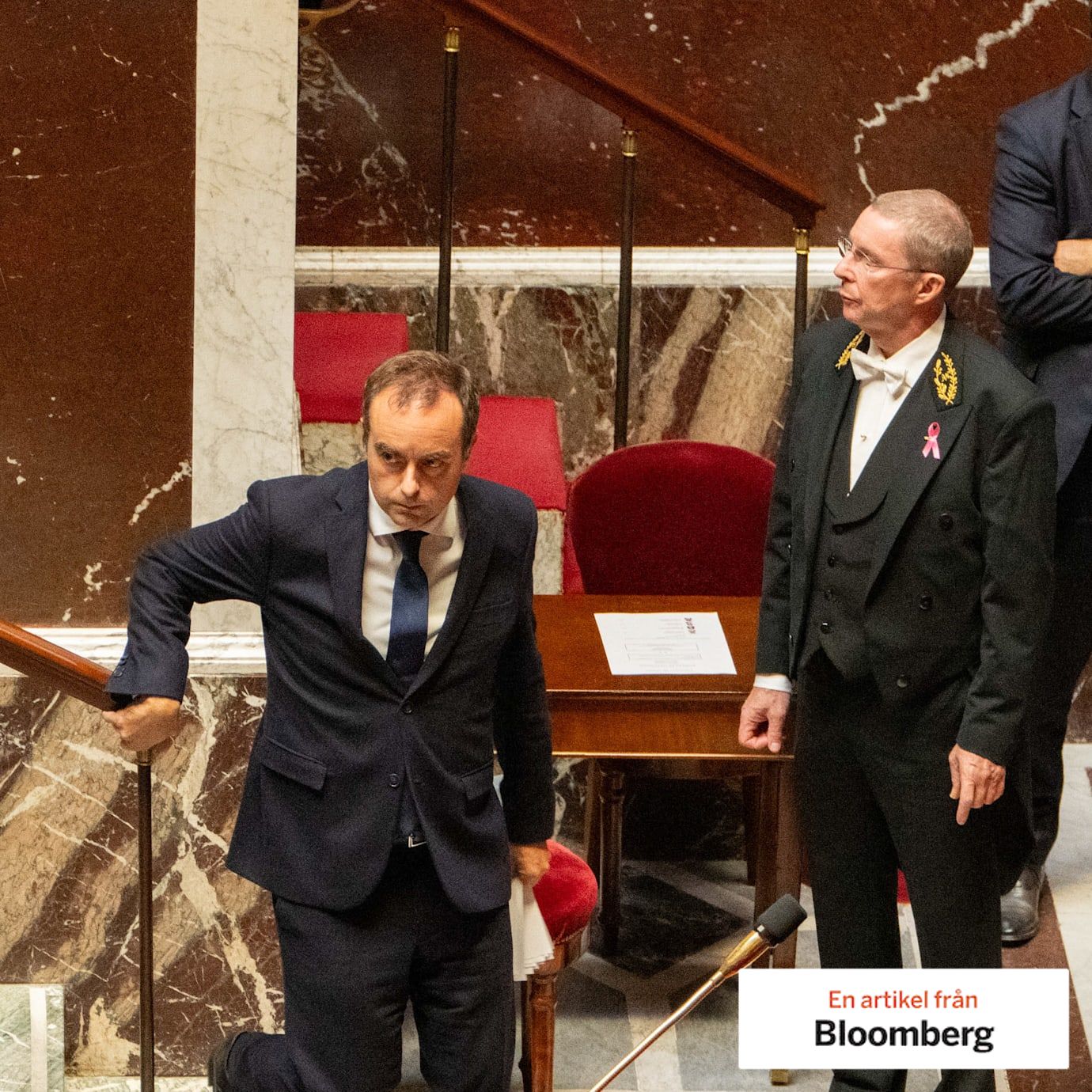
Mitt i brinnande regeringskris har Frankrikes premiärminister Sébastien Lecornu fått ”carte blanche” av president Emmanuel Macron för att hitta en väg framåt för landet.
Lecornus drag lät sig inte dröja: Macrons kontroversiella pensionsreform som skulle höja pensionsåldern till 64 år ryker. Det är ett symboliskt nederlag för presidentens ekonomiska agenda och hans mantra att Frankrike måste arbeta mer för att öka tillväxten och stärka de offentliga finanserna.
Om det är början på en lösning för EU:s mest skuldtyngda land återstår dock att se, skriver Bloomberg.
 Bloomberg
France Sacrifices Macron’s Pension Reform in Bid for Stability
France’s new government will begin the process of suspending Emmanuel Macron’s signature pension reform, removing an economic cornerstone of his presidency as it seeks a short-term antidote to political chaos.
Prime Minister Sebastien Lecornu, one of the president’s closest allies, announced the decision to parliament on Tuesday to sway the Socialist Party ahead of crucial no-confidence votes he risked losing. The center-left group and allies have only 69 of the National Assembly’s 577 seats, but that’s enough to be pivotal in such motions in France’s fractured political landscape.
For now, the 39-year-old premier appears to have bought himself a lifeline, with Socialist leader Olivier Faure reaffirming on Wednesday that his group won’t vote for the motions on Thursday.
“The suspension of pension reform is only a first victory,” Faure said on BFM TV. “The 2027 presidential election will determine the future of the pension reform.”
Suspending Macron’s pension law, which was gradually raising the minimum retirement age to 64 from 62, is a symbolic defeat of the president’s economic agenda and his mantra that France must work more to increase growth and repair public finances. But Lecornu’s premiership was hanging by a thread. He resigned eight days ago amid infighting within the cabinet, before accepting a new mandate on Friday.
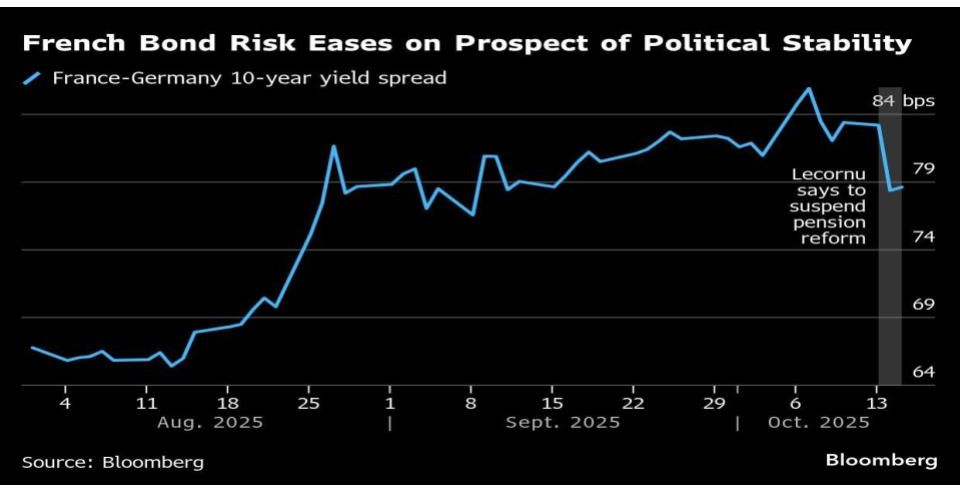
The prospect of some level of political stability triggered a relief rally on French markets on Tuesday that held into Wednesday. The 10-year spread over German bonds traded at 78 points, around 6 points lower than before Lecornu spoke to parliament. France’s CAC 40 benchmark index surged, also boosted by better-than-expected results from luxury goods powerhouse LVMH.
“It’s more important to have a government and a budget right now, in terms of urgency it overtakes the short-term cost of the suspension of the pension reform,” said Karen Georges, a fund manager at Ecofi Investissements in Paris. “It might not be the same when rating agencies give their assessment though.”
Moody’s Ratings is scheduled to update its assessment of French sovereign debt on Oct. 24, while S&P Global Ratings will do so on Nov. 28.
Suspending the pension reform until 2027 might be fiscally costly but it could lower political uncertainty, a key risk to the 2026 economic outlook
Macron’s grip on power has weakened dramatically since his ill-fated gamble on snap elections last year, which delivered a lower house of parliament fractured between irreconcilable blocs.
Lawmakers already forced both of Lecornu’s predecessors — Michel Barnier and Francois Bayrou — to resign over their plans to rein in what has become the largest budget deficit in the euro area. If the National Assembly forces out Lecornu later this week, Macron has told ministers it would amount to a “dissolution motion,” indicating he could dissolve parliament and call fresh elections.
As part of the effort to get parties to back Lecornu, Macron gave him “carte blanche” to navigate a path out of the crisis.
I will not endorse an outcome that would endanger our country’s credibility
Lecornu said a full suspension of the pension reform would benefit around 3.5 million people, but would cost €400 million ($465 million) next year and €1.8 billion in 2027. He warned that must be compensated by savings rather than a wider deficit.
“I will not endorse an outcome that would endanger our country’s credibility,” Lecornu told lawmakers. “I’m taking steps forward - it’s up to each of you to do the same.”
The prime minister’s pension concession is part of a broader gambit to cede more control to parliament over France’s finances as he also seeks to adopt a budget by the end of the year. To that end, Lecornu has pledged not to use the constitutional article known as 49.3 to bypass votes on bills.
That heralds an unpredictable shift in dynamics at the National Assembly as minority governments had until now relied on the article to shut down more radical proposals by lawmakers.
“Parliament will have the final word,” Lecornu said. “That seems like common sense, but it’s almost a revolution.”
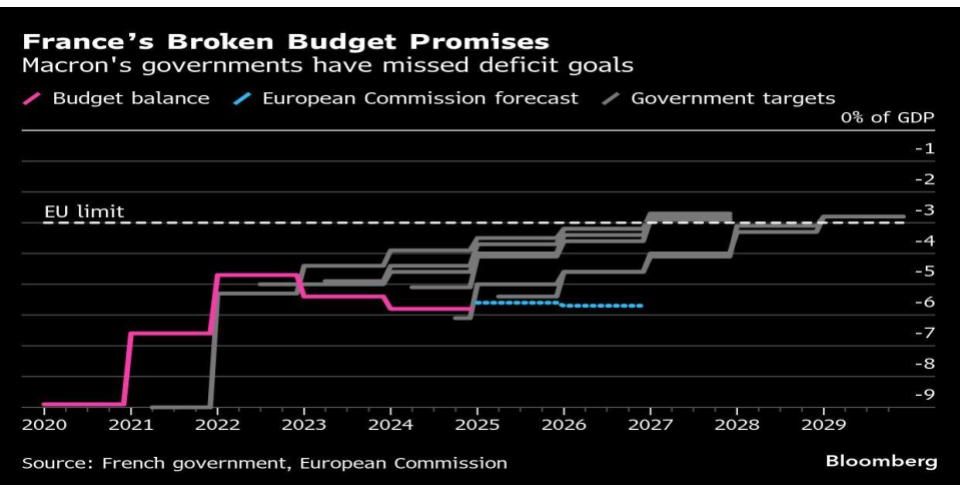
The draft budget presented to parliament Tuesday targets a reduction in the deficit to 4.7% of economic output from 5.4% this year. Lecornu said lawmakers are now free to amend those plans, but the resulting deficit should be no wider than 5% of economic output.
Faure said on Wednesday his party will push against several of the government’s proposed measures to reduce the deficit. Two-thirds of the planned adjustment is based on measures to curb spending, including unpopular freezes of pension and welfare payments.
The draft also includes a partial extension of what was originally a temporary increase in corporate tax for the largest firms. That will bring in €4 billion of revenue, compared with €8 billion expected this year, while another €2.5 billion will come from renewing a levy on the highest earners and creating a new tax on wealth in holding companies.
Faure said more can be done and that his group would again propose a wealth tax designed by economist Gabriel Zucman and a full renewal of the tax on big companies.
“We think we can do more,” he said in the interview on BFM. “The exceptional tax that was introduced this year on the biggest French companies didn’t kill them.”
For more articles like this please visit us at bloomberg.com