Marknad i gungning – skydda portföljen med defensivt
Augusti har börjat skakigt på börsen, och det kan vara läge att se över portföljen.
”Genom att lägga till defensiva aktier kan sparare fortsätta vara investerade samtidigt som de skyddar sig om ekonomin skulle gå in i en lågkonjunktur”, skriver Barron’s.
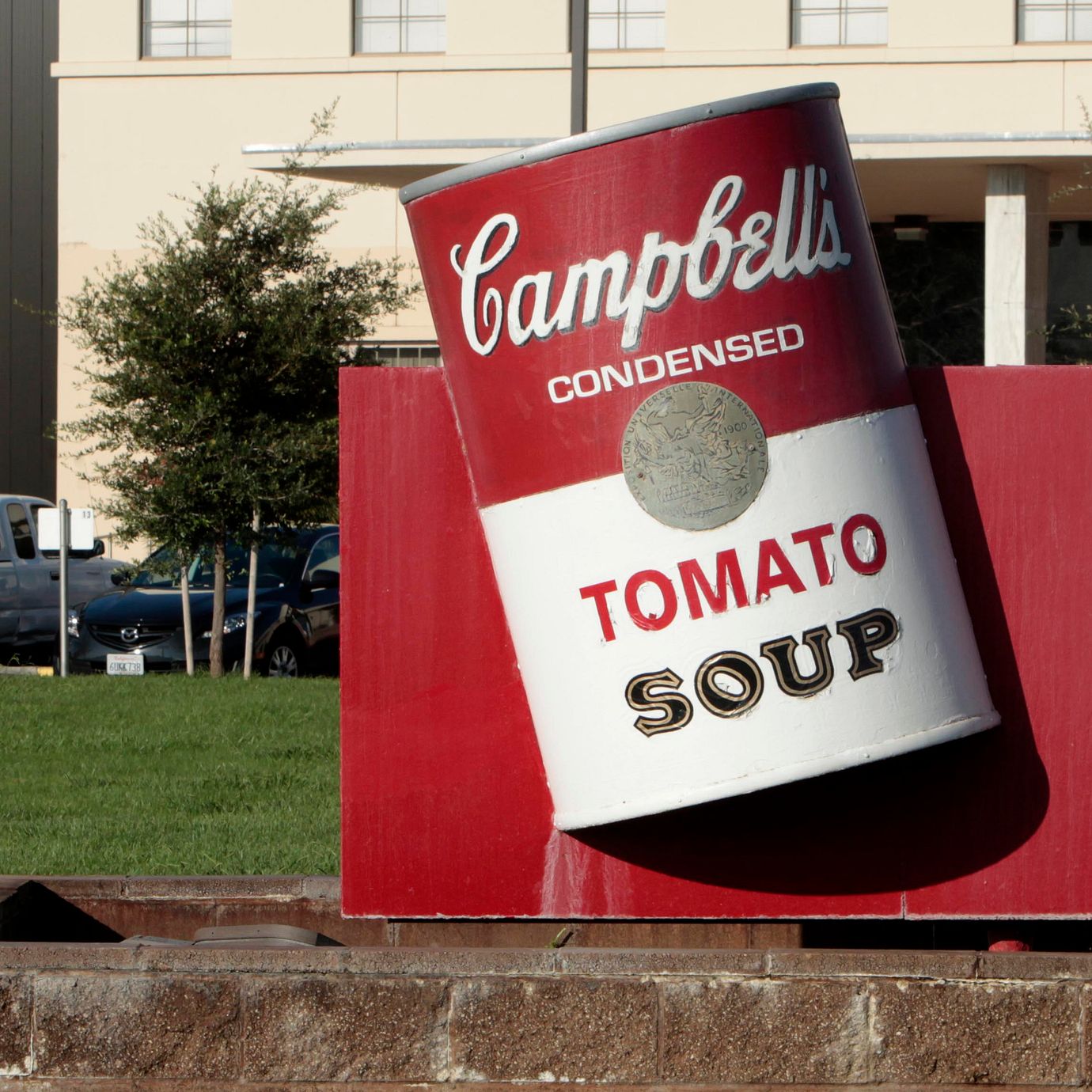
Börssajten slår bland annat ett slag för klassiska varumärken som Campbell Soup, Hershey och Oreos-tillverkaren Mondelez.
 Barron's
The Market Is Scary. These Stocks and Bonds Can Protect Your Portfolio.
Adding defensive stocks can allow investors to stay invested while protecting themselves if the economy goes into recession.
August has been a rough month so far for stocks. While it’s important not to overreact, it may be time for investors to shore up portfolios with defensive plays like consumer staples, utilities, and bonds.
Just a few weeks ago, it seemed like the stock market could do no wrong. The S&P 500 hit a record high on July 16. But trouble was brewing beneath the surface.
Big tech stocks had been shouldering much of the market’s returns—but investors had already begun to question how soon the dazzling promise of artificial intelligence would actually pay off. And, while economically sensitive small-cap stocks had finally begun to rally, those gains soon proved vulnerable to weaker-than-expected jobs and manufacturing data.
Throw in a wild card like the implosion of the yen carry trade, and stock prices buckled: The S&P 500 tumbled more than 6% during the first three days of August—its worst start to the month in 20 years.

The good news for investors: Most observers think the economy is fundamentally solid. The bad news: With interest-rate cuts and the U.S. election looming, there’s almost certain to be more tumult in coming months.
“We aren’t in the recession camp, we’re in the soft-landing camp,” says Anastasia Amoroso, chief investment strategist at marketplace iCapital. “But I do think every data point we get, especially on the labor market, will be scrutinized for being recessionary.”
In other words, it may be time to focus on stocks that can perform well no matter what the economic climate. And don’t forget about bonds, whose healthy yields should provide extra ballast. Here’s your defensive playbook for the rest of 2024.
First, do no harm
It’s no fun to see your portfolio whipsawed, the way it has been over the past few weeks. But little has fundamentally changed about the U.S. economy from mid-July, when stocks were posting record highs.
Stocks’ big pullback was largely kicked off with a disappointing Aug. 2 employment report, showing the U.S. added just 114,000 jobs in July. While San Francisco Fed President Mary Daly said the numbers suggest hiring is slowing, she added that firms aren’t issuing rounds of layoffs that would signal deep economic trouble.
Nearly 80% of companies beat second-quarter earnings forecasts, according to FactSet. And there have been upside surprises, too, such as July’s better-than-expected productivity gains.
Economists were far more worried about the economy last year: Fifty-four percent predicted a recession in the next 12 months in July 2023, compared with 28% in July 2024, according to a quarterly Wall Street Journal Survey. Investors who bailed out of stocks then would have missed 2024’s big gains. Even after the recent selloff, the S&P 500 has returned 20% in the past 12 months.
“It has been a great time to be invested,” said Fran Kinniry, head of Vanguard’s Investment Advisory Research Center, in a statement. “Investors and advisors should remain patient.”
Seek stable stocks
Even if the economy remains on sound footing, leadership within the stock market may change.
One corner of the market that stands to benefit from a defensive climate is consumer staples, a sector filled with familiar blue-chip companies that make stuff Americans need to buy, no matter what. One recent Morningstar study found that food and beverage stocks are the least cyclical among more than two dozen different industries represented in the market.
Staples stocks have lagged badly over the past 12 months, returning 11% as Americans’ frustration with inflation has cut into sales and profit margins. The silver lining, says Philip Straehl, chief investment officer, Americas, at Morningstar Wealth, is that these stocks should enjoy a tailwind as inflation slows.
Kitchen stalwarts Hershey, Campbell Soup, and Oreos maker Mondelez International are all priced at a discount to fair value and poised to outperform, according to Morningstar’s stock analysts. All three are also trading below the market’s forward price-to-earnings ratio of 21.
Utilities are another classic haven—although this year the sector has been something of a surprise growth story. Surging energy demand from data centers has led some nuclear power producers such as Vistra and Constellation Energy to surge 50% or more. Utilities are the third-best performing sector in the S&P 500 this year.
While the growth story may still hold, high valuations now make these riskier than stocks typically considered defensive. Investors looking for something steadier should consider power distributors, which tend to be less exposed to volatile energy prices than producers, says Mayukh Poddar, senior portfolio manager of Altfest Personal Wealth Management.
New York–based Consolidated Edison, trading at 19 times forward earnings, is a classic distributor, he notes, while NextEra Energy, trading at 23, offers a combination.
NextEra’s largest business is regulated distributor Florida Power & Light. But it recently made big investments in renewable-generation assets, and these are growing fast. “They’re getting benefits from increasing scale and continued reduction in prices for all of the different kinds of solar and wind power,” Poddar says.
Fund investors willing to explore more exotic strategies can consider covered call funds
There are plenty of defensive options among mutual funds, too. Dividend funds hold up well in down markets—they tend to hold blue chips with strong balance sheets. What’s more, when interest rates decline, these stocks’ yields become comparatively more attractive.
The Schwab US Dividend Equity exchange-traded fund boasts a yield of 3.7%, roughly twice the broad market’s, and a beta of just 0.77, meaning the fund’s portfolio should be 23% less volatile than the market.
Fund investors willing to explore more exotic strategies can consider covered call funds. These funds, like the JPMorgan Equity Premium Income ETF, write out-of-the-money call options on stock market indexes.
Covered-call funds receive regular income from writing calls that boost their yield and can smooth returns, offering a cushion in rocky markets. Over the past month, J.P. Morgan Equity Premium Income, which yields 6.4%, declined just 2%, compared with 6.5% for the S&P 500. Just remember: Writing options has risks—these funds tend to see their gains capped when stocks rise sharply.
Count on your bonds
Regardless of what happens in the stock market, investors should be able to count on their fixed-income portfolio to provide a backstop. That wasn’t the case two years ago. In 2022, the stock market fell 18% and bonds fell 13%, spelling disaster for investors with supposedly conservative 60/40 portfolios.
The situation is different this time. The 10-year Treasury note yields a healthy 4%, as opposed to less than 2% in 2022. Meanwhile, rates appear set to decline, not rise, which should give bond prices a tailwind, boosting bonds’ total return.
Investment giant Vanguard, not usually known for bold investment calls, is so bullish on bonds that it thinks they can outperform stocks over the next decade. Its model portfolio for risk-taking, “valuation aware” investors recommends putting 61% in bonds and 39% in stocks—flipping the portfolio’s 60/40 benchmark on its head.

For now, the yield curve remains inverted, with cash-like three-month Treasuries paying 5.2%, more than a full percentage point above 10-year notes. But longer-dated bonds may offer a better deal. They allow investors to hang on to today’s relatively generous yields for longer, and they promise additional price gains when the Fed starts cutting rates. That’s because bonds with longer durations are more sensitive to interest-rate moves.
“Not only do you lock in the yield, you are setting yourself up for gains,” says Amoroso, who sees the duration sweet spot in the five- to 10-year range.
Taking credit risk is another potential way to boost returns. The Vanguard Intermediate-Term Corporate Bond ETF yields 5.1%, also more than a percentage point above 10-year Treasuries. That may make sense: Investment-grade bonds rarely endure defaults, even during recessions. On the other hand, chasing yield into high-yield, or junk, territory offers a less appealing trade-off, especially for investors looking to play defense.
Junk-bond spreads have remained historically narrow for much of 2024, with high-yield bonds paying interest rates about four percentage points above comparable Treasuries, according to the St. Louis Fed. That means most investors on Wall Street aren’t too worried about a recession. But it also means investors aren’t getting paid much to take on the extra risk.