Därför kan börsen stiga ytterligare 20 procent 2025

Trots en rekordstark börs i år spås marknaden fortsätta uppåt under 2025, skriver Barron’s. Analytiker lyfter fram AI och Trumps avregleringsplaner som viktiga drivkrafter, vilket kan ge amerikanska S&P 500 en uppgång på över 20 procent.
Samtidigt finns det risker för högre inflation och politiska osäkerheter. Sektorer som finans och teknik väntas ta ledningen, men investerare uppmanas vara beredda på större svängningar.
 Barron's
Why the Stock Market Could Gain Another 20% in 2025
Wall Street’s market forecasts are too tepid. The S&P 500 could rally next year on a combination of AI growth and deregulation. But investors should prepare for a wilder ride.
The stock market is surging as the year winds down, and shows no sign of slowing in 2025. Investors should embrace the expanding bubble.
Investing arguably was too easy this year. Aside from a brief selloff in early August, the declines have been few and were best used as opportunities to reload. Events that should have sent shudders through the market—the presidential election, escalating conflicts overseas, and uncertainty about the path of inflation and the Federal Reserve’s rate-cutting plans—elicited barely a shrug.
Even relative weakness in the shares of Nvidia, Apple, and the rest of Big Tech during the second half of the year served as little more than an opportunity to prospect in other, forgotten corners of the market, many of which perked up. The result? The S&P 500 is on track to post a gain of almost 30% this year, while the tech-heavy Nasdaq Composite is up nearly 35%.
Such ebullience seemed unlikely, if not remote, at the start of 2024. Equity valuations were relatively low, economists were on recession watch, investor sentiment was reserved, and the Fed had yet to start cutting interest rates.
“There is a likelihood of building a bigger bubble. Booms result in bigger busts”
Today, however, conditions are far less benign. The S&P 500’s price/earnings ratio—at around 22 times next year’s expected earnings—is approaching frothy. Positive sentiment about the economy and markets has fueled the rise of animal spirits, from equities to Bitcoin to art. And talk of the Fed is no longer focused on when it will cut rates, but on when it might stop due to inflation’s potential resurgence.
If the stock market were as predictable as the calendar, a significant pullback would be in order right now. Instead, prices are poised to rise further in 2025, although the ride could become a lot wilder.
There is a good chance the S&P 500 will gain far more than Wall Street expects due to the combination of the incoming Trump administration’s deregulation drive and the continued advance of artificial intelligence. Either one on its own would probably be enough to push the market higher. Together they could act as rocket fuel and send stocks into the stratosphere—or, up 15% to 25%.
Yet, coming atop this year’s advance, gains of that magnitude will force uncomfortable decisions. Should investors hold on and ride the market higher, or take profits as stocks continue to climb? “There is a likelihood of building a bigger bubble,” says Benjamin Bowler, head of global equity derivatives research at BofA Securities. “Booms result in bigger busts.”
Dot-Com Redux?
Wall Street—as is its way—is expecting a solid, if unspectacular, year. Market strategists, on average, predict that the S&P 500 will hit around 6500 by the end of 2025, up 7% from a recent 6060, according to Bloomberg data. More than half of strategists have targets between 6500 and 6700, although a few outliers predict a bigger gain or sharp decline.
The consensus forecast seems reasonable based on current earnings expectations. Wall Street is looking for S&P 500 earnings to grow by 15% next year, to $273.25, according to FactSet data. If earnings rise 13% in 2026, to $309.37, dropping the valuation by half a point would put the index at just over 6700 a share, up 10% from Wednesday’s close. Minor adjustments to the multiple or estimates account for most of the differences among strategists’ forecasts.
But history rarely is reasonable. Over the past 100 years, the stock market was more likely to gain 10% to 20% annually than 0% to 10%, according to Deutsche Bank data. Overall, stocks gained 20% or more 39% of the time, while dropping 26% of the time. An average year, which analysts are predicting, doesn’t happen all that often, despite the frequency of such predictions.
Neither does a string of 20% annual gains. The S&P 500 has gained 20% or more in consecutive years just three times in its history. It happened in 1935 and 1936, only for the market to plunge 39% in 1937 when mistimed Fed rate hikes and fiscal spending cuts prolonged the Great Depression.

Things turned out better after the 20%-plus rallies of 1954 and ’55: The S&P rose 2.6% in 1956. The most recent skein of hefty gains began in the mid-1990s. Stocks rose 20% or more in 1995, ’96, ’97, and ’98, and almost 20% in 1999. Only the popping of the dot-com bubble in 2000 brought that sequence to an end, and it was ugly. By the time the market bottomed in 2002, the S&P 500 had lost nearly half of its value.
Could investors be looking at a repeat of the dot-com bubble and bust? It’s possible. When John Stoltzfus, chief investment strategist at Oppenheimer Asset Management, initiated a Street-high 2025 price target of 7100 on Dec. 9, the growth of AI technology was a big part of the reason. He compares AI to the arrival of the car in the 1920s, which ushered in improved productivity across the economy. He expects AI to do the same.
“We’re not suggesting paradise on earth nor are we expecting a ‘Goldilocks world,’ but rather a genuine potential for AI to provide greater efficiencies in key areas that are challenging progress today across the sectors and society,” he writes. “The potential for better virtual shovels and virtual drill bits to mine a world of increasing mountains of data to find solutions at a quicker pace could be one of its greatest contributions.”
“The context should also favor small- and mid-caps, given their higher domestic U.S. exposure, and we would expect them to outperform”
This market also has something going for it that the dot-com bubble didn’t—the potential for sweeping and stimulative policy changes, namely deregulation and lower taxes. President-elect Donald Trump has pledged to remove 10 regulations for every new one imposed during his second term, which begins in late January. While it might be difficult to fulfill that promise, a deregulatory push is expected to be a big part of his presidency, particularly with Tesla CEO Elon Musk and venture capitalist Vivek Ramaswamy leading the Department of Government Efficiency, a nongovernmental agency that will try to cut some $2 trillion in government spending through 2028.
Manish Kabra, head of U.S. equity strategy at Société Générale, says financials, manufacturing, and energy will likely be the focus of Trump’s deregulation efforts. Fewer regulations could help the U.S. manufacturing sector end the productivity slump in which it has been mired for the past 15 years. Oil-related energy companies could get a profit boost if Trump eliminates rules on carbon dioxide emissions, as he did during his first term. Financials may be the biggest beneficiary, with rules relaxed on everything from “buy now, pay later,” credit-card fees, and big banks.
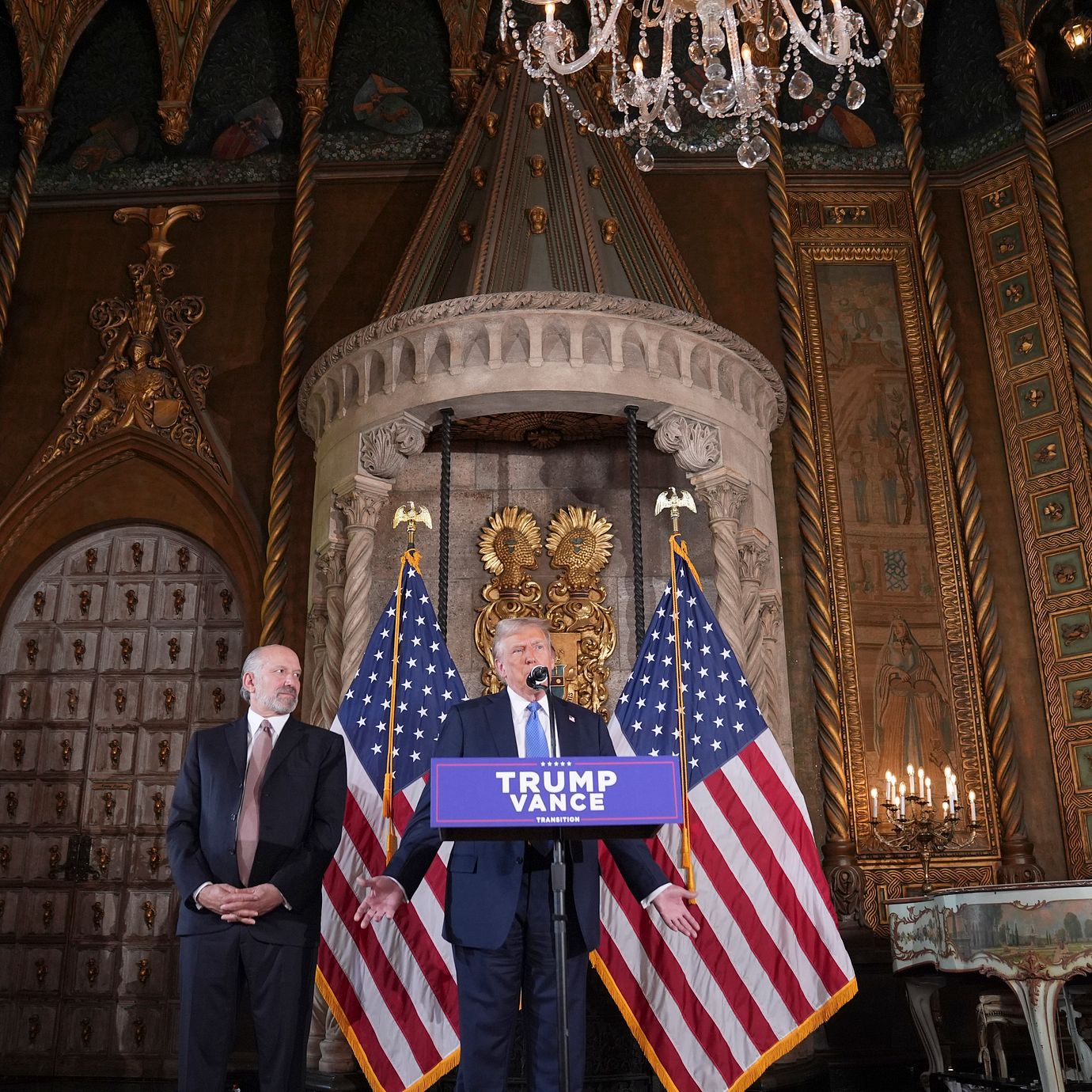
Lower taxes would also help, with a 15% rate for corporations, down from a current 21%, providing a 2% to 3% lift to earnings per share. “The context should also favor small- and mid-caps, given their higher domestic U.S. exposure, and we would expect them to outperform—especially those with exposure to financials and industrials,” Kabra says.
The combination of AI and deregulation has the potential to boost profit margins, increase earnings, and send stocks meaningfully higher than strategists currently estimate. Although Kabra sees the S&P 500 ending 2025 at 6750, he cites the potential for the index to hit 7500 by the end of next year, and perhaps even 8000 by July 4, 2026, when the U.S. celebrates its 250th anniversary, something he calls “a blue-sky scenario of getting everything right on the Trump agenda.”
The Fed’s Fine Line
Getting everything right won’t be easy, though. The potential benefits of lower taxes and deregulation could be offset—and then some—by tariffs and deportations. Kabra estimates that tariffs could knock 2% to 3% off S&P 500 earnings, one reason why he expects the index to bounce around between 6500 and 7500 next year.
Further inflation could force the Fed to stop cutting rates and raise them instead. And then there’s the possibility of a recession, something investors seem to have put out of their minds even as the unemployment rate rises and other signs of a slowdown emerge.
Peter Berezin, chief global strategist at BCA Research, notes that Trump’s tax cuts didn’t lead to increased capital spending during his first term, and he expects that to be the case again. What’s more, the possibility of a trade war could lower corporate spending and hit consumers hard. “We’re on a path to recession regardless,” says Berezin, who has a Street-low target of 4450 on the S&P 500. “Trump’s victory heightens other risks to the economy.”
Investors also need to be wary of the Federal Reserve, which is expected to cut rates in December, and three more times next year. Fed Chair Jerome Powell has to walk a fine line, ensuring that the economy keeps growing and inflation keeps falling. If inflation, which was relatively unchanged in November, proves resurgent, those rate cuts could be at risk—and with them, the market rally.
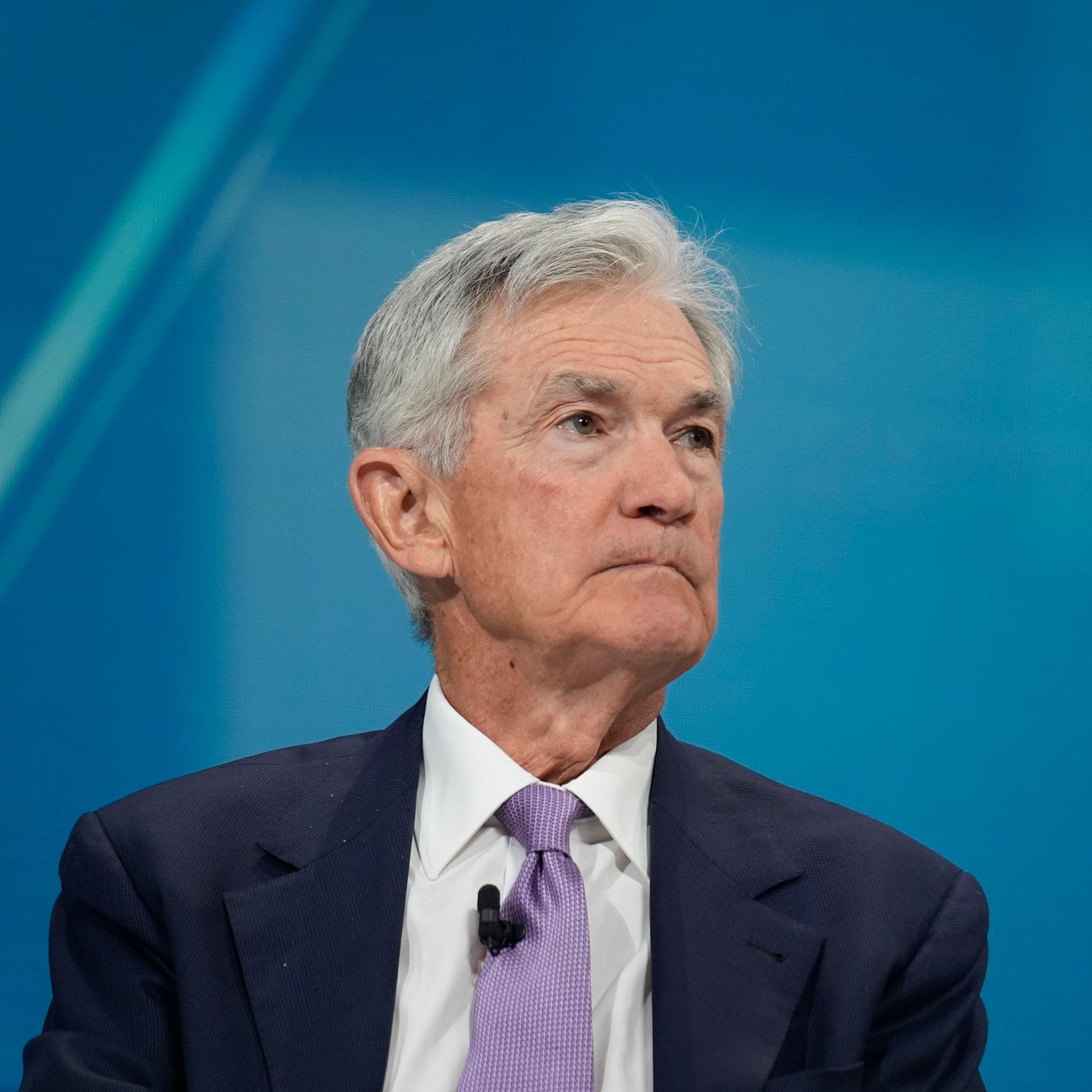
The Fed, though, could err on the side of growth and keep cutting despite hotter inflation, which would just add more fuel to the stock market’s rise. “Unless a December cut is accompanied by a very hawkish press conference by Powell, which he has not delivered since becoming a dove at August’s Jackson Hole speech, it could send the stock market melting up even higher,” writes Edward Yardeni, president of Yardeni Research, who has a 7000 target on the S&P 500. “That would increase the likelihood of a stock market correction early next year and risk overheating the economy.”
Valuations also look rich, but may be less of a risk than they are made out to be. The market is more expensive than at any time before, save for the peak of the Covid-19 rebound in 2022 and the dot-com bubble. But loftier price-to-earnings ratios also reflect changes in the S&P’s components, says Adam Parker, founder of Trivariate Research. For instance, the S&P 500 was previously overweight manufacturing, but is now dominated by technology and tech-adjacent companies. Profitability is also better, with 36% of companies boasting margins above 60%.
“This should support equity volatility no matter the market direction, as risk historically rises when valuations are this stretched”
If AI can provide a boost to earnings, growth could make today’s valuations look cheap, Parker says. What’s more, valuation is a lousy timing tool. While high or low valuations can be predictive of returns over a long horizon, they have little correlation to the market’s performance over the next 12 months. “On a one-year view, valuation isn’t helpful,” Parker says.
But high valuations are uncomfortable, and investors will have to embrace a degree of discomfort to get through 2025. BofA’s Bowler points out that there hasn’t been a convergence of deregulation and technological innovation since the 1920s, when electricity and autos were becoming mainstream and Calvin Coolidge became president. The combination has the potential to inflate an already expensive market even further.
Volatility usually rises during a bubble, Bowler says, which makes it unlikely that the Cboe Volatility Index , or VIX, will regularly trade below 10 next year as it did in 2017, the first year of Trump’s first term. Instead, volatility could rise along with the stock market, as it did in the latter years of the dot-com boom. “This should support equity volatility no matter the market direction, as risk historically rises when valuations are this stretched,” Bowler says.
He recommends using options strategies, which look cheap right now, to hedge downside exposure.
Playing Offense
But leaning defensive is unlikely to produce the results investors want. Andrew Slimmon, senior portfolio manager at Morgan Stanley Investment Management, notes that defensive sectors such as staples and healthcare have underperformed in 2024: The Consumer Staples Select Sector SPDR exchange-traded fund has gained just 15% this year, while the Health Care Select Sector SPDR ETF has risen just 5.7%. That underperformance could continue in 2025 as investors chase riskier sectors.
Slimmon also worries that stable growers with high valuations could run into trouble next year for the same reason. “We are entering the optimism phase, and that’s going to continue into 2025, especially if the Fed is going to cut rates,” Slimmon says.
With animal spirits back, Deutsche Bank strategist Binky Chadha, who has a 7000 target on the S&P 500 for 2025, recommends sticking with more economically sensitive sectors. He has Overweight ratings on consumer cyclicals, materials, and financials, while remaining Underweight on defensive sectors, including staples, healthcare, and telecommunications. Financials should benefit from a pickup in loan growth and resurgent merger activity, while materials are cheap enough to rebound if economic activity accelerates globally and the dollar’s strength recedes.
“As long as fundamentals for the Mag 7 remain strong in the quarters ahead, the group should continue to outperform”
Big tech may offer the best combination of growth and safety in 2025. Chris Senyek, chief investment strategist at Wolfe Research, argues that the Magnificent Seven— Alphabet, Amazon.com, Apple, Meta Platforms, Nvidia, Microsoft, and Tesla—have everything investors will be looking for next year. They’re still benefiting from the shift to AI, and their earnings growth remains strong, even if the rest of the index is catching up.
The Mag Seven also have defensive characteristics that could come in handy when volatility reemerges. Senyek prefers Nvidia, Amazon, Tesla, and Meta because they are more economically sensitive and should benefit as U.S. growth improves. “Our sense remains that as long as fundamentals for the Mag 7 remain strong in the quarters ahead, the group should continue to outperform,” he says. “We don’t see this dynamic changing until either the other side of the next recession and/or if AI enthusiasm substantially wanes. Said differently, something needs to pop the mini-bubble.” That’s something we’ll worry about in 2026.