Kan Europa få barnen att sluta hänga på sociala medier?
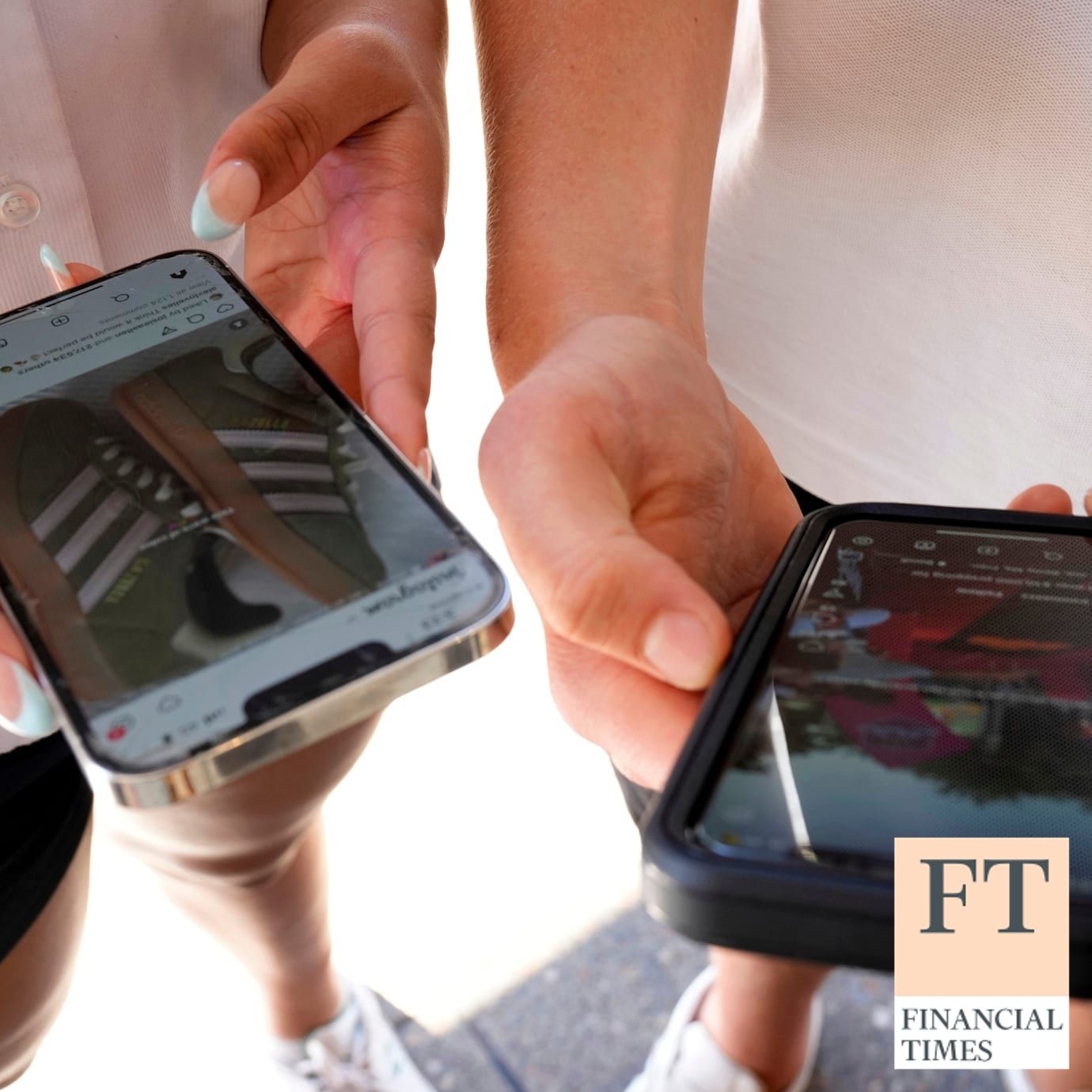
Snart kan Frankrike införa en åldersgräns för sociala medier, som Australiens regering har gjort. Danmark, Spanien, Nederländerna och Grekland vill också hålla minderåriga borta från plattformar som X, Instagram och Tiktok. Det skriver FT.
Även om förbud kan kringgås och bara delvis fungerar, tjänar det ändå syftet, hävdar förespråkarna.
– Det mest effektiva är att länder agerar gemensamt. Precis som med cigaretter nåddes till slut en kritisk punkt, säger Clara Chappaz, Frankrikes ambassadör för digitala frågor.
 Financial Times
Can Europe get kids off social media?
Move follows Australia’s decision to introduce age restrictions over child-safety concerns
Move follows Australia’s decision to introduce age restrictions over child-safety concerns
European countries are edging closer to broad social media bans for children, even as doubts persist over how to implement them and the risk of a new battle with US tech groups.
With France leading and close to passing a law, Spain, Greece, the Netherlands and Denmark have also said they will act to keep young people off platforms such as TikTok, Instagram and X. The UK parliament has had early debates and the government has begun consultations with stakeholders.
But past attempts to regulate online platforms have foundered because of the many ways they can be evaded. Initiatives in France and the UK that restricted minors’ access to porn sites were widely circumvented with virtual private networks that shield locations, while some companies refused to comply.
Clara Chappaz, the French ambassador for digital affairs, told the FT that if enough countries enacted controls on social media, children’s habits would evolve, even if the measures were imperfect.
”If bans only partially work, it is still worth doing”
“The best way to be effective is for countries to do this together. It’s like cigarettes, eventually there was a tipping point,” she said, adding that France’s porn rules have cut minors’ exposure by half.
“If bans only partially work, it is still worth doing. Seatbelt mandates have massively reduced driving fatalities, even if some people still do not wear them.”
The movement to restrict children’s social media comes as scientists have found their use to be associated with a higher risk of depression and anxiety, loneliness and body dysmorphia. Parents have also grown concerned that bullying is frequent and hard to monitor on such apps.
Last year, Australia enacted the world’s first social media ban for under-16s. Since December, companies must carry out age checks or risk fines of up to A$50mn (US$35mn) for systemic breaches.
While the law is still in its early stages, enforcement challenges have emerged as young users switch to different social media apps not yet covered or fool the age checks.
The Australian government says the ban is working because technology companies have purged 4.7mn accounts identified as belonging to children, but concedes it will take years for the regime to be fully enforced.
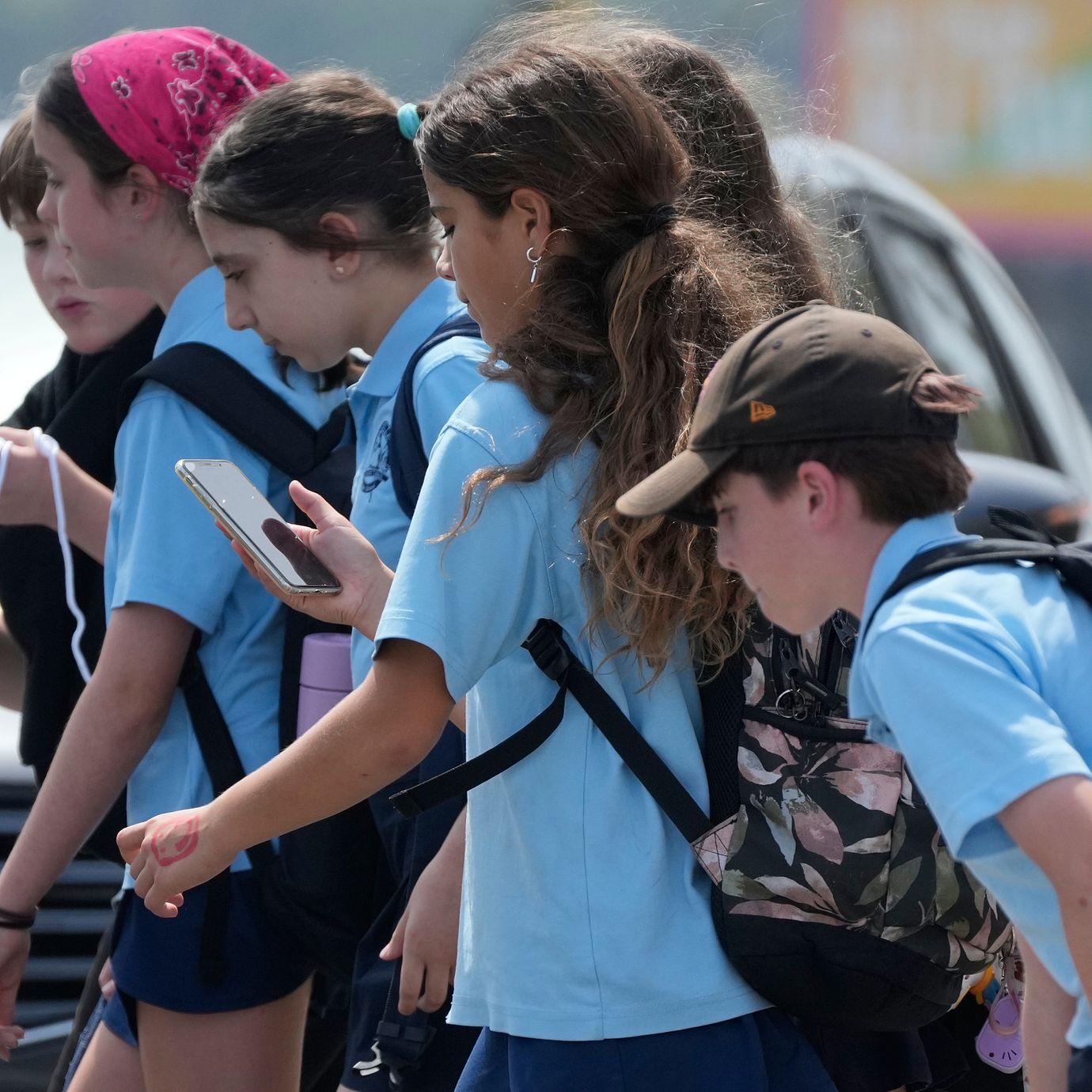
Unlike in Australia, the EU’s regulatory framework may complicate enforcement because Brussels, not national capitals, is the only body that can levy penalties on the biggest social media platforms via its Digital Services Act. Critics warn national rules could end up toothless, risking public confidence.
As momentum grows for tighter restrictions, pushback from the tech industry has become overt, breaking with traditionally discreet lobbying in Brussels.
Europe and the US are also sparring over digital policy more broadly as US President Donald Trump threatens retaliation if the bloc imposes further fines, tax or regulation.
When Spanish prime minister Pedro Sánchez this week promised to ban children from social media — accusing platforms of featuring “addiction, abuse, pornography, manipulation, violence” — he faced a furious response from Elon Musk. “Dirty Sánchez is a tyrant and a traitor to the people of Spain,” Musk wrote on X, his social network.
Pavel Durov, founder of the encrypted messaging app Telegram, sent a broadside to all Spanish users warning them that Sánchez “could turn Spain into a surveillance state under the guise of protection”.
“This isn’t just about kids — it requires platforms to use strict checks, like IDs or biometrics . . . eroding anonymity and opening doors to mass data collection,” added the Russian billionaire, whom France is investigating over allegations Telegram flouted digital regulation.

In Brussels and national capitals, tech companies such as Meta and TikTok are lobbying against outright bans, arguing they are a blunt response to parental concerns and that existing safeguards, such as restricted teen accounts, suffice.
They warn that bans risk pushing children towards unregulated platforms, and Meta has argued age verification should be handled at operating-system or app-store level.
Regardless of industry pressure, growing momentum among countries such as France and Spain — driven by strong public support — has forced the European Commission to act more decisively. Debate has centred on age thresholds and verification methods, long seen as the weak link in online child protection.
This marks a shift from only a few years ago, when France passed a law restricting social media access for under-15s that required parental consent, only for it to be blocked by Brussels for clashing with the DSA.
This time, Chappaz said France had consulted closely with the commission: “We have been very careful this time so that our law is applicable.”
But divisions remain between EU countries and within the commission on how far to go.
”I want to have a law which can be executed. Otherwise, it’s just theory”
European Commission president Ursula von der Leyen has voiced strong support, saying last September she was watching Australia’s restrictions “to see what next steps we can take in Europe”, adding that “parents, not algorithms, should be raising our children”.
EU tech chief Henna Virkkunen has instead argued for enforcing the existing legislation to protect children, noting that different countries have different sensibilities around age limits.
Most social media platforms already set a minimum age of 13, but enforcement relies on self-declaration.
France plans to require websites to carry out age verifications, as did Australia, but some advocate instead for so-called app store-based solutions that would force under-16s to verify their age via Apple or Google rather than with each individual app. It would also limit the transfer of personal data.
The commission is developing a prototype age-verification app that would make it harder for young people to evade restrictions using VPNs or other workarounds.
Dariusz Standerski, state secretary at Poland’s digital affairs ministry, said such a system-wide approach would be better. “I want to have a law which can be executed. Otherwise, it’s just theory,” he said.
Mobile-Free Adolescence, a Spanish association of concerned parents, welcomed Europe’s newfound “clear willingness to regulate”, said spokesperson Noemí Puigdellivol, although the group advocates harsher criminal penalties for non-compliance.
“If there is political will, we believe they [Europe] will be able to do it.”
Additional reporting by Carmen Muela in Madrid
©The Financial Times Limited 2026. All Rights Reserved. FT and Financial Times are trademarks of the Financial Times Ltd. Not to be redistributed, copied or modified in any way.